

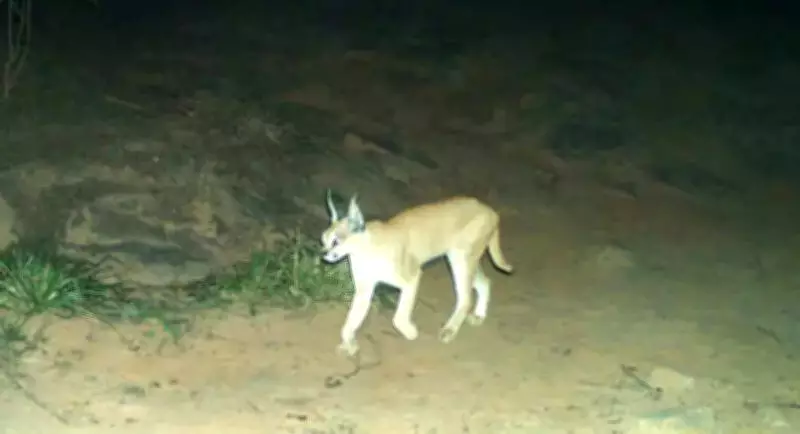
Rare Caracal Sighting in Rajasthan Sanctuary Sparks Conservation Optimism
In a heartening development for wildlife enthusiasts, a camera trap installed by the Rajasthan forest department has captured the elusive caracal inside the Bandh Baretha wildlife sanctuary in Bharatpur district. This sighting comes just two days after a tragic incident in Jaisalmer where a caracal was killed and charred, highlighting the fragile state of this rare species.
Ecological Recovery in Bandh Baretha Sanctuary
The discovery is being hailed as a significant boost for conservation efforts, particularly because the Bandh Baretha sanctuary has undergone notable ecological recovery in recent years after being affected by illegal mining. A senior forest official elaborated on the measures contributing to this revival.
"Conservation initiatives such as the removal of invasive plant species and the development of water sources have played a crucial role in habitat restoration," the official stated. "These efforts are gradually transforming the landscape into a secure refuge for rare and threatened wildlife species."

Historical Context and Current Status
An expert noted that while caracals have been recorded earlier in the Bharatpur region, this is the first reported sighting in the specific landscape of Bandh Baretha sanctuary. According to a 2021 report published in the ‘Journal of Threatened Taxa’, only 24 sightings of caracal have been documented in Rajasthan since 2001—the highest number from any state in India. However, the current population remains undetermined, with camera trap records suggesting that numbers could be higher than previously estimated.
Distribution and Conservation Challenges
Historically, caracals were reported across 7,93,927 square kilometers of India before 1947. Their range has suffered dramatic declines:
- Between 1948 and 2000, the range decreased by 47.99%.
- Between 2001 and 2020, it shrunk by a staggering 95.95%, reducing to just 16,709 square kilometers.
This represents less than 5% of their 1948–2000 range and a mere 2.17% of their pre-1947 distribution. An expert emphasized the severity of this contraction, stating, "Historically, the caracal's distribution in India has shrunk from 14 states to just three."
Rajasthan's Role in Caracal Conservation
Rajasthan can take pride in harboring these rare cats in its forests, which face severe threats due to habitat loss across several states. A senior official highlighted the shifting patterns of caracal sightings.
"Earlier, the Ranthambhore National Park landscape was considered home to one of India's most viable caracal populations," the official said. "In recent years, sightings have improved and been recorded in Ramgarh Vishdhari Tiger Reserve, Mukundra Hills Tiger Reserve, and even in Jaisalmer."
The official stressed the need for greater awareness about the species and the threats to its survival. Research is critical to determine population and density, as Rajasthan is believed to hold the country's largest remaining caracal population. Developing a comprehensive conservation action plan based on such data is essential for the species' future.
This recent sighting in Bandh Baretha not only offers a glimmer of hope but also underscores the importance of continued conservation efforts to protect India's dwindling caracal population.






