

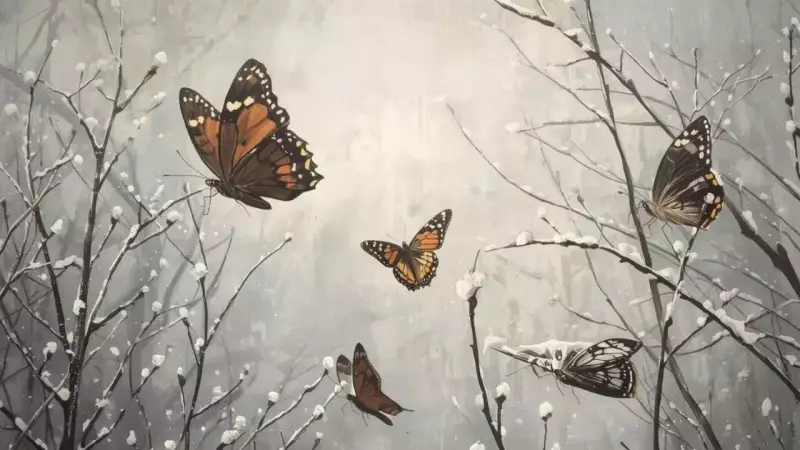
Butterfly Winter Survival: Migration, Dormancy and Natural Antifreeze
Summer's vibrant colors fade as gardens lose their butterfly visitors. These delicate creatures don't simply vanish when temperatures drop. They employ remarkable strategies to endure winter's harsh conditions when food becomes scarce and cold threatens survival.
Long-Distance Migration to Warmer Climates
Some butterfly species undertake incredible journeys to escape freezing weather. They ride air currents for thousands of miles toward warmer destinations. The monarch butterfly demonstrates this behavior dramatically, traveling up to 3,000 miles from North America to overwintering sites.
Staying Put Through Dormancy
Many butterflies remain near their original habitats instead of migrating. They enter a state called diapause, a form of insect dormancy. During diapause, butterflies hide under bark, within leaf litter, or in soil crevices. Their metabolism slows dramatically to conserve energy.

Species like mourning cloaks and comma butterflies overwinter as adults. They find shelter in tree crevices, wood piles, or beneath rocks. There they remain inactive until spring warmth returns.
Winter Survival in Different Life Stages
Butterflies don't always face winter as adults. Some species survive as eggs, caterpillars, or chrysalises. All these life stages can enter diapause when temperatures drop and food disappears.
Swallowtail and white butterflies often spend winter as chrysalises. They conceal themselves within shrubs or leaf litter, emerging only when spring flowers bloom and temperatures rise.
Physiological Adaptations for Cold Survival
Butterflies possess ingenious biological mechanisms to withstand freezing conditions. Many species produce natural antifreeze compounds that prevent ice crystal formation in their bodies. They also reduce water content and slow metabolism to protect tissues from frost damage.
A study titled "Climate change effects on animal ecology: butterflies and moths as a case study" published on PubMed Central examines these adaptations. The research highlights how butterflies demonstrate remarkable resilience despite their fragile appearance.
Helping Butterflies That Wander Indoors
Sometimes butterflies accidentally enter homes during winter, disturbed by indoor warmth. If you encounter one, avoid touching its delicate wings. Instead, gently coax the insect into a cardboard box with air holes.
Line the box bottom with tissue paper or dried leaves for grip. Place the container in a cool, dark location like a garage or unheated room. Never release the butterfly directly into cold outdoor air, as sudden temperature changes can prove harmful.
These winter survival strategies reveal butterflies as masters of adaptation. Their combination of migration, dormancy, and physiological changes ensures they reappear each spring, ready to brighten gardens once more.






