

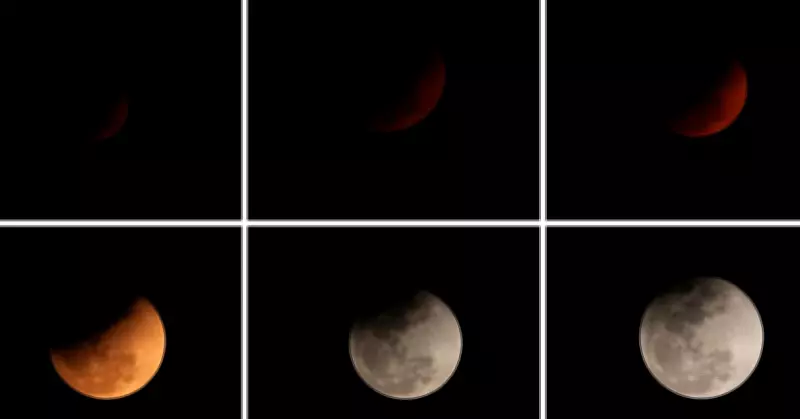
The 2026 Blood Moon: A Worldwide Celestial Phenomenon
The skies across the globe were painted with a mesmerizing crimson hue as the 2026 total lunar eclipse, popularly known as the Blood Moon, unfolded in a breathtaking display. This rare astronomical event captivated millions, from the bustling streets of Mexico to the sacred banks of India's rivers, creating a shared moment of celestial wonder.
A Global Canvas of Crimson Skies
In North America, the Blood Moon made a dramatic appearance over iconic landmarks. In Mexicali, Mexico, the moon rose majestically above the historic Obelisk, casting an eerie red glow across the cityscape. Simultaneously, in Ciudad Juarez, Mexico, residents witnessed the Blood Moon ascending into the night sky during the peak of the total lunar eclipse, creating a stark contrast against the urban horizon.
Across the Pacific, the phenomenon was equally spectacular. In Quezon City, Metro Manila, the Blood Moon emerged over the Philippine capital, offering a stunning visual treat to skywatchers. Meanwhile, in Karachi, Pakistan, the 2026 Blood Moon was seen peeking through the intricate architecture of the city, blending ancient celestial patterns with modern structures.

Spiritual Significance in South Asia
The lunar eclipse held profound spiritual and cultural importance in many parts of South Asia, where it coincided with religious observances. In Prayagraj, India, large crowds gathered at the sacred Sangam confluence of the Ganges, Yamuna, and Saraswati rivers to offer prayers during the total lunar eclipse. This ritual was repeated as people assembled again at the Sangam later in the event, highlighting the deep-rooted traditions associated with such celestial occurrences.
In Srinagar, the full moon was visible from the banks of the river Jhelum during the lunar eclipse, creating a serene reflection on the water's surface. Similarly, in Bhopal, the moon was observed during the eclipse behind a temple structure, symbolizing the harmonious blend of astronomy and spirituality.
Iconic Landmarks Under the Blood Moon
The eclipse provided a unique backdrop to some of the world's most famous monuments. In New Delhi, the moon was seen alongside the majestic India Gate during the lunar eclipse, offering a patriotic and astronomical fusion. In Kolkata, a partial lunar eclipse graced the night sky, visible to residents who looked upward through the city's ambient light.
After the lunar eclipse concluded in Prayagraj, the moon reappeared in the night sky, marking the end of the celestial show. The event also had cultural crossovers, as in Lopburi, Thailand, a total lunar eclipse graced the skies above Wat Khao Wong Phrachan temple during Makha Bucha Day celebrations, adding a layer of religious festivity to the astronomical spectacle.
A Unifying Celestial Event
The 2026 Blood Moon served as a powerful reminder of our shared human experience under the same sky. From the deserts of Mexico to the rivers of India, people paused to witness this natural wonder, capturing it through lenses and memories alike. The global distribution of sightings—from North America to Asia—underscores the universal appeal of such events, transcending geographical and cultural boundaries.
As astronomers and enthusiasts alike reflect on this event, the stunning images from Mexicali, Prayagraj, Karachi, and beyond will continue to inspire awe. The Blood Moon not only illuminated the night but also highlighted the enduring human fascination with the cosmos, a tradition that spans millennia and continents.






