Bengal Reigns Supreme in Great Backyard Bird Count for Fourth Straight Year
West Bengal has once again demonstrated its rich avian diversity by recording the highest number of species during the Great Backyard Bird Count (GBBC) across India. For the fourth consecutive year, Bengal has topped the list among 37 states and union territories participating in this massive birding event.
Record-Breaking Participation and Species Count
The GBBC, conducted between February 13 and 16, 2025, represents one of the largest birding events globally. Of the 1,083+ species recorded throughout India during this period, Bengal alone accounted for an impressive 518 species. This preliminary count was still being compiled at the time of reporting, according to Santanu Manna of the Birdwatchers' Society (BWS), who serves as the Bengal coordinator for the event.
The overall species count in India increased to 1,083 this year, up from 1,068 in the previous year's count. Bengal's contribution included 2,012 uploaded checklists, which are detailed records of birds observed, heard, or identified by participants. While this represents a decrease from 2,542 checklists in 2025, the state maintained its leadership in species diversity.

District-Level Performance and Key Observations
Within Bengal, Birbhum district emerged as the top performer with 219 recorded species, followed closely by South 24 Parganas with 201 species and Malda with 180 species. In terms of checklist submissions, South 24 Parganas led with 359 checklists, followed by Malda (311) and Kolkata (218).
The count revealed several significant sightings, including:
- Snowy-browed flycatcher (typically a hill species) observed in Malda by Sayanta Basak
- Smew recorded in Malda by Sayanta Basak
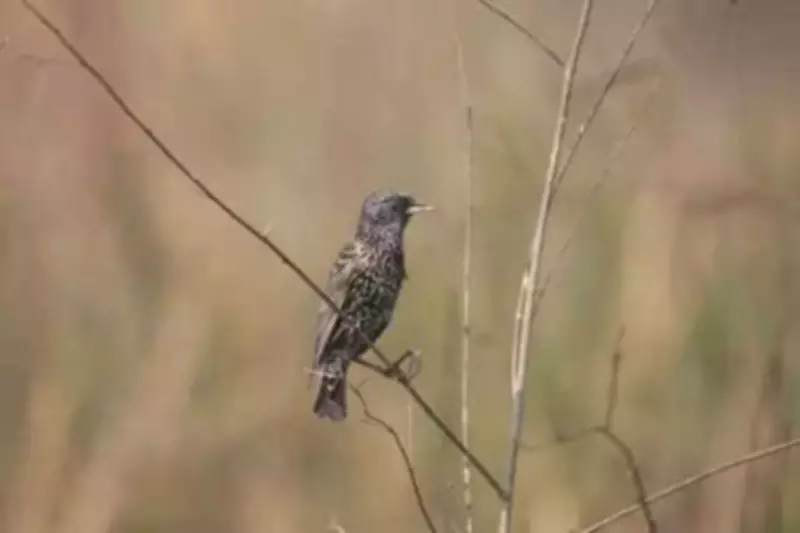
- Common starling spotted in Baruipur by Sujit Kumar Mandal
- Hodgson's bushchat recorded in Bolpur both before and during the GBBC
Kanad Baidya of BWS emphasized the importance of the Hodgson's bushchat record from Bengal, noting its significance for regional bird documentation.
Event Background and Methodology
Sujan Chatterjee of the Birdwatchers' Society explained the GBBC's origins and methodology: "Under the four-day event that started in 1998 by the Cornell Lab of Ornithology and National Audubon Society, birdwatchers go out, count birds, and upload the data on eBird — an online database of bird observations."
When asked why Bengal's species count has remained around the 500+ mark for several years, Chatterjee suggested several factors: "More people listing around Kolkata, the dates clashing either with Madhyamik or HS examinations may be some of the reasons." He added that increased efforts through bird walks and campus events aim to encourage broader participation, particularly among students.
Notable Contributors and Institutional Participation
The top observers on Bengal's species list were Subhra Pakhira with 273 species, Baharuddin Sk with 245 species, and Sayanta Basak with 169 species. Santanu Manna provided additional statistical insights: "Each district submitted at least three checklists. The number of species recorded in every exercise over the past four years is 382, while the number of species recorded only this year is 6. The number of species recorded during the last four years but not this year is 25."
Several educational institutions across Bengal participated actively in the count, including:
- IIM Joka
- Presidency University
- Durgapur College
- Bijoygarh Jyotish Ray College
- Shyampur Siddheswari Mahavidyalaya in Howrah
Chatterjee highlighted the growing efforts to expand birdwatching participation: "More camps and campus bird walks are being held to encourage citizens, including students, and ignite the passion of birding among them."
While Kerala led India in checklist submissions with 12,702+ entries, Bengal's consistent performance in species diversity underscores the state's exceptional avian habitat and dedicated birdwatching community. The GBBC continues to serve as a vital tool for monitoring bird populations and promoting conservation awareness across India.