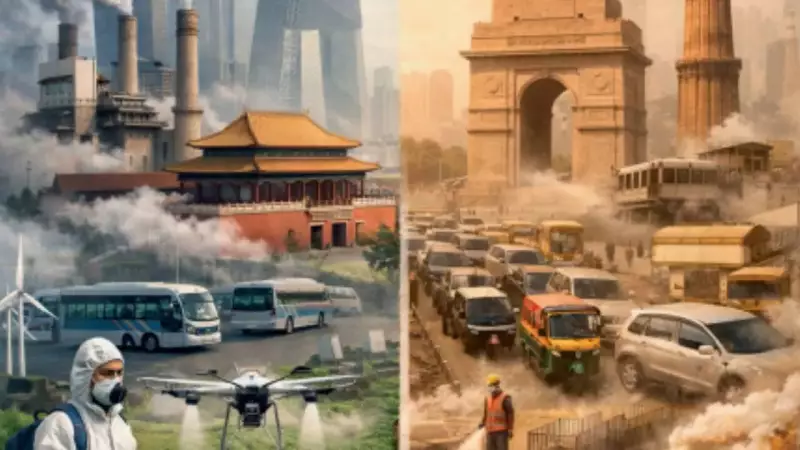
The parallels between the toxic air choking Beijing and Delhi have been debated for over ten years. This discussion was reignited recently when the spokesperson for the Chinese Embassy in India took to social media platform X to highlight the successful measures implemented by the Chinese capital to clean its skies. This move has put a renewed spotlight on the long, complex battle against air pollution in two of the world's most populous capitals, offering a chance to compare strategies and outcomes.
Two Decades of Policy: A Timeline of Action
Beijing's structured approach began much earlier. The city launched its first major air pollution control programme in 1998, initiating a phased battle plan. The first stage, from 1998 to 2008, targeted coal consumption, industrial and vehicle emissions, and dust. The post-Olympic period (2009-2012) saw the government taking primary responsibility, focusing on primary pollutants like SO2 and NO2, and beginning regional cooperation.
The most intense phase ran from 2013 to 2017, shifting focus to the dangerous fine particulate matter, PM2.5. This period also saw the launch of Beijing's first environmental protection police team in January 2017. In stark contrast, Delhi's monitoring capacity remains limited. While Beijing employs a network of 1,000 PM2.5 sensors to calculate its Air Quality Index (AQI), Delhi operates only around 40 such sensors.

In India, the Environment Pollution (Prevention and Control) Authority was established in 1998, issuing orders on road dust and vehicles. Later, the Commission for Air Quality Management (CAQM), formed in 2020, rationalised the Graded Response Action Plan (GRAP), which triggers actions based on AQI levels, though enforcement relies on state governments.
Shared Challenges and Divergent Strategies
Both megacities face remarkably similar hurdles. Alarming levels of ground-level ozone are a growing concern in both regions. Furthermore, seasonal pollution from stubble burning in neighbouring agricultural areas plagues Beijing and Delhi alike. Subsidies, fines, and legal actions have so far failed to fully eliminate this practice in either country.
However, their strategies in key areas show significant differences:
Tackling Coal and Industry
Beijing aggressively implemented a coal-to-gas policy in 2005, pushing industries and households to transition. By 2017, this reduced coal combustion by nearly 11 million tonnes. The government offered substantial subsidies for heating renovations and incentives for high-polluting enterprises to either shut down or install exhaust treatment.
In Delhi, the Badarpur thermal power station was shut down permanently in October 2018, though no formal study on its air quality impact exists. All registered industrial units in Delhi now operate on 100% piped natural gas (PNG), with most industries in the National Capital Region having shifted to cleaner fuels.
Controlling Vehicular Pollution
Beijing phased out old vehicles equivalent to BS-III and BS-IV standards, a move considered its most significant contributor to clean air. It backed this with financial subsidies for scrapping old cars and, between 2014 and 2017, offered up to 60% subsidy for purchasing personal electric vehicles (EVs).
Delhi has also imposed curbs on old vehicles, but these face legal challenges. Its current EV policy, introduced in 2020, provides purchase subsidies—such as Rs 5,000 per kWh for two-wheelers—and a new EV policy 2.0 has been proposed. Notably, Delhi offers no direct incentives for CNG vehicles, though they are exempt during GRAP restrictions.
Managing Private Car Usage
Here, the divergence is stark. Beijing employs a lottery system for buying new vehicles and enforces driving restrictions, such as banning private cars from roads one weekday per week based on license plates.
Delhi has no restrictions on purchasing new vehicles. The Odd-Even scheme was introduced only as an emergency measure and was later shelved, reflecting a different political and public acceptance threshold for such direct interventions.

The Road Ahead for Delhi
The comparison underscores that Beijing's journey, spanning over two decades, involved sustained, stringent, and state-driven policy enforcement across multiple sectors simultaneously. Delhi's efforts, while significant in areas like industrial fuel conversion, appear more reactive and face consistent enforcement hurdles. The data disparity in monitoring alone highlights a gap in systemic capacity building. For Delhi and India's National Capital Region, the lesson may lie not in copying Beijing's model directly, but in adapting its principles of long-term planning, substantial investment in clean technology subsidies, and unwavering regulatory commitment to a democratic context. The clean air battle is a marathon, not a sprint.