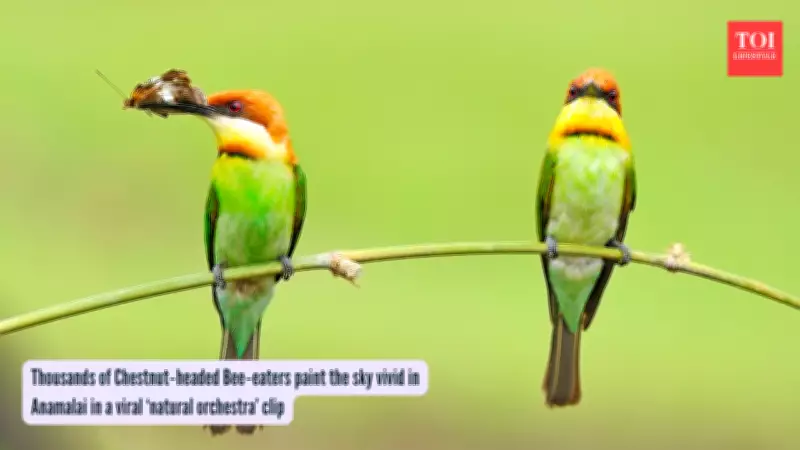
Thousands of Chestnut-Headed Bee-Eaters Create 'Natural Orchestra' in Tamil Nadu
Nature consistently delivers awe-inspiring moments that appear almost cinematic, from vibrant avian displays to bioluminescent marine life. A recent viral video from the foothills of the Anamalai Tiger Reserve in Tamil Nadu has captured one such extraordinary event, showcasing thousands of Chestnut-headed Bee-eaters in a mesmerizing, orchestral formation that has captivated viewers worldwide.
A Stunning Natural Spectacle in Anamalai
The remarkable footage was shared by IAS officer Supriya Sahu, who described it as depicting birds "at the foothills of the Anamalai Tiger Reserve, thousands of Chestnut-headed Bee-eaters paint the sky before coming together to roost." The video, credited to wildlife photographer @sriram_murali, shows the birds executing tightly coordinated aerial maneuvers before settling en masse into trees, their collective calls creating a rhythmic chorus that many have likened to a wild orchestra.
In her Instagram reel, the photographer explicitly noted, "Thousands of Chestnut-headed Bee-eaters gathered at the foothills of Annamalai Tiger Reserve to roost," and added, "This is not AI!" This clarification came in response to online speculation that the scene might be digitally generated, underscoring its authentic and rare nature.

Viewers have expressed amazement at the spectacle, with comments ranging from "What a beautiful song to cherish" to expressions of disbelief from birdwatchers accustomed to seeing only small groups. One observer remarked, "I thought I was lucky when I saw six or seven together. Wow," highlighting the exceptional scale of this gathering.
Why Do These Birds Gather in Such Large Numbers?
In her social media post, Ms. Sahu provided insights into the behavioral reasons behind this massive congregation. She explained that the birds assemble primarily for safety and survival, with roosting together serving multiple critical functions:
- Predator Defense: Large groups reduce individual risk from predators in open habitats.
- Communication: Constant vocalizations help maintain flock cohesion and coordination.
- Hunting Efficiency: Collective foraging improves success in capturing insects like bees and wasps.
Ms. Sahu further framed this behavior as a metaphor for "strength in togetherness," transforming a natural phenomenon into a lesson in unity and collective resilience. Wildlife reports indicate that Chestnut-headed Bee-eaters are typically found along forest edges and open landscapes, where their bright plumage and agile, looping flight make them visually striking against the backdrop of trees and grass.
The Ecological Importance of Chestnut-Headed Bee-Eaters
Beyond their aesthetic appeal, these birds play a vital ecological role. As insectivores, they primarily feed on bees, wasps, and other insects, helping to naturally control pest populations in their habitat. Their group foraging and consistent return to specific roosting sites also make them valuable indicator species for monitoring the health of open-forest and edge ecosystems, particularly around protected areas like the Anamalai Tiger Reserve.
This viral event serves as a powerful reminder of nature's intricate balance, where beauty and survival strategies intertwine to create moments of profound wonder. It underscores the importance of preserving such habitats to ensure these spectacular displays continue to inspire future generations.