The fate of your favorite summer mango milkshake, the mustard tadka in your dal, and the spices in your biryani rests on a tiny, vanishing workforce: bees. Across Indian farmlands, a silent crisis is unfolding as bee populations plummet, taking with them the crucial pollination needed for onions, mangoes, apples, mustard, and melons. This decline, driven by pesticides, monoculture farming, habitat loss, and extreme weather, is already hitting crop yields and threatening food security.
The Stark Reality on the Ground: Yields Plummet as Bees Disappear
The impact is no longer theoretical; it's showing in stark numbers. Raghavendra Sandhikar, managing director of hybrid seed company United Genetics India, reported a dramatic drop in output. His firm works with over 700 farmers in Maharashtra and Karnataka on crops like cucumber, tomato, and capsicum. "Onion seed production has dropped by 60% this year," Sandhikar revealed. He attributed this to erratic weather and a drastic fall in bee numbers.
"February and March were unusually hot, which threw off flowering cycles. Mangoes bloomed on time, but onions matured early, and the bees didn't turn up," he explained. Bee numbers have fallen by half this year, leading to the severe shortage in onion seeds that will eventually affect growers. Sandhikar warned that other crops like pomegranate and custard apple could also face pollination failure.

From Pest to Pet: Pune's Bee Rescue Mission Scales Up
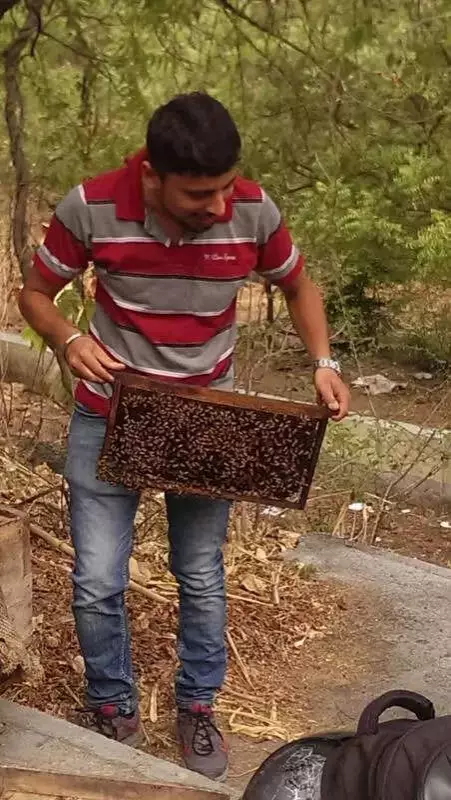
In the face of this crisis, Pune-based Amit Godse and his initiative Bee Basket are racing against time. They rescue hives, relocate colonies, and work to rebuild pollinator populations. Godse, who started in 2014 after a Khadi Village Industries Board beekeeping course, stresses this is a policy issue, not a pest problem. "If bees don't return to our farms in strength, food security will erode. Saving bees is the only way to ensure that your plate stays full," he stated.
His nine-member team handles logistics, outreach, and operations, having trained over 250 bee rescuers in metros like Mumbai, Delhi, Kolkata, and Bengaluru. Their educational sessions have reached over 10,000 people. After Prime Minister Narendra Modi praised Godse's work on 'Mann Ki Baat' in May, calls for humane hive removal surged.
"We get over 10 calls from the Pune and Mumbai region per day," Godse said. This demand sparked the 'Pest to Pet' initiative, which trains people to become professional, humane bee rescuers. These rescuers can earn around ₹25,000 per month, providing a livelihood while saving bees and aiding farm pollination.
Urban Havens vs. Farmland Deserts: A Troubling Paradox
Ironically, cities often host more beehives than farms. Urban bees benefit from floral diversity in balcony gardens, regular water from birdbaths, and built structures for hives. Farmlands, however, have become hostile due to pesticides, single-crop monoculture, and water scarcity, offering bees barely one or two months of honey-gathering. "We're forcing bees out of the very spaces that need them the most," Godse lamented.
Farmers and activists echo this concern. Sugar cane farmer Ganesh Dongre from Latur, part of the Paani Panchayat attending Bee Basket's sessions, noted that melon growers had to use jaggery waste to attract bees—a shocking indicator of their scarcity. Abhijit Patil, a seed saver from Ratnagiri, blames logging, mining, and monoculture for the decline. On his farm in Morde, mango tree pollination has seriously worsened over 5-10 years.
"These monoculture hybrids don't support healthy ecosystems," Patil said. He warned that without diversity and urgent action, India could witness colony collapse events like those seen in almond farms abroad.
11 Years and 17,000 Hives: A Documentary-Worthy Rescue Legacy
The scale of Bee Basket's work is monumental. One rescue in February 2019 near Harihar Fort in Nashik involved a 300km drive and a 12-hour overnight operation to save a massive hive blocking a forest path. This mission was featured in an award-winning short film, The Bee Rescuer (2019).

In total, over the last 11 years, Godse's team has rescued and relocated more than 17,000 beehives from construction sites, community toilets, gardens, and abandoned buildings. These hives are moved to farms and eco-conscious corporate campuses in Mumbai and Pune. "If you consider 50,000 bees per hive, that's hundreds of millions of bees protected," Godse calculated, highlighting a grassroots effort that is now vital for India's agricultural future.