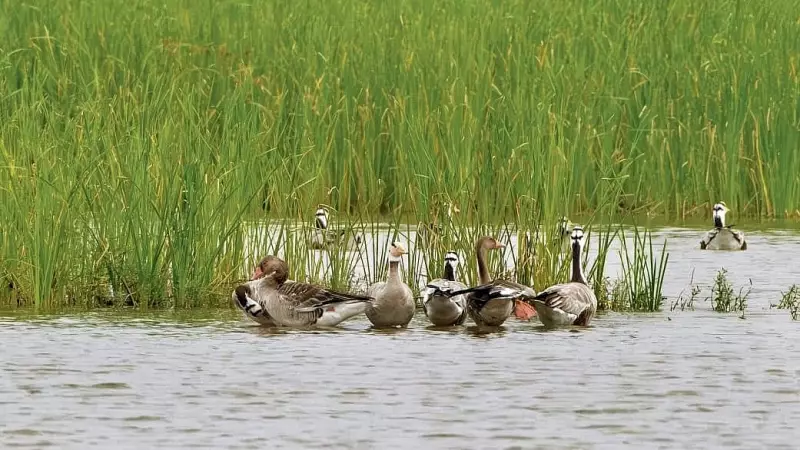
A major migratory bird sanctuary in Karnataka is facing an unexplained and worrying phenomenon this season. Thousands of Bar-headed geese, known for their high-altitude Himalayan migrations, have left their traditional wintering ground near Gadag much earlier than usual, with their numbers plummeting to a fraction of the norm.
A Drastic Drop in Numbers
Observers and wildlife enthusiasts reported a startling sight at the lake sanctuary on Sunday, January 5, 2026. Instead of the vast, noisy flocks that typically grace the waters, only an estimated 700 to 1,200 birds were visible. This count represents a severe decline that has sparked concern among conservationists.
In a typical year, this specific lake in the Gadag region plays host to a significantly larger population. An estimated 7,000 Bar-headed geese usually arrive at this water body by November, transforming it into a vibrant hub of avian activity. These birds traditionally use the sanctuary as their winter home, staying put until the last week of March before embarking on their arduous journey back to breeding grounds.

An Unseasonal and Premature Exit
The core of the current concern is the timing of their departure. The early disappearance of the geese in early January, a good two-and-a-half months before their scheduled leave, suggests significant environmental pressures. Their premature exit breaks a long-established seasonal pattern, indicating that conditions at the lake may no longer be suitable for their prolonged stay.
While the exact reasons for this early mass exodus are still under investigation, experts point to several potential factors that could have turned the sanctuary inhospitable. These include possible changes in water quality, depletion of food sources like aquatic vegetation, increased human disturbance in the vicinity, or even broader climatic shifts affecting their migratory instincts and energy needs.
Implications for Local Ecology and Conservation
The sudden absence of these key migratory birds has deeper implications beyond just the visual spectacle. Bar-headed geese play a crucial role in the local ecosystem. Their movement and feeding habits help in nutrient cycling within the wetland. Their drastic reduction and early departure serve as a potent bio-indicator, signaling potential distress in the lake's ecological health.
This event underscores the fragile nature of migratory routes and stopover sites. It calls for urgent attention from the state's forest and wildlife departments to conduct a thorough assessment of the lake's condition. Investigating water quality, food availability, and human impact factors is now critical to understand what triggered this unusual behavior and to prevent the potential loss of an important wildlife habitat.
The situation at the Gadag lake is a clear reminder that the well-being of migratory species is intricately tied to the health of their seasonal habitats. Protecting these sanctuaries is essential not just for the birds, but for maintaining regional biodiversity and ecological balance.