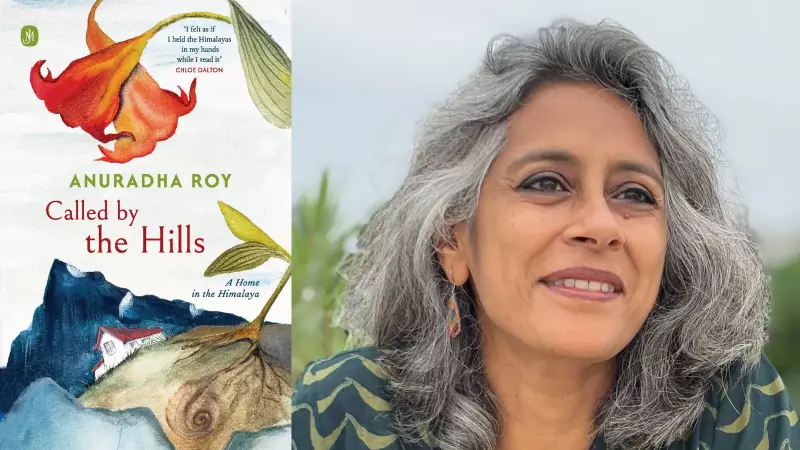
In her first major work of nonfiction, acclaimed author Anuradha Roy delivers a powerful and intimate portrait of life in the Kumaon Himalayas, while sounding a stark alarm about the escalating ecological crisis. The book, titled 'Called by the Hills: A Home in the Himalayas', was released in late December 2025. Based in Ranikhet for over 25 years, Roy, 58, weaves together personal memoir, keen observation, and urgent environmental commentary.
A Personal Chronicle of a Changing Landscape
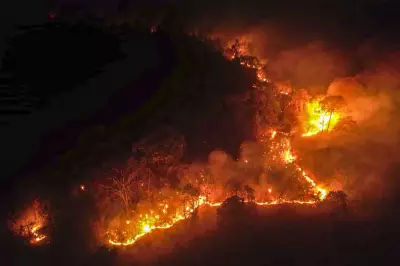
The collection of essays moves between the deeply personal—such as building a home with her husband, publisher Rukun Advani, and nurturing a garden—and the broadly observational. Roy documents the everyday rhythms of life in Ranikhet, from conversations in Sadar Bazar to the loyal companionship of dogs. However, these peaceful moments are increasingly shadowed by the visible impacts of a warming planet and unchecked development.
Roy, who spent her early childhood in tents in the eastern Himalayan foothills where her father was a field geologist, describes a profound, lifelong connection to the mountains. This affinity informs her detailed, caring prose, which is interspersed with her own watercolour paintings. The book acts as both a literary and visual act of preservation, asking what it means to live attentively in a place that is ancient, fragile, and under threat.

The Unmistakable Signs of Climate Disruption
Speaking in an interview, Roy highlighted the dramatic changes witnessed over a quarter-century. "The peaks on the horizon are mostly bare, black rock, with very little snow on them," she noted, contrasting this with memories of winters where the same peaks were blindingly white. This personal archive of change is echoed in local conversations; vegetable vendors in the mandi now explicitly discuss 'climate change', linking it to the destruction of Himachal Pradesh's apple crop due to lack of winter rain.
The ecological shifts are granular and pervasive. Roy points to vanishing wildlife, such as foxes and flying squirrels, whose disappearances are precursors signaled by a flurry of development projects. Nocturnal leopards now forage in populated areas during daytime, and migratory bird patterns have become erratic. "A small patch of land is enough to demonstrate how awry things have gone," she states, referring to parched earth and disrupted flowering times.
Greed Over Survival: A Stark Diagnosis
Roy's critique extends beyond observation to a direct condemnation of the forces driving environmental degradation. She draws a parallel to Philip K. Dick's dystopian novel 'Do Androids Dream of Electric Sheep?', but with a contemporary villain. "Today, in place of a nuclear bomb, we have the limitless greed of oligarchs and dictators turning the earth into a wasteland," she asserts. This greed, she argues, often supersedes genuine economic survival in both large-scale government infrastructure projects and individual actions in Uttarakhand.
The book grapples with the complex tension between belonging and intrusion in the hills, a state where migration, land ownership, and development are politically sensitive. Roy acknowledges that urban settlers and tourists are economically vital yet are also resented as instruments of dispossession. Her wisdom for newcomers is to approach with curiosity, respect, and a willingness to integrate slowly and give back to the community.
Ultimately, 'Called by the Hills' is layered with a sense of deep geological time—from ancient deodar trees to frequent earth tremors—that underscores human inconsequentiality. Yet, it firmly roots itself in the present crisis, making a compelling case for protective responsibility towards one of the planet's most fragile and vital ecosystems.