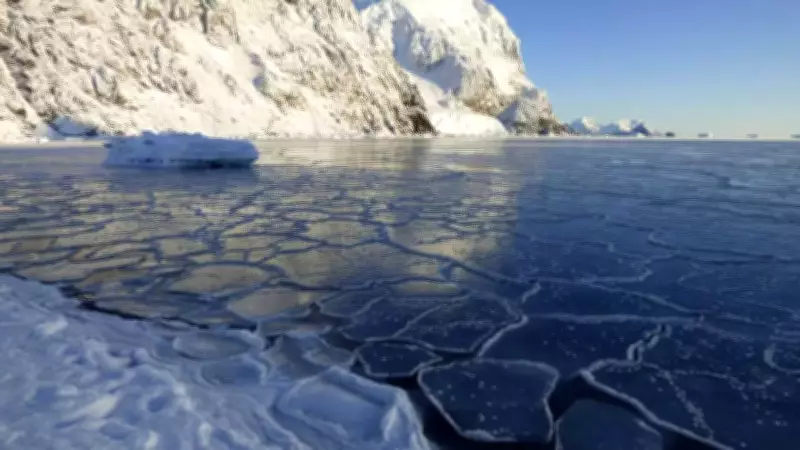
Antarctica: The World's Largest Desert Where Heatwaves Are Impossible
When most people think of deserts, they envision vast sand dunes, scorching winds, and relentless heat. The Sahara or Arabian Desert typically come to mind, along with travel advice emphasizing sunscreen, sunglasses, and ample water. Heatwaves and deserts often seem synonymous in popular imagination.
However, there exists one desert that completely shatters this conventional perception. This desert features no dunes, no burning sun, and absolutely no risk of heatwaves. Instead, it remains perpetually covered in ice and snow. This remarkable place is Antarctica, officially recognized as the largest desert on Earth.
Antarctica's Official Desert Classification
According to the National Aeronautics and Space Administration (NASA), a desert is defined as any region receiving less than 250 millimeters of precipitation annually, whether as rain or snow. Antarctica, despite its icy appearance, receives an average of just 25 centimeters (10 inches) of precipitation each year, making it drier than many famous hot deserts.

National Geographic confirms that Antarctica spans approximately 14 million square kilometers, surpassing even the Sahara Desert in size. This immense frozen continent represents the world's largest desert by area, where extreme conditions make survival challenging for most plants and animals.
Why Heatwaves Cannot Occur in Antarctica
A heatwave occurs when temperatures rise significantly above a region's normal average for consecutive days. In Antarctica, such warming events are scientifically impossible due to several interconnected factors:
- Extreme Cold and Dense Air Masses: The air over Antarctica remains exceptionally cold and dense year-round. Cold air cannot retain moisture effectively, limiting cloud formation and precipitation. The British Antarctic Survey notes that powerful circumpolar winds isolate the continent from warmer air masses, creating a natural barrier against temperature increases.
- High Albedo Effect: Antarctica's massive ice sheet reflects up to 80% of incoming solar radiation back into space, according to NASA. This reflection, known as the albedo effect, prevents the land from absorbing heat. Even during summer months with continuous daylight, temperatures remain far below freezing.
- Elevation and Atmospheric Conditions:
- Antarctica is Earth's highest continent, averaging 2,500 meters above sea level
- Higher altitude means thinner air that retains less heat
- The central plateau experiences particularly frigid conditions due to its elevation
- Permanent Frozen Ground: With no exposed soil to absorb and store heat, temperatures cannot accumulate as they do in hot deserts. The combination of reflective ice, cold air, high altitude, and atmospheric isolation makes heatwaves practically impossible.
Record-Breaking Cold Temperatures
Antarctica holds the distinction of recording Earth's lowest natural temperature. On July 21, 1983, scientists at Vostok Station documented minus 89.2 degrees Celsius, according to the British Antarctic Survey. This remains the coldest directly measured temperature on our planet.
Subsequent satellite data analyzed by NASA suggests temperatures in East Antarctica may have plummeted even further, potentially reaching around minus 98 degrees Celsius. These extreme readings demonstrate how far Antarctica remains from experiencing anything resembling a heatwave.
Understanding Desert Classification
The common misconception that deserts must be hot stems from confusing temperature with the actual defining characteristic: dryness. Both the Sahara and Antarctica qualify as deserts due to minimal precipitation, but their temperature mechanisms differ fundamentally:

- The Sahara experiences dryness due to hot descending air in subtropical high-pressure zones
- Antarctica remains dry because freezing air cannot hold moisture effectively
While coastal regions of the Antarctic Peninsula have recorded temporary temperature spikes above 18 degrees Celsius (as reported by the World Meteorological Organization in 2020), these isolated events do not constitute continent-wide heatwaves. Antarctica's interior remains deeply frozen throughout the year.
What Makes Antarctica Unique Among Deserts
Antarctica stands apart as the only desert that combines multiple extreme characteristics:
- It is Earth's coldest continent
- It experiences the strongest winds
- It has the highest average elevation
- It represents the world's largest desert by area
These factors work synergistically to maintain Antarctica's frozen state. Even during summer months with 24-hour sunlight, reflected solar energy, high elevation, and cold atmospheric conditions prevent sustained warming.
The scientific consensus from organizations like NASA confirms that Antarctica's extreme cold results from low precipitation, high albedo, elevated terrain, and atmospheric isolation. This frozen desert serves as a powerful reminder that nature often defies human assumptions, presenting us with landscapes that challenge our conventional understanding of geographical classifications.