Antarctic Glacier Collapses at Unprecedented Speed, Losing Manhattan-Sized Ice in 60 Days
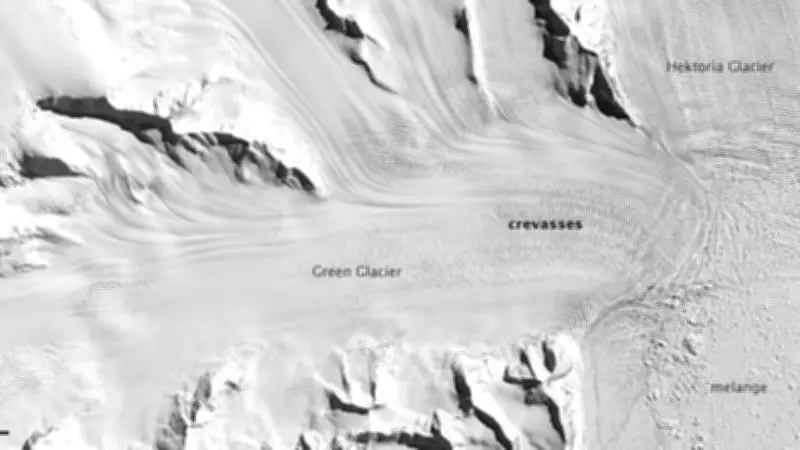
In a stunning development that has sent shockwaves through the scientific community, researchers at the University of Colorado Boulder's Cooperative Institute for Research in Environmental Sciences (CIRES) have documented the catastrophic collapse of West Antarctica's Hektoria Glacier. Over a mere 60-day period, this massive ice formation retreated an astonishing 8 kilometers, marking the fastest ground-based glacial retreat ever observed in recorded history.
The 'Lightning-Fast' Melting Event
The disintegration occurred with such rapidity that scientists described it as "lightning-fast" and "out of this world." During this brief window, an ice mass roughly equivalent to the entire island of Manhattan—approximately 60 square kilometers—shattered into the Weddell Sea. This unprecedented event was verified through high-resolution satellite imagery and seismic monitoring that detected what researchers term "glacier earthquakes" as enormous ice blocks calved into the ocean.
Why Did Hektoria Glacier Collapse So Rapidly?
The primary culprit behind this dramatic collapse was a unique geological feature known as an ice plain. Unlike most glaciers that are anchored by rough, uneven bedrock, Hektoria Glacier rested upon an exceptionally flat underwater terrain. As lead researcher Dr. Naomi Ochwat explained in the study, once the glacier thinned sufficiently due to warming ocean waters, it lost contact with this bedrock and became buoyant.

"There was almost no friction to keep it from sliding forward," Ochwat stated. "This created a chain reaction that resulted in previously undocumented retreat speeds."
The glacier's rapid thinning—just a few meters was enough—eliminated the downward pressure that had previously kept it grounded. Once buoyant, the entire ice mass began moving uncontrollably toward the sea.
Historical Context: From Larsen B to Hektoria
According to research published in the Journal of the European Geosciences Union, the stage for this collapse was set two decades earlier with the disintegration of the Larsen B Ice Shelf in 2002. This massive ice shelf had previously acted as a crucial "bottleneck," slowing the flow of glaciers like Hektoria into the ocean.
With this natural barrier gone, Hektoria Glacier had been thinning and accelerating for twenty years. Exceptionally warm ocean currents then infiltrated beneath the glacier, eroding its base and ultimately causing it to lift completely off its grounding line—the critical point where ice makes contact with the seabed.
Broader Implications for 'Doomsday Glaciers'
The collapse of Hektoria Glacier serves as a critical warning about larger, more dangerous ice masses in West Antarctica. While Hektoria is relatively small compared to giants like Thwaites Glacier (often called the "Doomsday Glacier"), scientists note that much of West Antarctica rests on similar flat, deep bedrock.
"This event suggests that larger, higher-stakes glaciers on similar bedrock topographies may be at much greater risk for rapid demise than previously considered," warned Dr. Ochwat.
If these massive ice formations experience comparable thinning due to climate change, they too could collapse rapidly through the same buoyancy mechanism. This new understanding fundamentally revises scientific estimates about how quickly grounded ice can disappear, potentially accelerating sea-level rise projections.
Unprecedented Retreat Documented
From early 2022 through early 2026, Hektoria Glacier retreated more than 25 kilometers total. However, the most dramatic period occurred between May and August 2022, when it lost those 8 kilometers in just two months. This retreat represents not just a local phenomenon but exposes a structural weakness in earlier ice stability estimates, demonstrating that deep grounded ice has lost its insulation against Southern Ocean warming.
The research team emphasizes that this event acts as a "canary in the coal mine" for Antarctica's future, highlighting vulnerabilities that could have global consequences for coastal communities worldwide as ice melt contributes to rising sea levels.