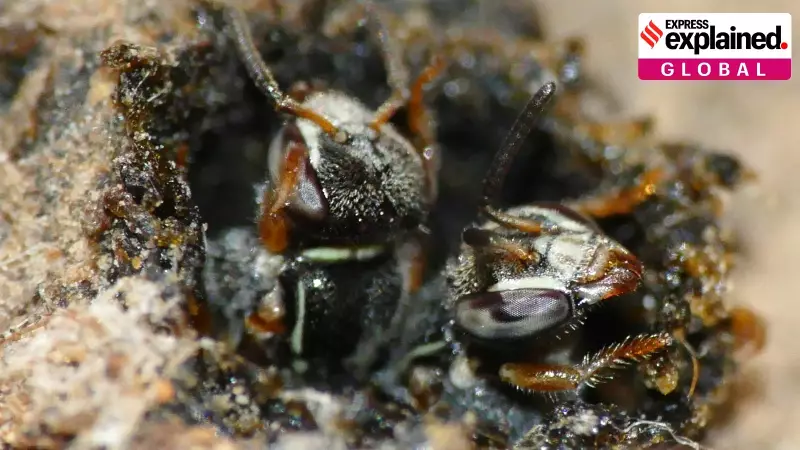
In a landmark decision for global conservation, Amazonian stingless bees have become the first insects in the world to be granted formal legal rights. This historic move was enacted earlier this month by two municipalities in Peru—Satipo and Nauta—through a new ordinance. The action aims to provide robust protection for these ancient pollinators, who have been facing escalating threats from deforestation, climate change, and wildfires.
What Makes Stingless Bees So Significant?
Stingless bees, as their name implies, are a group of bees that either lack a stinger or possess one that cannot inflict serious harm. They are native to tropical regions worldwide, with roughly half of the 500 known species residing in the Amazon basin. Peru itself is home to more than 170 species.
These bees are not just another insect; they are living relics. For approximately 80 million years—since the age of the dinosaurs—they have played a crucial role in sustaining tropical forests as vital pollinators. In the Amazon, they are responsible for pollinating over 80% of the flora, including economically important crops like cacao, coffee, and avocados.

Beyond ecology, stingless bees are deeply woven into the cultural fabric of Indigenous communities such as the Asháninka and Kukama-Kukamiria peoples. "Within the stingless bee lives Indigenous traditional knowledge, passed down since the time of our grandparents," said Apu Cesar Ramos, president of EcoAshaninka. The bees' honey, which is more liquid and has a sweet-sour taste compared to commercial honey, is used traditionally as medicine. Modern studies confirm it possesses anti-inflammatory, antibacterial, and antiviral properties.
The Mounting Threats in the Amazon
The survival of these invaluable insects is under severe pressure. The primary danger is deforestation driven by illegal logging, agricultural expansion, and cattle grazing, which destroys their natural habitats. Compounding this crisis are increasingly frequent and intense forest fires in the Amazon region.
Climate change adds another layer of vulnerability. Rising temperatures are forcing stingless bee colonies to migrate to higher, cooler elevations, distancing them from the indigenous communities that rely on them. Researcher Vásquez Espinoza of Amazon Research Internacional highlighted this growing challenge, noting community members report that finding bees now takes hours of searching instead of the previous 30 minutes.
Understanding the New Legal Framework
The municipal ordinance did not emerge in a vacuum. It builds upon a 2024 national law in Peru that recognized stingless bees as native species, a status that mandates protection under Peruvian law. The new ordinance strengthens this by explicitly recognizing the bees' inherent rights.
These legally established rights include:
- The right to exist and persist.
- The right to maintain healthy populations.
- The right to have their habitats restored.
- The right to live in a pollution-free environment.
Critically, the law was developed in collaboration with Asháninka leaders, acknowledging that indigenous rights and cultural survival are inextricably linked to the well-being of the stingless bees. While currently active only in Satipo and Nauta, significant advocacy efforts are underway to expand this protection into a national law across Peru.
This pioneering step sets a global precedent, moving beyond viewing species merely as resources to be managed and instead recognizing them as rights-bearing entities in the eyes of the law. It represents a fusion of modern conservation science with ancient indigenous wisdom, aiming to secure a future for a creature that has been a cornerstone of Amazonian ecosystems for millions of years.