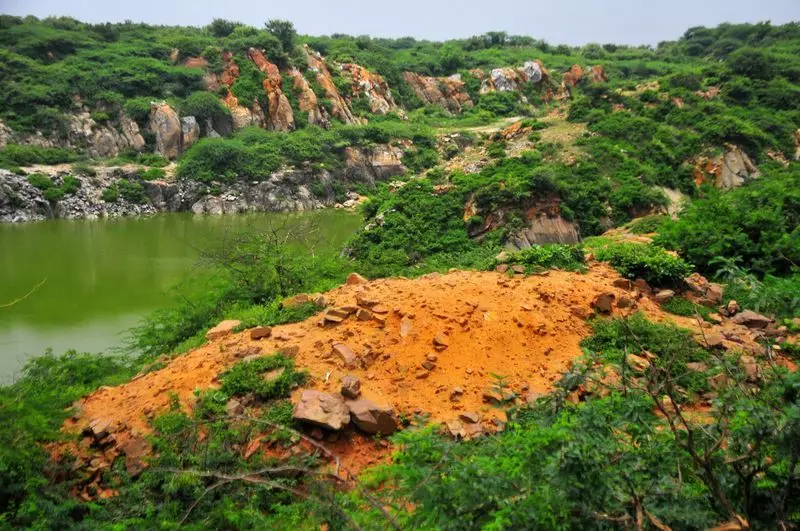
In a significant move for environmental conservation, the Indian government has declared that a vast majority of the Aravalli range in the national capital territory is now under strict protection. Union Environment Minister Bhupender Yadav delivered this crucial update, putting a complete stop to mining activities in the region.
A Landmark Declaration for Delhi's Green Lungs
Union Minister for Environment, Forest and Climate Change, Bhupender Yadav, made a definitive statement in the Rajya Sabha. He clarified the legal status of the ecologically sensitive Aravalli hills within Delhi's boundaries. The minister confirmed that mining is not permitted anywhere in the Aravalli range of Delhi. This announcement comes as a firm response to concerns about the degradation of this vital natural barrier.
The protection is backed by a robust legal framework. Minister Yadav cited the Delhi Minor Mineral Rules, 2015, and the stringent guidelines laid out by the Supreme Court of India and the National Green Tribunal (NGT). These regulations collectively form an ironclad shield against any extractive industrial activities in the area.

The Extent of Protection: A Closer Look at the Numbers
The scale of the conservation effort is substantial. According to the data presented by the minister, approximately 90% of the Aravalli range in Delhi has been granted formal protection status. This safeguarded land is officially classified as either Reserved Forest, Protected Forest, or is part of the Asola Bhatti Wildlife Sanctuary.
This classification is not merely administrative. It carries the full weight of environmental law. Activities like mining, quarrying, or any form of land degradation are completely illegal on these protected lands. The remaining portions of the range are also under scrutiny, with the government actively working to bring them under similar protective measures to ensure the integrity of the entire ecosystem.
Legal and Environmental Implications
This declaration by the Environment Ministry has far-reaching consequences. First, it provides absolute clarity to enforcement agencies and local authorities. Any attempt to initiate or continue mining operations can now be met with immediate legal action. Second, it empowers environmental activists and citizen groups by solidifying the legal standing for their conservation efforts.
The Aravalli range is not just a collection of hills; it is a critical ecological feature for North India, particularly for the National Capital Region (NCR). It acts as a natural barrier against desertification, helps in groundwater recharge, supports biodiversity, and serves as the region's green lungs. Protecting it is essential for combating air pollution and maintaining ecological balance in one of the world's most populated urban areas.
The government's stance, as communicated by Bhupender Yadav, sends a powerful message about prioritizing long-term ecological security over short-term resource extraction. It aligns with broader national goals of forest conservation, climate change mitigation, and sustainable urban planning. The move is expected to set a precedent for the protection of other vulnerable hill ranges and forest ecosystems across the country facing similar threats from unchecked industrial activity.