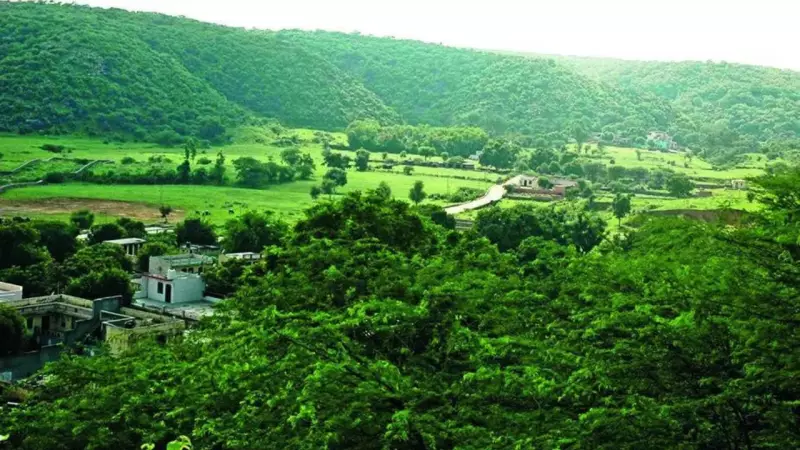
The ecologically fragile Aravali mountain range in Rajasthan continues to bear the heavy burden of extensive mining activity, with over 1,230 active leases, a majority of which are embroiled in legal disputes. This sprawling network of excavations covers a staggering 17,393 hectares within the ancient hill system, raising serious environmental concerns.
A Landscape Under Legal and Ecological Siege
According to a senior state mining department official, the current situation is complex. Most of the mining leases in the Aravalis are under dispute and their cases are pending in various courts. This legal limbo has resulted in a patchwork of operations, with some mines shut down while others continue to function. The issue gained renewed attention when the Rajasthan mining department's proposal to lease out additional pits in late 2025 was overruled by the Central government.
The Centre imposed a blanket ban on granting any new mining leases in the mountain range. This decisive move came in response to significant public outcry over a proposed "new definition" of the Aravalis, which many feared would open up more areas for excavation. An official source revealed that the state had already issued notifications for 126 new leases in November 2025, with 50 of those located within districts falling under the Aravali region.

District-Wide Concentration and Environmental Toll
The scale of mining penetration becomes starkly clear when examining district-level data. Rajsamand district alone hosts more than 540 mining leases, making it the epicenter of this activity. It is followed by Udaipur with 162 leases and Jaipur with 139. The combined tally from Alwar, Sirohi, and Bhilwara districts exceeds 250 leases, illustrating how deeply the industry is entrenched across the Aravali belt.
Mining expert Pradeep Singh pointed out a critical loophole: the new central ban does not apply retrospectively. This means hundreds of existing leases and permissions remain valid and operational, particularly in Rajasthan. Singh highlighted the visible and often irreversible environmental damage in areas with active leases. "Hills have been hollowed out, forest cover has thinned dramatically, and natural drainage systems have been severely disrupted," he stated, painting a grim picture of the ecological consequences.
The State's Vast Mining Footprint
The mining footprint in Rajasthan extends far beyond the contested Aravali region. Statewide data reveals a massive scale of extraction, with 16,116 active mining leases across Rajasthan. Of these, approximately 10,060 are currently operational. Additionally, the state has granted nearly 18,000 quarry licences, further amplifying the impact on its landscape and resources.
Another expert, Kishore Kumawat, provided a breakdown of the area under mining within the Aravali region itself. Udaipur district accounts for the largest mined area at 6,084 hectares. It is followed by Sojat with 2,575.4 hectares, Bhilwara with 1,229 hectares, and Rajsamand with nearly 800 hectares. This data underscores the significant transformation of the terrain, raising urgent questions about sustainable land use and conservation of one of the world's oldest mountain ranges.