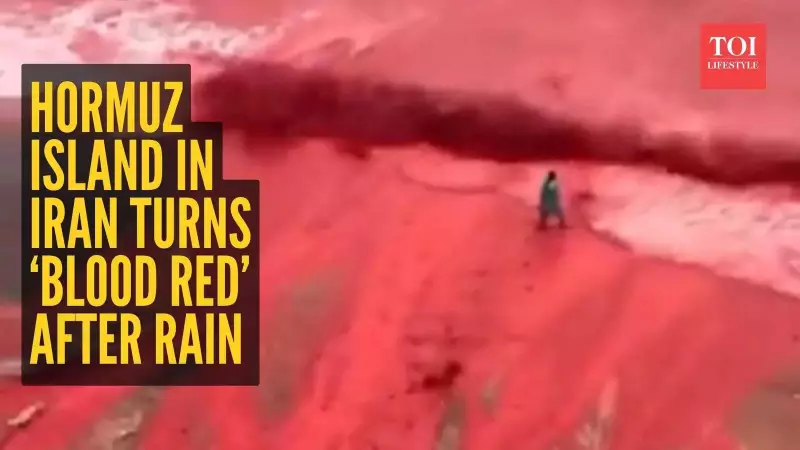
A startling visual transformation along Iran's southern coast has taken social media by storm. Following periods of heavy rainfall, footage emerging from Hormuz Island captured global attention, showcasing its beaches and shallow coastal waters dyed a deep, dramatic red. The surreal and almost otherworldly scenes prompted widespread curiosity and concern among netizens, with many questioning the origin and safety of the crimson tide.
The Science Behind the Scarlet Shores
Contrary to alarming initial assumptions, environmental and geological experts have provided a clear and reassuring explanation. The striking red colour is not a result of pollution, algal bloom, or any man-made environmental damage. Instead, it is a completely natural process tied to the island's unique geological composition, which becomes vividly apparent only under specific weather conditions.
As detailed in an NDTV report, the phenomenon is rooted in the very earth of Hormuz Island. The island is famously rich in iron, with its soil and bedrock containing high concentrations of iron oxide. A key mineral present is hematite, which inherently possesses a reddish-brown hue and is a primary ore of iron. During dry spells, this mineral gives the landscape its characteristic rusty tones, blending into the overall terrain.

How Rain Activates the Colour
The catalyst for the viral spectacle is rainfall. When heavy rain saturates the iron-rich ground, it acts as a transporting agent. The water washes over the terrain, picking up and carrying microscopic particles of hematite and other iron oxides. This mineral-laden runoff then flows downhill towards the coastline.
As the reddish water spreads across the sandy beaches and mixes with the shallow seawater, it creates the illusion of a "blood-red" sea. The effect is particularly pronounced in areas with active erosion, where more soil is mobilised. Hematite's chemical properties cause it to react and become more visually prominent when exposed to moisture, making the colour appear more intense during and immediately after rain.
Hormuz: The Island of Seven Colours
This event also sheds light on why Hormuz is nicknamed "the Rainbow Island". Its geological history has painted the land in a stunning palette of colours. Beyond the dominant red hematite, the island features vibrant streaks and patches of yellow, orange, purple, and blue, resulting from various mineral deposits and geological activity over millennia.
While these colours are a permanent feature, rainfall acts as a natural highlighter, especially for the red tones. The wet conditions enhance the contrast and saturation, turning the landscape into a dramatic, painterly vista that seems to change before one's eyes.
Is the Red Water Dangerous?
Authorities and scientists have been quick to dispel any fears. The red runoff is completely natural and poses no threat to marine life, the ecosystem, or human health. It is simply rainwater carrying naturally occurring minerals from the land into the sea. The comparison to "blood rain" is purely visual and not indicative of any harmful substance.
The viral spread of the videos primarily stems from the unfamiliarity of a global audience with Hormuz's unique geology. The sudden, dramatic change in a landscape's appearance, driven by a simple weather event, proves to be a powerful recipe for online fascination. It underscores how natural processes can create moments of breathtaking wonder, reminding us of our planet's dynamic beauty.
In conclusion, the red beaches of Hormuz Island are not a mystery or an ecological warning sign. They are a centuries-old natural process made temporarily visible by rain. For this Iranian island, such transformations are an integral part of its identity, demonstrating how the basic elements of earth, mineral, and water can collaborate to produce scenes of extraordinary beauty.