Taiwan Reports Chinese Naval Presence Near Its Territory
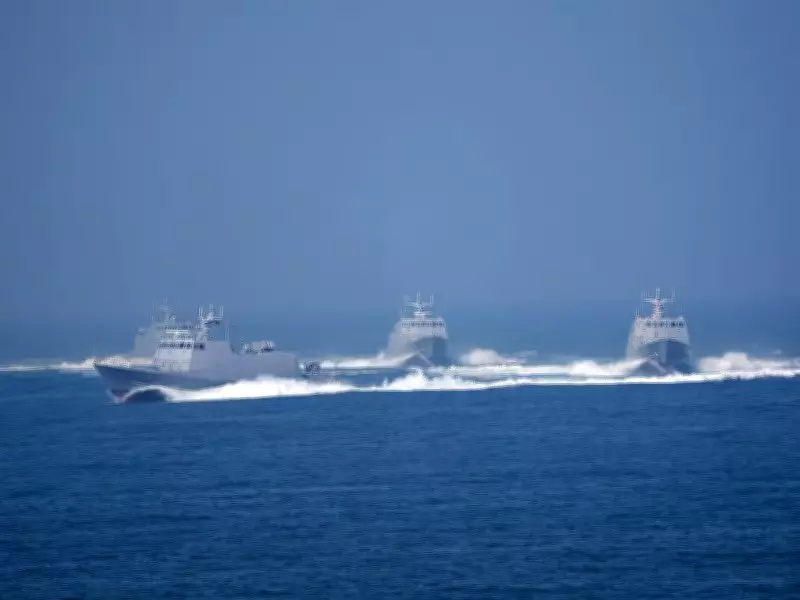
In a development underscoring the persistent military tensions in the region, Taiwan's defense ministry announced on Sunday that it had detected five Chinese naval vessels operating around its territory. The vessels were monitored for more than 24 hours, with Taiwan's military forces maintaining a state of high alert to ensure national security.
Details of the Naval Operation
The five Chinese naval ships were observed conducting operations in the waters surrounding Taiwan, a self-governing island that China claims as part of its territory. According to the Taiwanese defense ministry, the vessels included a mix of destroyers and frigates, which were tracked using radar and surveillance systems. This incident marks another instance in a series of similar activities by China, which has been increasing its military presence in the Taiwan Strait in recent years.
The Taiwanese military responded by deploying its own naval and air assets to monitor the situation closely. Officials emphasized that all necessary measures were taken to safeguard Taiwan's sovereignty and prevent any potential escalation. The defense ministry stated that the Chinese vessels did not enter Taiwan's territorial waters but operated in the adjacent areas, which are considered part of Taiwan's air defense identification zone.

Broader Context of Regional Tensions
This event occurs against a backdrop of heightened geopolitical friction between Taiwan and China. China has consistently asserted its claim over Taiwan, viewing it as a breakaway province that must be reunified with the mainland, by force if necessary. In response, Taiwan has bolstered its defense capabilities and sought international support to maintain its de facto independence.
The detection of Chinese naval vessels is not an isolated incident but part of a pattern of increased military maneuvers by China in the region. Over the past few years, China has conducted numerous military exercises and patrols near Taiwan, often involving aircraft and ships. These actions are seen as a demonstration of China's military might and a signal to Taiwan and its allies, particularly the United States, which has provided Taiwan with defensive weapons and political backing.
International Reactions and Implications
The presence of Chinese naval vessels near Taiwan has drawn attention from the international community, with many countries expressing concern over the potential for conflict in the Taiwan Strait. The United States, in particular, has reiterated its commitment to peace and stability in the region, while also affirming its support for Taiwan under the Taiwan Relations Act.
Analysts suggest that such incidents could exacerbate tensions and lead to miscalculations, especially if there is a lack of clear communication between the involved parties. The situation highlights the delicate balance in the Taiwan Strait, where any military activity can quickly escalate into a broader confrontation.
Taiwan's Defense Posture
In light of these developments, Taiwan has been actively enhancing its military readiness. The island nation has invested in modernizing its armed forces, including the acquisition of advanced fighter jets, missile systems, and naval vessels. Additionally, Taiwan has been conducting its own military exercises to prepare for potential threats.
The defense ministry's prompt reporting of the Chinese naval presence reflects Taiwan's proactive approach to transparency and deterrence. By publicly disclosing such incidents, Taiwan aims to garner international sympathy and support, while also signaling to China that it is vigilant and prepared to defend its territory.
As the situation continues to evolve, the world watches closely, aware that the Taiwan Strait remains one of the most volatile flashpoints in global geopolitics. The ongoing military activities by China serve as a reminder of the unresolved status of Taiwan and the complex dynamics at play in the Asia-Pacific region.