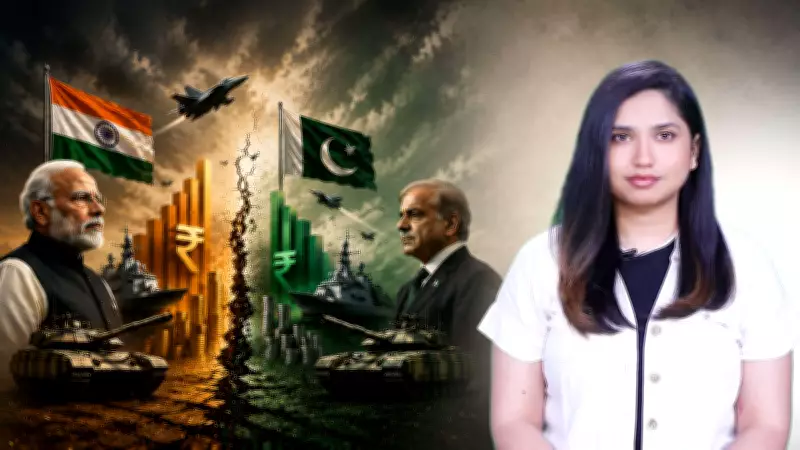
The latest report from the Stockholm International Peace Research Institute (SIPRI) highlights a significant shift in the military landscape of South Asia. India has overtaken Pakistan in the number of nuclear warheads, now estimated at 190, while Pakistan holds 170. This development underscores India's growing military capabilities and its emergence as the world's fifth-largest military spender.
India's Military Modernization
SIPRI notes that India is accelerating its military modernization efforts, focusing on expanding long-range strike capabilities and preparing for multi-front challenges. The report comes amid heightened regional tensions, particularly following the severe India-Pakistan military crisis of May 2025. India's defence budget has seen a steady increase, reflecting its strategic priorities.
Global Trends in Military Spending
The findings also point to a broader global trend of record military spending, expanding nuclear arsenals, and increasing concerns over strategic stability. Many nations are investing heavily in defence, driven by geopolitical uncertainties and regional conflicts. India's rise as a top military spender aligns with this global pattern, as countries seek to bolster their security postures.

Regional Implications
The nuclear asymmetry between India and Pakistan could have significant implications for regional stability. While India's larger arsenal may provide a strategic edge, it also raises concerns about an arms race in South Asia. SIPRI's data suggests that both countries continue to prioritize nuclear deterrence, with India focusing on a triad of delivery systems and Pakistan maintaining a smaller but credible deterrent.
India's defence spending, now ranked fifth globally, reflects its ambitions to become a major military power. The country has been modernizing its armed forces, acquiring advanced platforms, and investing in indigenous defence production. This trajectory is likely to continue, with implications for regional and global security dynamics.