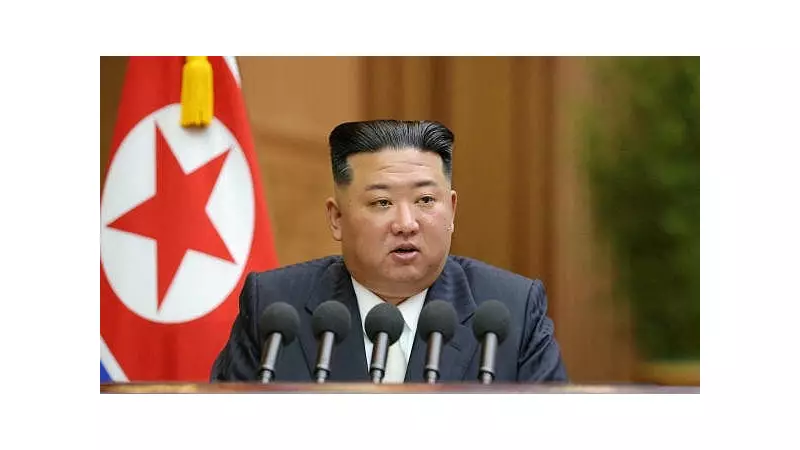
North Korean leader Kim Jong Un personally oversaw the test-firing of a new long-range missile, the country's state-run Korean Central News Agency (KCNA) reported on Tuesday. This significant military demonstration marks a notable escalation in Pyongyang's weapons development program and poses a direct challenge to international sanctions aimed at curbing its nuclear and ballistic missile ambitions.
Kim Jong Un's Direct Involvement in the Test
According to the detailed report from KCNA, Kim Jong Un guided the test launch on the ground. His direct presence underscores the high priority the regime places on advancing its strategic strike capabilities. The test was conducted to verify the technical parameters and operational reliability of the newly developed weapon system. Analysts suggest that such hands-on involvement by the supreme leader is intended to project strength and confidence in the nation's military prowess, both domestically and to the international community.
The state media did not specify the exact type of missile tested, but the description as a "long-range" weapon immediately raises concerns. North Korea's long-range ballistic missiles are designed to carry nuclear warheads and potentially threaten targets far beyond the Korean peninsula, including the continental United States. This test is part of a consistent pattern of provocative actions that violate multiple United Nations Security Council resolutions.
Timing and Strategic Implications
The timing of this missile test is particularly sensitive, coming amidst stalled diplomatic efforts and heightened geopolitical friction in the region. It serves as a stark reminder of North Korea's unwavering commitment to expanding its arsenal despite global condemnation and economic pressure. The launch is seen as a strategic signal, possibly aimed at strengthening Pyongyang's bargaining position in any future negotiations or simply asserting its military independence.
The international response is expected to be swift and critical. Neighboring South Korea and Japan, which are within range of numerous North Korean missiles, have consistently condemned such tests as threats to regional stability. The United States, a key security ally for both Seoul and Tokyo, is likely to reiterate its commitment to the defense of its partners and call for renewed diplomatic pressure on the Kim regime. This development complicates the already delicate security landscape in Northeast Asia.
Escalating Tensions and Future Outlook
This latest test-firing represents a clear escalation in North Korea's weapons testing activities. It follows a series of other missile launches conducted throughout the year, showcasing a diverse range of technologies from short-range ballistic missiles to purported hypersonic gliders. The persistent advancement of its missile program indicates that sanctions have not succeeded in halting Pyongyang's military research and development.
Looking ahead, the successful test of a long-range missile under Kim Jong Un's supervision suggests that more such demonstrations could follow. The international community faces the ongoing challenge of formulating a coherent and effective response to deter further provocations while keeping the door open for dialogue. For now, the test reinforces the grim reality of a nuclear-armed North Korea that continues to enhance its ability to deliver a potential strike over vast distances, keeping its adversaries on high alert and regional tensions simmering.