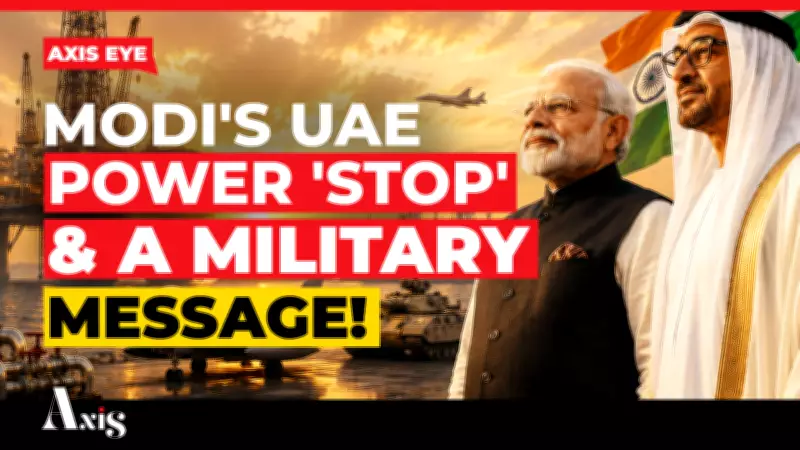
Prime Minister Narendra Modi's visit to the United Arab Emirates, officially described as a diplomatic stopover, is quietly heralding a significant shift in West Asian geopolitics. Behind the scenes, India and the UAE are deepening defence and security cooperation in ways that could reshape regional equations, especially amid rising Gulf tensions due to the Iran conflict.
Deepening Defence and Security Ties
The India-UAE partnership is moving beyond traditional oil and trade ties into more strategic areas. Key areas of cooperation include cybersecurity, counter-terrorism coordination, defence manufacturing, and strategic infrastructure planning. This deepening relationship signals a mutual interest in ensuring stability in the region, particularly in the context of the ongoing Iran war and its ripple effects across the Gulf.
Countering Saudi-Pakistan Alignment
Observers note that the growing India-UAE closeness is being closely watched by Pakistan. The Saudi-Pakistan strategic partnership has long been a cornerstone of regional dynamics, but Abu Dhabi's move toward New Delhi is seen as a counterbalance. The UAE's willingness to engage with India on defence and security matters reflects a shift in Gulf power politics, where traditional alliances are being reassessed.

Strategic Implications for West Asia
The India-Modi-UAE axis has broader implications for key regional initiatives and chokepoints. The India-Middle East-Europe Corridor (IMEC), the Strait of Hormuz, and the role of Israel are all part of this rapidly changing picture. India's growing defence ties with Israel and the UAE create a triangular dynamic that could influence power equations in West Asia. Additionally, the UAE's strategic location near the Strait of Hormuz makes it a critical partner for India in ensuring energy security and maritime safety.
Pakistan's Concerns
Pakistan, which has historically relied on its close ties with Saudi Arabia and the UAE, is watching these developments with concern. The India-UAE defence cooperation could potentially undermine Pakistan's influence in the Gulf and its strategic depth in the region. Moreover, the UAE's engagement with India on counter-terrorism is particularly sensitive for Pakistan, given India's longstanding concerns about cross-border terrorism.
Conclusion
Prime Minister Modi's Abu Dhabi visit is more than a diplomatic stopover; it is a signal of India's growing strategic footprint in West Asia. As the Iran war reshapes Gulf dynamics, the India-UAE partnership is emerging as a key factor in the region's future stability. With defence cooperation, counter-terror collaboration, and infrastructure planning on the agenda, the Modi-MBZ axis is set to shake up traditional alliances and create new realities in West Asia.