For decades, planetary scientists widely believed that Earth's vast oceans originated from extraterrestrial sources during our Solar System's turbulent early history. The prevailing theory suggested that asteroids and comets delivered water to our planet, especially during a period known as the Late Heavy Bombardment approximately 4.1 to 3.8 billion years ago. This era witnessed dramatically increased collision rates between planets and various celestial objects.
The Traditional Theory of Water Delivery
The conventional understanding held that planets closer to the Sun, including Earth, could not naturally retain volatile compounds like water due to extreme solar heat. Therefore, scientists hypothesized that meteorites and comets served as the primary carriers of water molecules to our developing world. This explanation seemed logical given Earth's surface renewal processes that erase ancient impact records.
Lunar Rocks as Cosmic Time Capsules
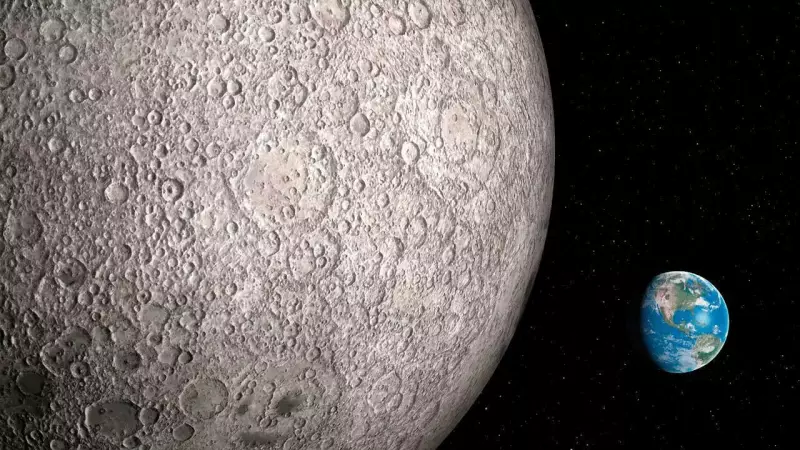
Recent groundbreaking research analyzing lunar rocks returned by NASA's Apollo missions has fundamentally challenged this long-standing assumption. Unlike Earth with its constantly renewing surface through geological processes, the Moon preserves an ancient record of cosmic impacts within its barren, inert environment. The lunar surface functions as a remarkable time capsule, locking in billions of years of Solar System history that Earth has lost over time.

Scientists led by Dr. Tony Gargano of the Lunar and Planetary Institute and University of New Mexico conducted meticulous analysis of lunar materials using advanced triple oxygen isotope techniques. This sophisticated methodology enables researchers to distinguish between materials deposited by meteorite impacts and those altered by the extreme temperatures and vaporization processes during cosmic collisions.
"The lunar regolith represents one of the rare locations where we can interpret time-integrated data about what was striking Earth's neighborhood for billions of years," explained Dr. Gargano. "Essentially, we can extract an impactor signal from a complex mixture that has undergone melting, vaporization, and repeated reworking over eons."
Surprisingly Minimal Meteorite Contribution
The comprehensive study yielded startling results: only about 1% of the Moon's regolith mass originated from meteorites, particularly from water-rich C-type asteroids. From this crucial finding, researchers concluded that meteorites could have delivered merely a minuscule fraction of Earth's water content. This revelation appears especially significant considering that approximately 70% of our planet's surface is covered by ocean waters.
While Earth's total water represents just 0.023% of the planet's overall mass (approximately 1.46 × 10²¹ kilograms), meteorites seem to have made an almost negligible contribution to this volume. Co-author Dr. Justin Simon from NASA's ARES Division clarified: "Our findings don't completely rule out meteorites carrying some water. However, the Moon's long-term history makes it extremely difficult for late meteorite delivery to serve as the dominant source of Earth's oceans."
Implications for Understanding Earth's Habitability
This research significantly advances our comprehension of how Earth transformed into a habitable world teeming with life. By examining the preserved impact record on the Moon, scientists can now determine the relative delivery contributions from various celestial bodies regarding life-essential materials. The study strongly indicates that while meteorites might have provided some water molecules, they certainly were not the principal source of Earth's vast oceans.
These findings necessitate further investigation into alternative origins for Earth's water, including possibilities that our planet retained water during its initial formation or acquired it directly from the primordial Solar Nebula. Dr. Gargano emphasized the Moon's unique scientific value: "The Moon provides us with ground truth—actual material we can measure in laboratories and use to anchor inferences drawn from meteorite analysis and telescopic observations."

Lunar Water's Significance for Future Space Exploration
Beyond revising our understanding of Earth's history, this research highlights the Moon's water resources that concentrate mainly in permanently shadowed regions near polar craters. These ice deposits hold tremendous importance for future space exploration initiatives, potentially supplying drinking water, supporting crop irrigation, providing radiation shielding, and enabling fuel production through liquid hydrogen and oxygen conversion.
Space agencies including NASA, ESA, Roscosmos, and the China Manned Space Agency are actively planning human habitats in areas like the South Pole-Aitken Basin, where accessible water ice exists. Even the limited water delivered by meteorites may prove crucial for enabling early lunar exploration and establishing scientific infrastructure, such as radio telescopes operating free from Earth-based interference.
The study fundamentally reshapes our understanding of water delivery mechanisms in the inner Solar System while simultaneously highlighting the Moon's enduring value as a scientific laboratory and potential stepping stone for humanity's expansion into deeper space.