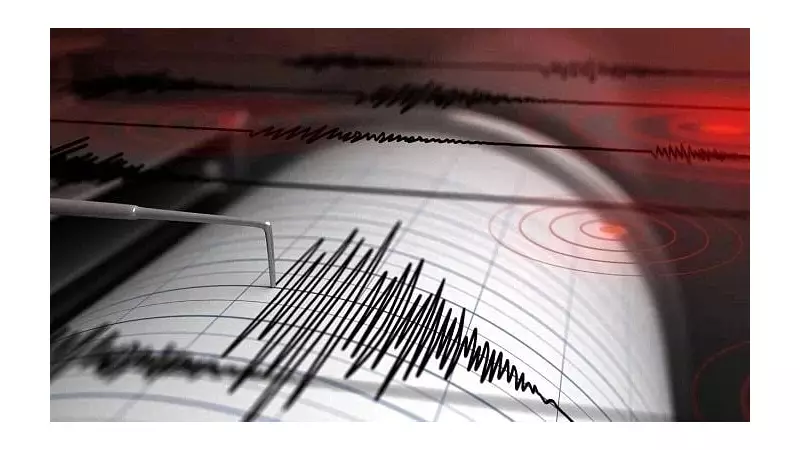
A significant seismic event rattled the Pacific region as a strong earthquake struck off the eastern coast of Japan. The tremor, measuring a substantial magnitude on the Richter scale, originated in a seismically active zone, reminding the world of the constant geological forces at play.
Details of the Seismic Event
The United States Geological Survey (USGS), the authoritative body monitoring global earthquakes, reported the quake. According to their data, the earthquake had a magnitude of 6.0. It occurred in the waters off the coast of Japan's Noda region. The precise timing of the event was recorded at 00:22:34 Indian Standard Time (IST) on Sunday. The epicenter was located in the Pacific Ocean, approximately 67 kilometers east of Noda in Japan's Iwate Prefecture. The quake originated at a considerable depth beneath the Earth's surface, which often influences the intensity of shaking felt on land.
Immediate Aftermath and Official Response
Following the tremor, Japan's meteorological agencies swiftly assessed the situation. Crucially, no tsunami warning was issued for the Japanese coastline. This rapid assessment provided immediate relief to coastal communities. Initial reports from the affected region indicated that the earthquake was felt in nearby areas, but there were no immediate reports of significant damage or injuries. Japan's robust early warning systems and stringent building codes, developed over decades of dealing with frequent seismic activity, likely played a key role in mitigating potential impacts. Authorities continued to monitor for aftershocks, which are common following an event of this size.
Context and Regional Seismic Activity
Japan is situated along the volatile Pacific Ring of Fire, an arc of intense seismic and volcanic activity stretching around the Pacific Ocean. This region is notorious for experiencing a large percentage of the world's most powerful earthquakes and volcanic eruptions. The event near Noda is a stark reminder of the ever-present geological risks faced by nations located in this volatile zone. For a country like India, which has its own seismic concerns in regions like the Himalayas, monitoring such global events is crucial for understanding tectonic patterns and improving domestic preparedness strategies. The efficient Japanese response to this quake offers valuable lessons in disaster management and public communication.
While this particular earthquake off the Noda coast did not trigger a major crisis, it underscores the unpredictable nature of tectonic forces. The incident highlights the importance of continuous investment in seismic monitoring technology, public awareness campaigns, and resilient infrastructure, not just for Japan but for all countries vulnerable to earthquakes.