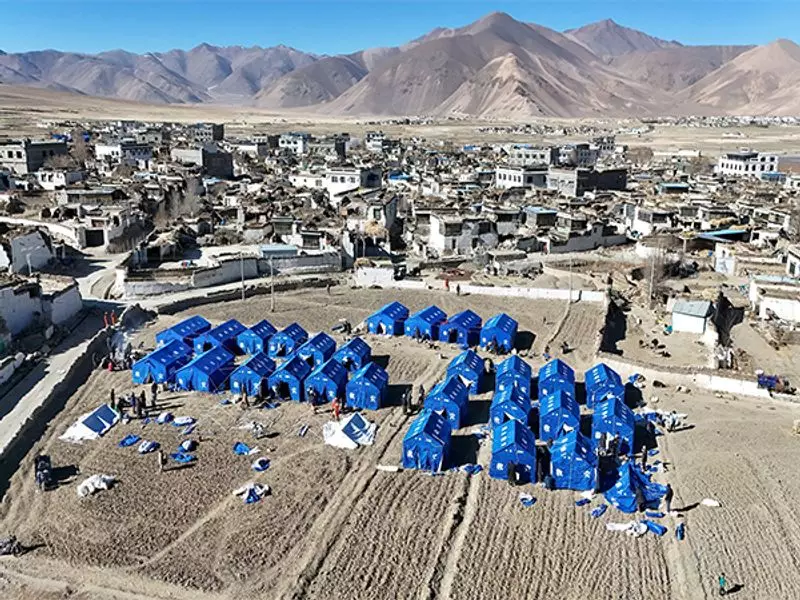
A light but noticeable earthquake struck the Tibet region on Sunday, as confirmed by seismic monitoring authorities. The tremor, which registered a magnitude of 3.5 on the Richter scale, occurred in the early hours of the morning, sending subtle vibrations through the area.
Details of the Seismic Event
The National Center for Seismology (NCS) provided the official details of the event. According to their data, the earthquake's epicenter was located in Tibet. The precise timing of the tremor was 5:49 am Indian Standard Time (IST) on Sunday, March 23, 2025. The seismic event originated at a shallow depth, which can sometimes make tremors more perceptible at the surface despite a moderate magnitude.
The NCS, which operates under the Ministry of Earth Sciences in India, is responsible for monitoring and reporting earthquake activity across the country and in neighboring regions. Their rapid reporting helps assess potential risks and provides crucial data for scientific research.

Impact and Initial Assessments
Initial reports indicate that the earthquake was a relatively minor event. Given its magnitude of 3.5, it is classified as a light tremor. Earthquakes of this scale are often felt by people indoors, especially on upper floors of buildings, but typically cause no significant damage to structures.
As of now, there have been no reports of any casualties, injuries, or damage to property stemming from this seismic activity. The region has not issued any tsunami alerts, as the magnitude was far below the threshold required to generate such oceanic waves. Local authorities likely conducted preliminary checks on infrastructure, but widespread disruption is unlikely.
Understanding Seismic Activity in the Region
The Tibet region is situated in a seismically active zone, largely due to the ongoing collision of the Indian and Eurasian tectonic plates. This monumental geological process, which gave rise to the Himalayan mountain range, makes the broader region prone to earthquakes of varying intensities.
While a magnitude 3.5 event is considered minor, it serves as a reminder of the constant geological forces at work. Monitoring networks like the NCS play a vital role in tracking these events, collecting data that helps scientists better understand fault lines and potential patterns. This information is critical for long-term seismic hazard assessment and preparedness planning in vulnerable areas.
Residents in seismically active zones are often advised to be aware of safety protocols, such as taking cover under sturdy furniture during a tremor and staying away from windows. Fortunately, this recent event did not necessitate such emergency measures.
The swift reporting by the National Center for Seismology underscores the importance of robust monitoring systems. Continuous tracking of such events contributes to a global database that improves our collective ability to understand and eventually predict seismic risks, aiming to mitigate the impact of larger, more destructive earthquakes in the future.