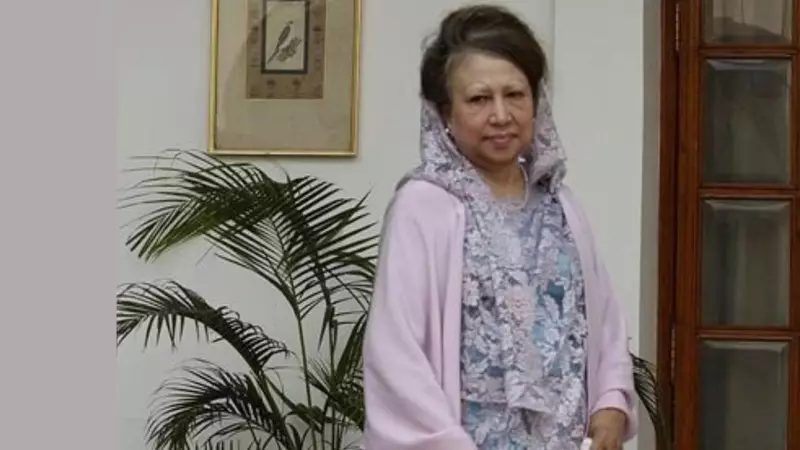
Former Prime Minister of Bangladesh, Begum Khaleda Zia, passed away in the early hours of 30 December 2025, drawing a curtain on a life that was as influential as it was controversial. Her death prompted Indian Prime Minister Narendra Modi to express deep sorrow, acknowledging her contributions to Bangladesh and its ties with India.
From Tragedy to Political Powerhouse
Khaleda Zia's entry into politics was forged in personal tragedy, a common thread among several prominent South Asian women leaders of the 20th century. The assassination of her husband, President Ziaur Rahman, propelled her into the political arena with a fierce determination. Initially dismissed by critics as merely a privileged housewife, she defied expectations by transforming the Bangladesh Nationalist Party (BNP) into a formidable, militant grassroots organisation.
Her political crusade primarily targeted the military establishment under dictator H M Ershad and her arch-rival, the Awami League. Over three terms as Prime Minister, she oversaw a significant shift in economic policy from socialism to market-oriented reforms. Her tenure also saw notable advancements for women, including crackdowns on domestic violence and child marriage, and making primary education free and compulsory.
A Legacy of Contradictions and Authoritarianism
However, Khaleda Zia's legacy is marked by stark contradictions. While empowering women in some spheres, her political methods were often harsh. Her regime was frequently accused of repression, corruption, and election rigging. In her relentless opposition, she cultivated a terrifying dam of street power, which became endemic to the BNP's political culture.
This approach eventually morphed into an extra-democratic structure within her party, culminating in the notorious Hawa Bhaban, an alternative power centre accused of kleptocracy. Furthermore, like her husband, she was known to make compromises with religious extremists, a strategy that had long-term implications for Bangladesh's secular fabric.
The Final Chapter and an Uncertain Future
The latter part of Khaleda Zia's life was plagued by legal battles and imprisonment. She was jailed in her old age by her lifelong rival, Prime Minister Sheikh Hasina. Her release following the July uprising offered a brief respite, but her health had deteriorated. Her passing is seen by some analysts as potentially marking the end of an era of revolutionary democracy and nationalism in Bangladesh.
The mantle of the BNP now falls to her son, Tarique Rahman, who faces the daunting task of revitalising the party. As historian Walter Benjamin noted, in the hands of one's enemies, not even the past is safe. The future of Khaleda Zia's political legacy and the BNP remains deeply uncertain, leaving a complex and indelible mark on the history of the nation.