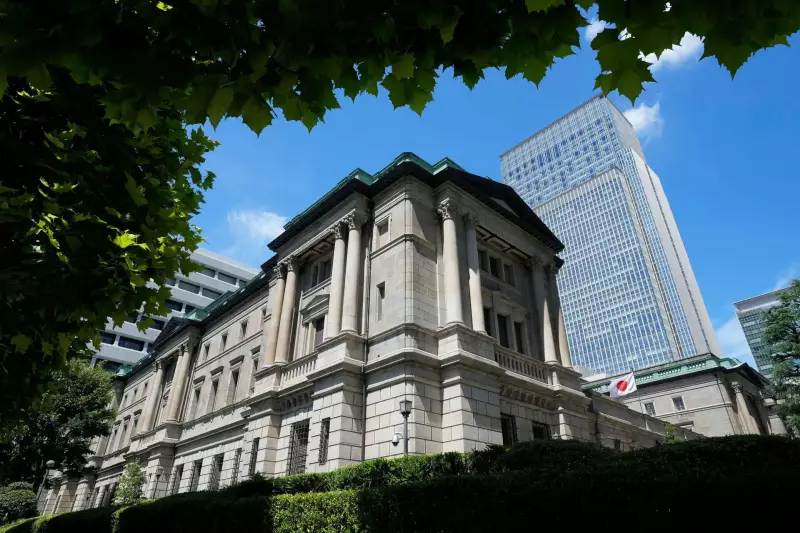
Official data released on Friday revealed that Japan's inflation rate remained unchanged in November. This critical economic indicator arrives just as the Bank of Japan prepares for a pivotal monetary policy decision that could see interest rates climb to their highest level in three decades.
Steady Inflation and Mounting Pressure
The core consumer price index, which excludes volatile fresh food prices, registered a year-on-year increase of three percent in November. This figure matched both the previous month's rate and market expectations. The data underscores persistent price pressures within the world's third-largest economy.
Notably, the internal affairs ministry highlighted a staggering 37 percent surge in rice prices compared to the previous year. This sharp increase is attributed to supply chain disruptions from a severe 2023 summer and panic-buying triggered by seismic activity warnings.

Political and Economic Crosscurrents
The inflation report lands amid significant economic challenges. Japan's economy contracted by 0.6 percent in the third quarter. Furthermore, financial markets have been jittery, with yields on Japanese government bonds rising due to concerns over budget discipline under Prime Minister Sanae Takaichi. The yen has also continued to weaken.
Prime Minister Takaichi, who formally assumed office in October, has pledged to combat inflation as a top priority. Her government recently secured parliamentary approval for an extra budget worth 18.3 trillion yen (approximately $118 billion) to fund a substantial stimulus package. While historically an advocate for aggressive government spending and loose monetary policy, Takaichi has stated that since taking office, monetary policy decisions rightly belong to the independent Bank of Japan.
The Bank of Japan's Critical Decision
The Bank of Japan (BoJ) began its tightening cycle in March last year, moving rates from negative territory as inflation signs emerged, ending a long period of stagnation. However, it paused these measures in early 2025 amid global economic worries and growing US tariff pressures. The last rate increase in January brought rates to a 17-year high.
Now, with inflation consistently above the BoJ's two percent target, the central bank is at a crossroads. A majority of economists surveyed by Bloomberg anticipate the BoJ will raise its main policy rate from 0.5 percent to 0.75 percent. Such a move would mark the first hike since January and push borrowing costs to their highest level since 1995.
BoJ Governor Kazuo Ueda offered a nuanced perspective last week, suggesting the impact of US tariffs has been less severe than initially feared. He told the Financial Times that, so far, US corporations have absorbed much of the tariff burden rather than passing it fully to consumers.
The upcoming decision is fraught with risk. A rate hike could potentially exacerbate existing turmoil in debt markets. However, with inflation proving sticky, the central bank faces mounting pressure to normalize policy after years of unprecedented easing, setting the stage for a landmark week for Japan's economy.