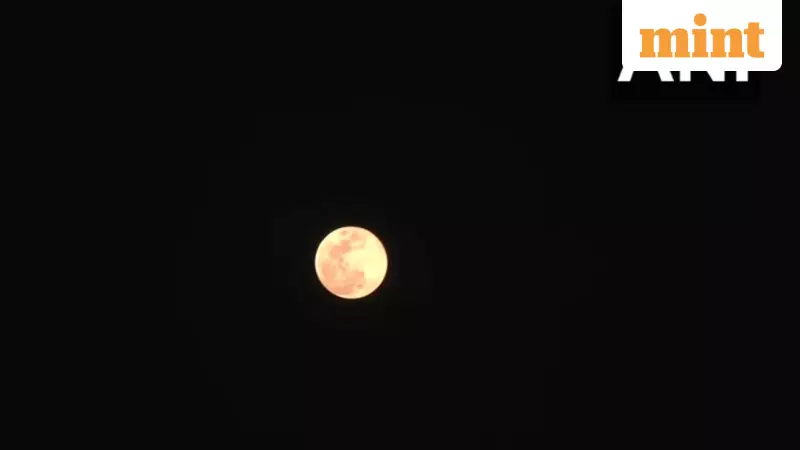
Skywatchers across eastern and northern India were treated to a breathtaking celestial spectacle on the night of Friday, 3 January 2026. The first supermoon of the year, popularly known as the Wolf Moon, shone with exceptional brilliance, captivating residents in cities like Bhubaneswar, Kolkata, and Lucknow.
Social media platforms were quickly flooded with videos and photographs of the glowing lunar disc, shared by excited observers who witnessed the event. The supermoon phenomenon occurs when a full moon coincides with its closest orbital point to Earth, known as perigee. This alignment makes the moon appear noticeably larger and brighter in the night sky.
Why the Wolf Moon Shone So Brightly
Astronomers explained that on that Friday night, the moon was positioned approximately 362,000 kilometers from Earth. This proximity caused it to appear up to 14% larger and nearly 30% brighter compared to an average full moon seen at its farthest distance. While the size difference can be subtle to the naked eye, the enhanced luminosity was unmistakable, especially in areas with clear weather conditions.
The January supermoon received a special "triple boost" in brightness. Firstly, it was at perigee. Secondly, during this time of year, Earth itself is closer to the Sun in its elliptical orbit. This means more sunlight is available to reflect off the lunar surface. The combination of the moon being close to Earth and Earth being closer to the Sun made the Wolf Supermoon one of the most brilliant lunar displays of 2026.
The Folklore Behind the Name
The name Wolf Moon has its origins in ancient folklore from the Northern Hemisphere. Traditional beliefs held that wolves tended to howl more frequently during the deep cold of January's midwinter nights. Early communities thus began associating the first full moon of the year with the haunting cries of wolves. While the name is now largely symbolic, it remains a popular and evocative title for January's full moon.
A Celestial Treat for Casual and Serious Observers
For many residents in Bhubaneswar, Kolkata, and Lucknow, the event provided a rare and beautiful reason to look up from their daily routines. Astronomers and enthusiasts noted that such supermoons are perfect for casual observation, requiring no special equipment to enjoy. The bright moon was easily visible even through the ambient light of urban skies.
Those with binoculars, cameras, or small telescopes had the opportunity to capture finer details on the lunar surface, including craters and shadows cast by its topography. Adding to the spectacle, the giant planet Jupiter was visible as a bright point of light nearby, creating a striking pair in the heavens.
The Wolf Supermoon of January 2026 has set a high bar for the year's astronomical calendar. It heralds a period filled with several notable lunar and planetary events that will be visible from India, offering continued opportunities for public engagement with the wonders of the night sky.