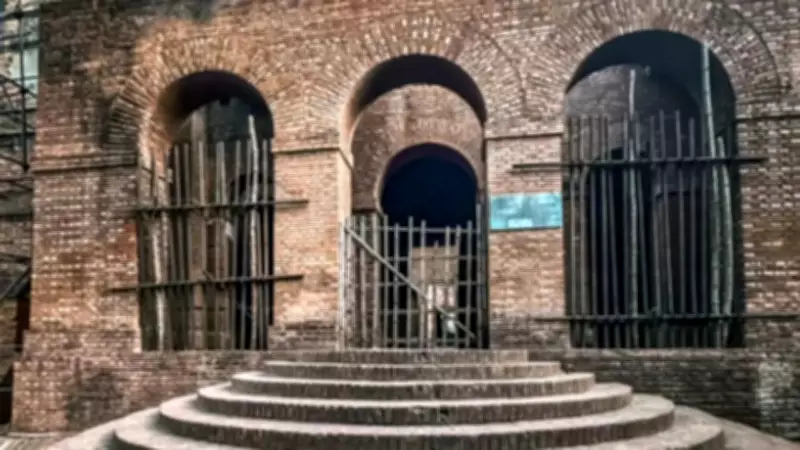
Clive House, also known as Burra Kothi, stands as a remarkable testament to centuries of history in Dum Dum, on Kolkata's northern fringe. Often described as one of the oldest structures in Kolkata, it is more than just a building; it is a site of archaeological importance, a monument of early British history, and an example of architectural evolution. Despite severe dilapidation and illegal encroachments, Clive House retains its historic significance.
Historical Background
Clive House is named after Robert Clive, who used the building as a country residence in the mid-18th century. However, the structure predates him. Historical research indicates the building existed before Clive's arrival, and he later renovated and modified it around 1757-1760. The site itself is even older. Archaeological excavations in 2001 revealed pottery, coins, and other remains from early-historic and medieval strata, suggesting continuous occupation of the mound for up to 1,500-2,000 years. The structure witnessed key historical moments, including the period around the Battle of Plassey, which marked the beginning of British dominance in India. Over time, the house served multiple purposes: a colonial residence, a military structure, and later a social or refugee space.
Architectural Features
Clive House is an intriguing blend of early colonial and pre-colonial influences. Its architecture emphasizes functionality over ornamentation, typical of early European structures in India. One striking feature is its elevated location on a mound, possibly for strategic surveillance and protection, suggesting it may have served as a lookout or defensive outpost. The building is constructed primarily of brick masonry, with bricks dating back to the late 17th or early 18th century. Key architectural elements include:

- Thick walls designed to resist weather elements
- Rectangular plan emphasizing functionality over symmetry
- Semi-circular stairs unearthed in archaeological excavations
- Limited decoration, reflecting colonial practicality
Clive is believed to have added an extra floor and modified the original structure, transforming it into a more functional residence. The structure shows European influence blended with local construction techniques, a hallmark of early colonial architecture in India. This hybrid style later evolved into the more elaborate Indo-European designs seen across Kolkata.
Archaeological Significance
What makes Clive House unique is not only the structure itself but also its historical background. Excavations have unearthed artifacts including coins, terracotta figures, and pottery from ancient times, such as the Gupta period. Its proximity to Chandraketugarh, an ancient civilization site, suggests the location was chosen for its importance in trade and transit. Thus, Clive House is a multi-layered heritage site connecting ancient, medieval, and colonial histories.
Present Condition and Challenges
Although officially declared a protected monument, Clive House remains neglected. Portions of the roof have collapsed, and walls are deteriorating. Encroachment, poor maintenance, and lack of awareness about its significance continue to pose conservation challenges. The house is located in an area dominated by modern buildings.
Relevance to Modern Real Estate
Clive House offers a valuable lesson for real estate development: heritage buildings are assets, not liabilities. In densely populated cities like Kolkata, facing rapid urbanization, heritage buildings are often under pressure to be redeveloped. Globally, heritage buildings are increasingly used as boutique hotels, cultural centers, or luxury residences. A thoughtful restoration of Clive House could transform it into a tourist attraction, thereby increasing the value of surrounding real estate. Its present state highlights the challenge of balancing development with conservation in Indian real estate. Clive House serves as an important reminder of Kolkata's rich history, spanning from the prehistoric period through colonial expansion. It is an important landmark due to its simple architecture, historical relevance, and archaeological significance.