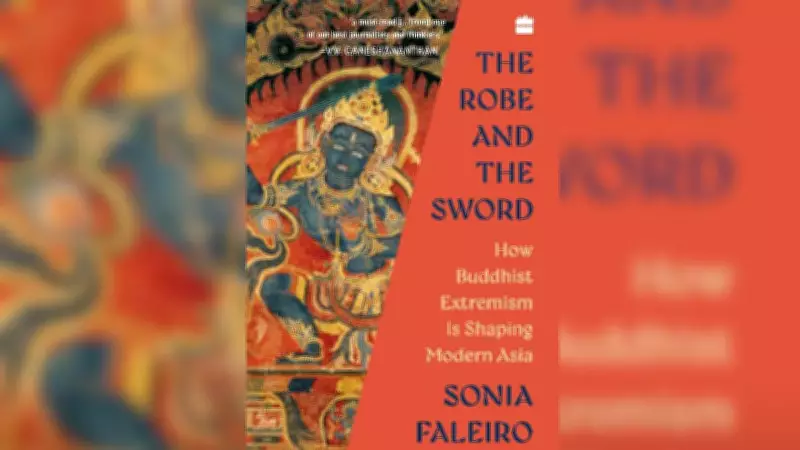
The Robe and the Sword: How Buddhist Extremism is Reshaping Modern Asia
In a groundbreaking exploration, author and journalist Faleiro embarks on a profound journey across Asia to document the unsettling rise of Buddhist extremism. Her travels span from the serene hills of Dharamshala in India, home to Tibetan Buddhists in exile, to the turbulent landscapes of Sri Lanka, Myanmar, and Thailand. This extensive investigation captures the silent yet powerful transformation occurring within these societies, where ancient spiritual traditions are increasingly intertwined with modern political and social conflicts.
A Journey from Exile to Conflict Zones
Faleiro's odyssey begins in Dharamshala, a symbol of peaceful Buddhist exile, but quickly moves into regions where Buddhism has taken a more militant turn. In Sri Lanka, she observes how Sinhalese Buddhist nationalism has fueled ethnic tensions and violence against minority groups. Myanmar reveals a stark contrast, where monastic communities have been implicated in the persecution of the Rohingya Muslim population, challenging the perception of Buddhism as inherently pacifist.
Thailand, with its deep-rooted Buddhist monarchy, presents another layer of complexity, where religious authority is often leveraged in political struggles. Through firsthand accounts and meticulous research, Faleiro uncovers how these movements are not isolated incidents but part of a broader pattern reshaping Asian geopolitics and identity.

The Silent Transformation of Buddhist Societies
The book delves into the historical and socio-economic factors driving this extremism. Colonial legacies, economic disparities, and globalization have all played roles in radicalizing certain Buddhist factions. Faleiro highlights how in some cases, monks have abandoned their traditional roles as peacemakers to become vocal advocates for ethnic purity and political dominance.
This shift is often masked by an unquiet silence—a reluctance within international communities to critically examine Buddhism's darker facets. By bringing these issues to light, Faleiro aims to spark a necessary dialogue on the intersection of religion, nationalism, and violence in contemporary Asia.
Implications for Regional Stability and Global Perceptions
The rise of Buddhist extremism has significant implications for regional stability. In countries like Myanmar and Sri Lanka, it has exacerbated conflicts, leading to humanitarian crises and international condemnation. Moreover, it challenges the global narrative of Buddhism as a religion of peace, forcing a reevaluation of its role in modern society.
Faleiro's work serves as a crucial reminder that no faith is immune to extremism. Her documentation urges policymakers, scholars, and the public to look beyond stereotypes and address the root causes of this transformation. As Asia continues to evolve, understanding these dynamics is essential for fostering peace and coexistence in a diverse and rapidly changing world.