

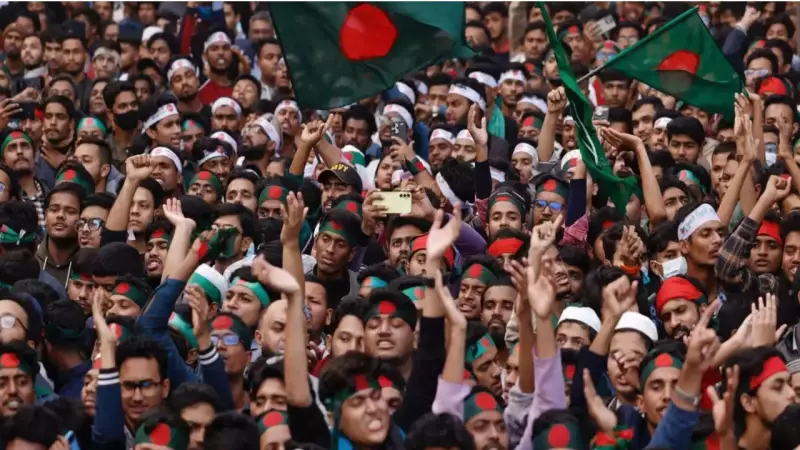
Bangladesh is navigating one of its most volatile periods since the 2024 uprising, with the nation engulfed in violent protests following the death of a key youth leader. The capital Dhaka witnessed scenes of arson, attacks on media houses, and anti-India demonstrations overnight, forcing authorities to deploy the army to restore order.
Death of a Leader Ignites Nationwide Fury
The catalyst for the current crisis is the death of Sharif Osman Hadi, a 32-year-old youth leader who was a prominent figure in the 2024 pro-democracy movement that ended Sheikh Hasina's long rule. Hadi was shot by masked assailants on December 12 while travelling in a rickshaw in Dhaka. After days of treatment, he succumbed to his injuries at a hospital in Singapore on Thursday, December 19, 2025.
His death came at a politically sensitive juncture, just weeks after the announcement of Bangladesh's first post-uprising elections, which Hadi was preparing to contest. As news of his passing spread, thousands of supporters poured onto the streets of Dhaka, demanding justice and the immediate arrest of his killers. Mourning gatherings swiftly escalated into aggressive and widespread demonstrations.

Media Under Fire: Journalists Trapped in Burning Buildings
The unrest took a particularly alarming turn when protesters targeted the offices of two of Bangladesh's most influential newspapers, The Daily Star and Prothom Alo. Groups stormed the buildings, vandalised property, and set fires, trapping journalists and staff inside.
Reporters described harrowing conditions as smoke filled the offices. Zyma Islam, a reporter for The Daily Star, posted a desperate plea on social media: “I can’t breathe anymore. There’s too much smoke. I am inside. You are killing me.” Firefighters battled for hours, rescuing at least 25 journalists using ladders from the smoke-filled structures. The fire at The Daily Star was brought under control around 1:40 am, but 27 employees were reportedly still inside even after the main blaze was doused.
This direct assault on press freedom has sparked outrage among journalist groups and civil society, raising serious questions about the safety of media workers during political turmoil.
Army Deployment and Escalating Anti-India Sentiment
As violence escalated and police resources were stretched thin, Bangladeshi authorities took the significant step of deploying army contingents in parts of Dhaka. Troops were stationed near media houses, major intersections, and sensitive government installations to secure key locations and prevent further attacks.
Simultaneously, the protests acquired an anti-India dimension. Demonstrators surrounded the residence of India's deputy high commissioner, leading police to use tear gas. Some groups alleged Indian involvement in Hadi's killing, intensifying diplomatic strain between the two neighbours.
In response, India has tightened security around its diplomatic missions in Bangladesh and suspended visa services at some centres. The gravity of the situation was underscored in New Delhi, where a parliamentary committee warned that the evolving crisis in Bangladesh poses the gravest strategic challenge for India in decades.
Interim Government Under Mounting Pressure
The interim government, led by Muhammad Yunus, declared a day of mourning, calling Hadi's death an "irreparable loss for the nation" and urging for calm. Police have launched a manhunt for the shooters, offering a substantial reward for information.
However, the government faces mounting pressure from protesters who accuse it of failing to ensure justice and from the practical challenge of restoring law and order without resorting to excessive force. The deployment of the military, while a measure to control the situation, also raises concerns among human rights groups about the potential for further escalation if political dialogue fails.
As Bangladesh grapples with this fresh wave of instability, the world watches closely. The coming days will be critical in determining whether the nation can navigate this crisis and proceed towards its promised elections, or if it will descend further into violence and political fragmentation.






