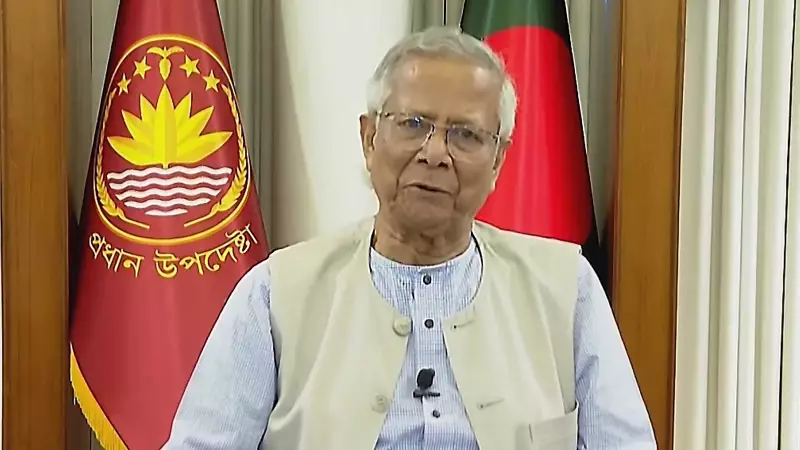
Bangladesh's interim government chief, Muhammad Yunus, has announced the arrest of seven individuals in connection with the horrific lynching of a 27-year-old Hindu man. The victim, identified as Dipu Chandra Das, was brutally beaten to death in Bhaluka, Mymensingh, on Friday over allegations of blasphemy.
Swift Action by Security Forces
In a post on social media platform X, Yunus confirmed that the elite Rapid Action Battalion (RAB) conducted a series of raids leading to the detentions. The operation was carried out by RAB-14 across various locations to apprehend the suspects linked to the murder.
The interim government chief publicly named the seven arrested individuals:
- Md. Limon Sarkar (19)
- Md. Tarek Hossain (19)
- Md. Manik Mia (20)
- Ershad Ali (39)
- Nijum Uddin (20)
- Alomgir Hossain (38)
- Md. Miraj Hossain Akon (46)
Details of the Gruesome Crime
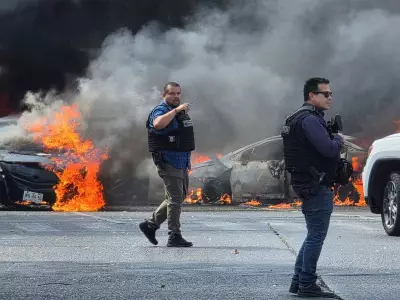
The attack on Dipu Chandra Das represents an extreme act of mob violence. According to reports, after being beaten to death, his body was tied upside down to a tree and set on fire. This shocking act of desecration has sent waves of horror through the local community and beyond.
The incident occurred in the Bhaluka area of the Mymensingh district, highlighting the persistent tensions that can erupt into fatal violence. The allegations of blasphemy, a highly sensitive issue, served as the catalyst for the mob's actions.
Renewed Fears for Minority Communities
This lynching has raised significant fears of targeted attacks against minority communities in Bangladesh. The Hindu community, which constitutes a minority in the predominantly Muslim nation, has faced sporadic violence in the past, often linked to allegations of blasphemy or disputes over property and temples.
The swift arrest of seven suspects by the RAB is being seen as a critical step by authorities to demonstrate control and deliver justice. However, the brutal nature of the crime has intensified calls for stronger and more consistent protection for religious minorities and for measures to prevent such mob violence.
Human rights observers and community leaders are closely monitoring the investigation and subsequent legal proceedings. The case is expected to be a test of the judicial system's ability to handle hate crimes and deliver accountability in a timely manner.