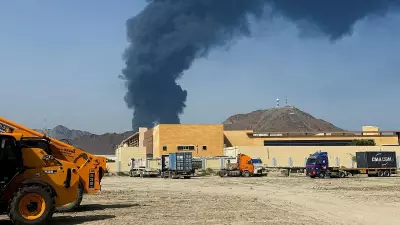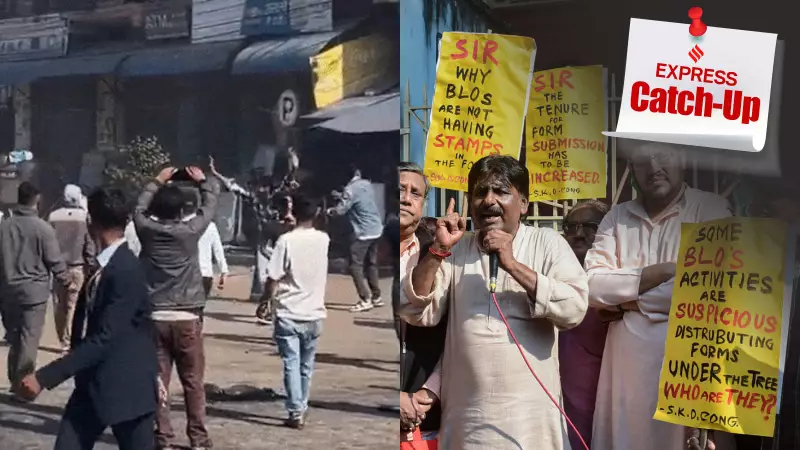
Thursday, November 20, witnessed significant developments across South Asia and India, ranging from renewed political unrest in Nepal to critical security and electoral matters within the country. While Nitish Kumar's swearing-in as Bihar Chief Minister and the Supreme Court's stance on gubernatorial timelines captured headlines, several other crucial events unfolded.
Fresh Wave of Gen Z Protests in Nepal
Nearly two months after successfully toppling the government, Gen Z protesters have returned to the streets of Nepal, signaling ongoing political instability. Authorities responded by imposing a curfew in the Bara district on Thursday.
The tensions reignited on Wednesday at Simara Chowk in Bara district, where fresh clashes broke out between the young protestors and loyalists of the former ruling party, which was ousted during the September uprising. In an appeal for calm, Nepal's Prime Minister Sushila Karki urged all parties to "refrain from unwanted political provocation" and to trust the democratic process ahead of the elections scheduled for March 5, 2026.

Mamata Banerjee Alleges Electoral Intimidation in Bengal
West Bengal Chief Minister Mamata Banerjee has escalated her concerns regarding the electoral process by writing to Chief Election Commissioner Gyanesh Kumar. She has demanded an immediate halt to the ongoing Special Intensive Revision (SIR) of voter lists.
In her letter, Banerjee made serious allegations against the office of the Chief Electoral Officer (CEO) of West Bengal, accusing it of resorting to the "intimidation" of Booth Level Officers (BLOs). She claimed that under extreme pressure and fear of punitive action, many BLOs are being compelled to submit incorrect or incomplete entries. This, she warned, risks the disenfranchisement of genuine voters and erodes the integrity of the electoral roll.
Assam's Unprecedented Expulsion Orders
In a stark application of a decades-old law, the Sonitpur district administration in Assam has issued orders directing five individuals to "remove yourself from India within 24 hours". The group, comprising four women and one man from two families, was declared foreign by a tribunal earlier this year.
The orders, issued on Tuesday, mark the first known invocation of the Immigrants (Expulsion from Assam) Act, 1950. The five individuals, identified as residents of Dhobokata village in Sonitpur, are currently "absconding," with their whereabouts unknown. Local sources indicate they left the area over a decade ago and have not resided there since.
NIA Intensifies Red Fort Blast Investigation
The National Investigation Agency (NIA) announced on Thursday the arrest of four more individuals in connection with the Red Fort car blast on November 10. The arrested men are identified as close associates of Umar Un Nabi, the alleged driver of the i20 car that exploded.
Those taken into custody are Dr Muzammil Shakeel Ganai of Pulwama, Dr Adeel Ahmed Rather of Anantnag, Dr Shaheen Saeed of Lucknow, and Mufti Irfan Ahmad Wagay of Shopian. The NIA stated that all the accused played a key role in the terror attack near the iconic monument. Separately, four other accused, initially arrested by the Kashmir police, have been transferred to NIA custody in Srinagar.
Google Rolls Out New Security Features for India
In a significant move to combat the rising tide of online fraud, Google India has unveiled new anti-scam tools and security features. A highlight is a scam detection feature for Pixel phones that leverages the on-device capabilities of Gemini Nano.
This feature analyzes calls in real-time to flag potential scams without recording audio, creating transcripts, or sending data to Google's servers. The feature is off by default, applies only to calls from unknown numbers, audibly notifies participants with a beep, and can be disabled by the user at any time. Additionally, Google is piloting a new feature specifically designed to combat the recent surge in "digital arrest" scams across India.