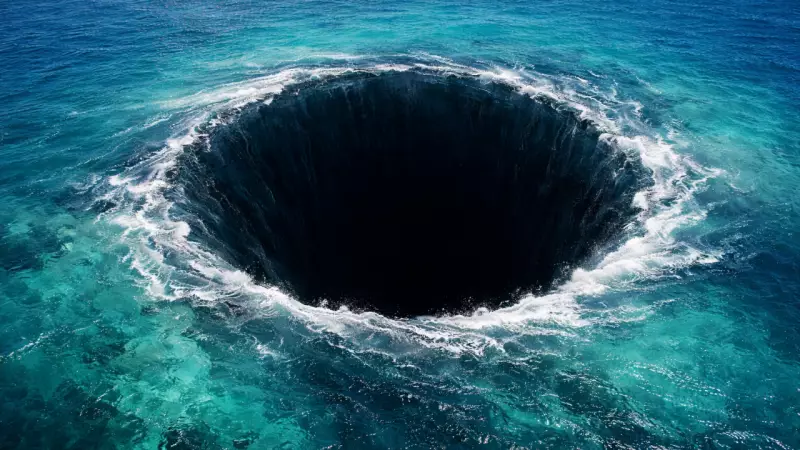
Deep Sea Mystery: Dragon Hole's Hidden Viral World Revealed
In the remote waters of the South China Sea, a team of Chinese marine researchers has made a startling discovery within one of the ocean's most enigmatic formations. The Dragon Hole, officially known as the Sansha Yongle Blue Hole, has yielded secrets that are both eerie and scientifically groundbreaking, challenging our understanding of life in Earth's most extreme environments.
The Dragon Hole: Nature's Underwater Laboratory
The Dragon Hole is a massive marine sinkhole located in the South China Sea, plunging nearly 1,000 feet straight down into darkness. This geological wonder, formed in limestone landscapes and later flooded as sea levels rose, has been the focus of intensive study by institutes including China's First Institute of Oceanography. Unlike typical ocean environments, this blue hole functions almost as a sealed world, with its steep walls and narrow opening limiting water circulation between surface and deeper layers.
This unique structure creates distinct layered zones with varying chemical compositions. While upper sections resemble normal marine environments, deeper waters become progressively oxygen-starved, eventually creating anoxic conditions where familiar ocean life cannot survive. Yet, as researchers have discovered, this apparent lifelessness masks a thriving hidden ecosystem.

Microbial Kingdoms in Oxygen-Free Depths
What makes the Dragon Hole particularly fascinating is the microbial life that thrives in its extreme conditions. Without sunlight or oxygen, specialized bacteria have adapted to survive using chemical reactions rather than photosynthesis. Scientists have identified communities that generate energy from sulphur and other compounds found in the deep-water chemistry, with different bacterial groups dominating at various depths depending on available chemicals.
These microbial communities represent a remarkable example of life's adaptability, but the real surprise came when researchers analyzed the genetic material within these waters.
The Viral Revelation: 1,700 Types Detected
The most significant finding from recent Dragon Hole research is the detection of approximately 1,700 distinct viral types through advanced DNA sequencing techniques. Many of these appear to be bacteriophages—viruses that specifically infect bacteria—and their diversity appears to shift with depth, suggesting different viral communities inhabit various layers of the sinkhole.
What makes this discovery particularly noteworthy is that a substantial portion of these viral sequences cannot be matched to known virus groups in existing databases. This doesn't necessarily mean they're dangerous or entirely new, but it highlights how much viral diversity remains undocumented in extreme marine environments.
Viruses as Ecosystem Architects
In the Dragon Hole's unique environment, viruses play crucial roles that extend far beyond simple infection. These microscopic entities:
- Control bacterial populations by selectively infecting and eliminating hosts
- Influence microbial evolution through gene transfer between organisms
- Reshape nutrient cycles by breaking down cells and releasing organic matter
In an oxygen-free environment like the Dragon Hole, these viral interactions likely determine which microbial species survive and how chemical processes unfold over time, making viruses key architects of this hidden ecosystem.
Scientific Significance Beyond the South China Sea
The Dragon Hole represents more than just a regional curiosity—it serves as a natural laboratory with implications reaching far beyond its geographical location. This extreme environment offers valuable insights for:

- Understanding early life on Earth, when oxygen-free conditions were more common
- Studying oxygen-depleted marine zones that are expanding in today's oceans
- Tracking microbial responses to changing ocean chemistry
- Exploring potential life forms in similar extreme environments elsewhere
Because such conditions are difficult to replicate in laboratory settings, natural formations like the Dragon Hole provide rare windows into ecosystems that challenge conventional understanding of where and how life can exist.
Future Research Directions
The discovery of such remarkable viral diversity raises important new questions for marine scientists. Future research will likely focus on identifying which specific microbes these viruses infect, how viral activity varies between different layers of the sinkhole, and what this means for long-term ecosystem stability.
As exploration continues, the Dragon Hole reminds us that Earth's oceans still hold biological worlds that defy expectations, offering constant reminders of nature's capacity for innovation in even the most challenging environments.