

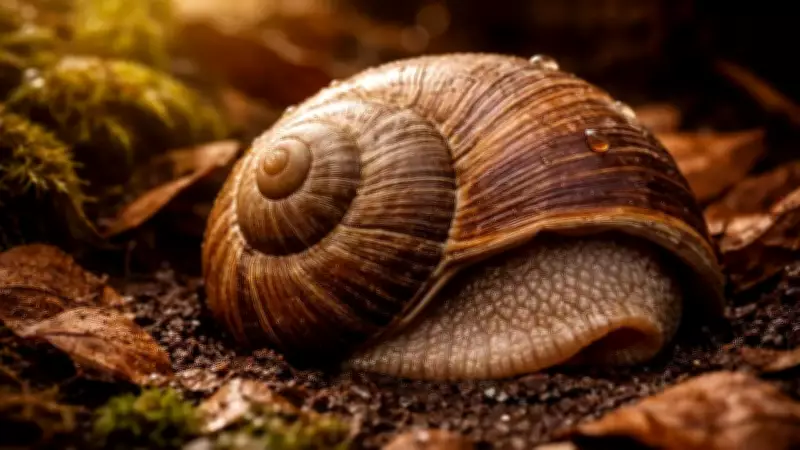
The Snail's Secret: Surviving Years in a Dormant State
In the vast tapestry of nature, survival strategies often border on the extraordinary, with some creatures employing methods that seem almost mythical. Among these, the humble snail stands out for its ability to enter a deep state of dormancy that can last for years. While commonly misunderstood as "sleeping for three years," this phenomenon is a sophisticated adaptation that allows snails to endure harsh environmental conditions.
Debunking the Myth: Do Snails Really Sleep for Three Years?
Contrary to popular belief, snails do not sleep in the human sense for extended periods. Instead, they enter a state of dormancy, where their metabolic processes slow dramatically to conserve energy. This survival mechanism is crucial for their existence in fluctuating climates.
Understanding Dormancy: Hibernation vs. Aestivation
Snails exhibit two primary forms of dormancy: hibernation and aestivation. Hibernation occurs during cold weather, while aestivation is triggered by hot and dry conditions. In both states, the snail becomes inactive, sealing its shell with a mucus layer that hardens into a protective barrier. This coat prevents moisture loss and shields the snail from external threats, enabling it to survive with minimal energy expenditure.

The Science Behind Long-Term Survival
During dormancy, a snail's metabolism slows to a near-standstill, eliminating the need for food or movement. This suspended animation allows the snail to wait out adverse conditions, such as droughts or extreme temperatures. When favorable weather returns, such as after rainfall, the snail reactivates, resuming its normal activities. This ability is not universal among all snail species; the duration and frequency of dormancy vary based on environmental factors and biological traits.
Why Snails Need This Adaptation
Moisture is essential for snail survival, as their bodies are prone to dehydration in dry or hot climates. Dormancy serves as a critical adaptation, enabling them to halt most bodily functions and endure prolonged periods without water or nutrients. This strategy is particularly vital for species inhabiting regions with unpredictable weather patterns.
Other Fascinating Snail Facts
Beyond their dormancy capabilities, snails possess several unique characteristics. Their muscular foot, lubricated by mucus, facilitates movement across various surfaces. They also have a nervous system and sensory organs that detect light and motion, aiding in navigation and predator avoidance. Additionally, snails carry their homes on their backs—their shells provide protection and can even be repaired if damaged.
The Reality of the "Three-Year Sleep"
The notion of snails sleeping for three years stems from observations of their long dormancy periods. However, this is not a form of rest but a survival tactic. Not all snails can achieve such lengthy dormancy, and the duration depends on species-specific traits and environmental pressures. This ability underscores the resilience of even the smallest creatures in the wild.
A Testament to Nature's Ingenuity
The snail, often overlooked as a simple creature, demonstrates remarkable adaptability through its dormant states. This highlights how life on Earth has evolved diverse strategies to cope with challenges, fostering a deeper appreciation for biodiversity. Understanding these mechanisms enriches our knowledge of ecological resilience and the intricate balance of natural systems.






