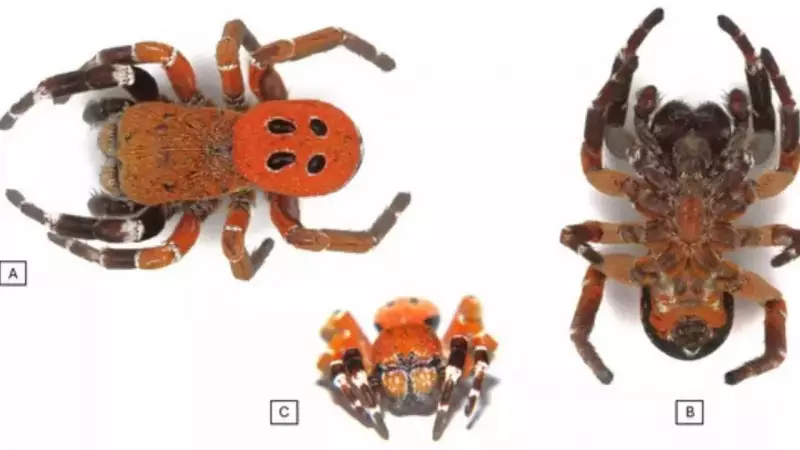
In a remarkable find from the harsh, dry terrains of southern Morocco, scientists have identified a new spider species that is captivating the arachnological world. This creature stands out dramatically due to its vibrant red head, a feature rarely seen in its close relatives, creating a stark contrast against its darker body in an arachnid family typically known for duller colours.
A Striking Newcomer in the Ladybird Family
The spider has been formally classified within the genus Eresus, a group commonly called ladybird spiders because of their bold and contrasting colour patterns. The official description was detailed in a peer-reviewed study published in the journal Animals. Researchers conducted a meticulous morphological analysis, examining body size, leg proportions, eye arrangement, and reproductive structures to distinguish it from related species.
The most defining characteristic is its brilliantly coloured cephalothorax, which is a bright red hue not previously documented in any member of the Eresus genus. This discovery has refined existing classification frameworks and revealed that these spiders, especially North African populations, possess a greater morphological variety than earlier records suggested.

Unravelling the Mystery of the Red Head
Colouration in spiders is deeply linked to survival and reproduction, often serving functions like predator deterrence, camouflage, or mate recognition. Typically, within the Eresus genus, bright colours like red or orange are confined to the abdomen, signalling toxicity or distastefulness to predators.
This Moroccan species breaks the pattern by displaying its vivid red pigmentation on the head region. The colour appears consistent across examined specimens, suggesting it is a genetic trait rather than a result of diet or environmental staining. This unusual placement raises intriguing questions about the evolutionary pressures that favoured such a trait. The red head could act as a warning signal to predators or play a role in communication during courtship rituals, offering fresh insights into how visual traits evolve even within well-studied animal groups.
Survival in a Harsh Habitat
The spider inhabits Morocco's dry, rocky landscapes, which are characterised by low rainfall and sparse vegetation. Such environments impose strict limitations on moisture and food availability, driving specific behavioural and physiological adaptations. Like other ladybird spiders, this new species is believed to be ground-dwelling, constructing silk-lined burrows that offer protection from extreme temperatures and predators.
Originating from a semi-arid region, it likely possesses adaptations for water conservation and managing activity during dry periods. Its survival probably depends on a limited range of insect prey that are themselves adapted to the harsh conditions, illustrating a delicate ecological balance. Studying such species helps scientists understand how biodiversity is maintained under environmental stress and how life persists in seemingly inhospitable places.
The timing of this discovery is fortuitous, as researchers are actively documenting the biodiversity of regions undergoing rapid change due to climate shifts and altered land use. The transition zones between desert and Mediterranean climates in North Africa create complex ecological mosaics. This find underscores that the African continent remains a treasure trove of undiscovered species, with many animals and plants still unknown to science.
The identification of such a visually distinctive spider provides valuable insight into regional biodiversity and emphasises how much remains hidden within familiar yet underexplored habitats. It highlights the ongoing importance of fieldwork and classical taxonomy in building the foundational knowledge necessary for effective ecological study and conservation.