

Giant Dinosaur Fossils in Brazil Unveil New Species
In a groundbreaking discovery, Brazilian scientists have identified a new species of giant dinosaur, shedding light on ancient land connections between continents. The findings, published this month in the Journal of Systematic Palaeontology, reveal a colossal creature named Dasosaurus tocantinensis, one of the largest dinosaurs ever found in South America.
Discovery and Excavation Details
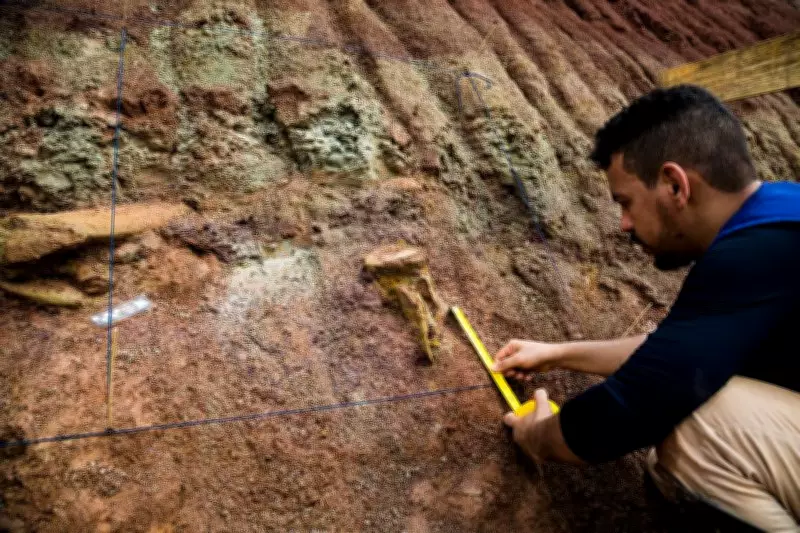
The fossils were uncovered in 2021 during infrastructure works near Davinopolis, located in Brazil's northeastern state of Maranhao. Led by Elver Mayer from the Federal University of the Sao Francisco Valley, the research team meticulously excavated the site, where they discovered significant remains including a femur measuring approximately 1.5 meters (59 inches).
Leonardo Kerber, a paleontologist at the Federal University of Santa Maria (UFSM) who contributed to the study, described the moment of discovery: "As the excavation progressed over the days, we began to see the evidence of that huge bone, which is the femur. This indicates it was a very large dinosaur. Today we know Dasosaurus is among the biggest dinosaurs ever found in Brazil."

Size and Significance of the Find
Based on the femur size, researchers estimate that Dasosaurus tocantinensis stretched roughly 20 meters in length, making it a formidable giant of the Mesozoic era. The species name combines references to the Tocantins River, a major waterway whose eastern margins lie near the fossil site, highlighting the regional significance of the discovery.
Ancient Continental Connections
Analysis conducted by UFSM indicates that Dasosaurus tocantinensis is the closest known relative of Garumbatitan morellensis, a dinosaur previously described in Spain. This connection reinforces scientific knowledge that land routes once linked parts of South America, Africa, and Europe about 120 million years ago.
According to the university, the lineage of these dinosaurs was European and likely dispersed into what is now South America around 130 million years ago, probably via northern Africa before the Atlantic Ocean fully opened. This discovery provides crucial insights into the migration patterns and evolutionary history of prehistoric giants.
Implications for Paleontology
The identification of Dasosaurus tocantinensis not only adds a new species to the dinosaur record but also enhances understanding of ancient ecosystems and continental drift. It underscores Brazil's rich paleontological heritage and the ongoing importance of fossil research in unraveling Earth's history.
This discovery is expected to spur further excavations and studies in the region, potentially revealing more about the diverse fauna that once roamed the supercontinents.






