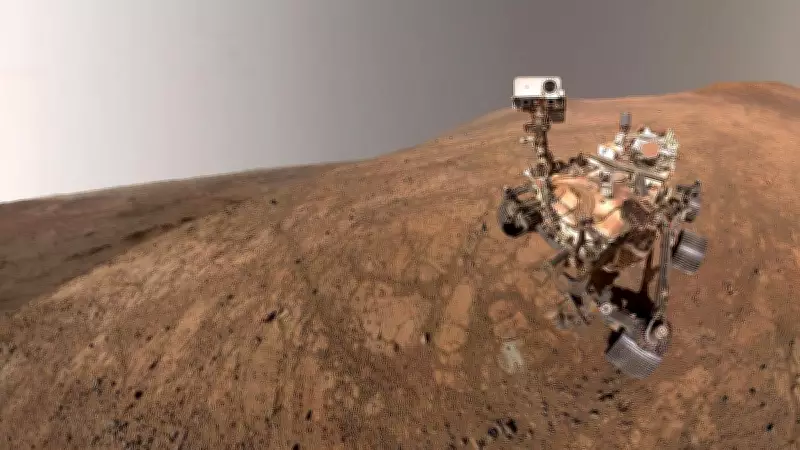
Perseverance Rover Discovers Organic Carbon in Martian Rock
NASA's Perseverance rover has taken a closer look at organic carbon on Mars, revealing new details about the structure of the compound found last year in sedimentary rock. The discovery, described in a recent research paper, identifies a potential biosignature—a possible sign of past microbial life.
Details of the Discovery
The organic carbon was detected in a rock sample from Jezero Crater, an ancient lakebed that may have once harbored life. Using the rover's SHERLOC instrument, scientists analyzed the chemical composition and found complex organic molecules that could be biological in origin. According to the research, the carbon structure is consistent with organic matter preserved in sedimentary rocks on Earth.
Implications for Ancient Life
While organic carbon can form through non-biological processes, the specific structure observed increases the chance of a biological source. Researchers emphasize that this is not definitive proof of life but a promising clue. "This is the most compelling evidence yet that Mars once had the ingredients for life," said a NASA scientist involved in the study.

Next Steps in the Mission
Perseverance continues to collect samples that will be returned to Earth by a future mission, allowing for more detailed analysis. The rover is also exploring other rock formations in Jezero Crater to search for additional biosignatures.