Guinea's military leader, General Mamdi Doumbouya, has been declared the winner of the country's presidential election held over the weekend, based on incomplete results announced late on Tuesday. This marks the first presidential election in the West African nation since the 2021 coup that brought Doumbouya to power.
A Landslide Victory in a Controlled Race
According to data from Guinea's General Directorate of Elections, Doumbouya secured a commanding 86.72% of the votes counted so far. The outcome was widely anticipated by analysts, who predicted that a significantly weakened opposition would pave the way for his victory. The election is largely viewed as a strategic move to legitimize Doumbouya's continued hold on power, culminating a four-year transition process that began after he ousted former President Alpha Conde.
Critics argue that the junta leader systematically clamped down on dissent in the lead-up to the vote. This crackdown left him without any major political rivals among the eight other candidates on the ballot. More than 50 political parties were dissolved, and prominent opposition figures were either barred from contesting on technical grounds or forced into exile.

Opposition Marginalised, Voter Turnout High
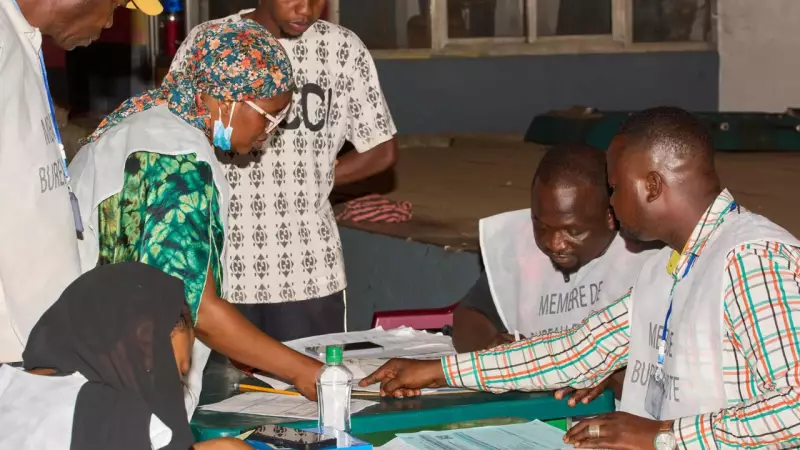
The distant second place went to Yero Balde, a former education minister under Conde's government, who managed to garner only 6.51% of the votes. Despite the political climate, the electoral body reported a high participation rate, with 80.95% of the 6.7 million registered voters casting their ballots.
Doumbouya's candidacy itself represents a reversal of an earlier promise. After seizing power, he had stated that he and fellow military officers would not run for elected office. However, a constitutional referendum held in September altered the rules, permitting officers to contest and extending the presidential term from five to seven years.
Economic Hopes Pinned on Simandou Amidst Poverty
The election takes place against a backdrop of severe economic challenges. Guinea, rich in mineral resources like bauxite and iron ore and home to 15 million people, sees half its population mired in poverty. The World Food Program notes record levels of food insecurity in the country.
The junta's primary hope for economic revival is the massive Simandou iron ore project, the world's largest untapped high-grade iron deposit. The project, which is 75% Chinese-owned, began production last month after decades of delays. Authorities are banking on Simandou to generate thousands of jobs and spur investment in critical sectors like education and healthcare.
Guinea's situation reflects a broader trend of political instability in West Africa. It is one of several nations in the region, including Guinea-Bissau and Benin, that have experienced coups or attempted takeovers since 2020. Military officers have often capitalised on widespread public discontent over worsening security, poor economic performance, and disputed elections to seize control.