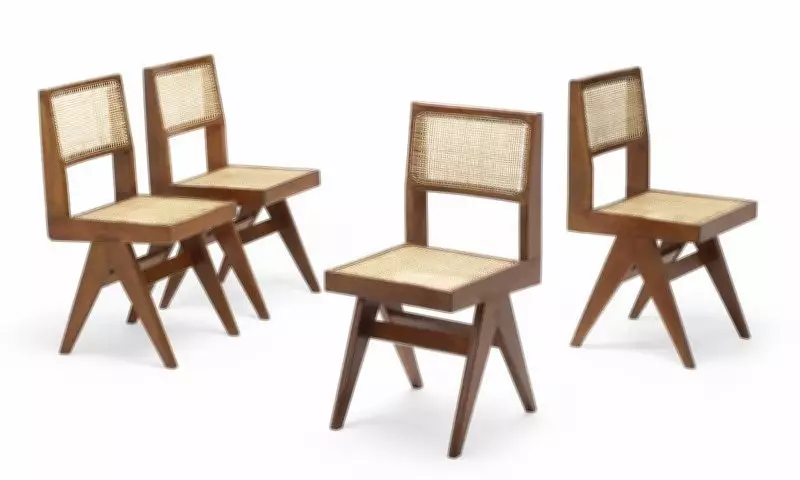
For fifteen years, India watched Chandigarh's heritage furniture disappear into international auction houses without effective legal recourse. The structural legal gap stemmed from the Archaeological Survey of India (ASI) twice ruling that the Antiquities and Art Treasures Act of 1972 did not apply to these pieces. This left India with no domestic bar on export, no legal basis to demand return, and no criminal hook for diplomatic requests. What changed this week was not the law itself, but the decision to stop seeking a domestic solution to an international problem and instead utilize the existing international legal architecture.
The UNIDROIT Advantage
The 1995 UNIDROIT Convention on Stolen or Illegally Exported Cultural Objects provides sharper, actionable legal obligations than the earlier 1970 UNESCO Convention, which is largely preventive and aspirational. France ratified UNIDROIT in 1997, creating a binding treaty obligation. When India presents France with two active FIRs for theft and illegal export of the chairs—backed by documentary proof of government provenance, including inventory markings PU/Chem/55 and PGI/W/CH-0202—France is reminded of its treaty obligations, not merely asked a favour. Under UNIDROIT, India must establish that the object was stolen or illegally exported and hold a legitimate ownership claim. India's position is strong: inventory codes identify the institutional owner, the Ministry of Home Affairs' 2011 export ban establishes illegal removal under Indian law, and the FIRs confirm active criminal proceedings. France, as a signatory, is obliged to facilitate return, subject to time limits and good-faith purchaser provisions depending on the chain of ownership.
The UNESCO Dimension
The involvement of India's Permanent Delegation to UNESCO adds a complementary channel. Chandigarh's Capitol Complex is inscribed on the UNESCO World Heritage List as part of "The Architectural Work of Le Corbusier—An Outstanding Contribution to the Modern Movement." This inscription creates a framework within which the original furniture—designed by the same architects for the same institutions—can be argued to form part of the outstanding universal value that the inscription protects. While a softer argument than UNIDROIT's hard legal obligation, it gives the diplomatic conversation additional moral and institutional weight, particularly given UNESCO's framework against illegal trade of cultural property.

Why the FIRs Were the Turning Point
Every previous diplomatic representation over fifteen years lacked one thing: a formal criminal investigation in India. Without an active FIR, India's requests to foreign governments amounted to appeals rather than legal notifications. Foreign auction houses or government authorities had no obligation to treat such requests as more than correspondence. The registration of FIR Nos. 0080 and 0081 on June 23 changed that calculus entirely. France cannot be asked to intervene in a private commercial transaction on the basis of a letter alone, but it can be asked—and under UNIDROIT, obliged—to respond to a documented request backed by active criminal proceedings in the country of origin.

The Gap That Remains
The Paris breakthrough is real, but the legal architecture reveals how narrow the pathway still is. UNIDROIT's protections are strongest for items stolen recently and traceable through a short chain of ownership. For hundreds of pieces already dispersed across European and American private collections—many sold over the past two decades, passing through multiple hands—the chain of custody will be far harder to establish. Time limits under various conventions may have lapsed, and good-faith purchaser defences will complicate recovery. The ASI's repeated refusal to classify Chandigarh furniture under the Antiquities and Art Treasures Act remains an unresolved structural weakness: without that classification, every future case depends on the quality of institutional marking on each individual piece rather than a blanket national designation. What this week has demonstrated, however, is that the combination of a proactive administration, active FIRs, a formal Ministry of External Affairs (MEA) communication, and the right international treaty framework can work—and work fast. Whether that combination can be institutionalised into a standing mechanism capable of intercepting the next auction is now the central question for Chandigarh's heritage conservation effort.
The chairs that left Panjab University's Chemistry Department and PGIMER's wards may yet come home. But for the library table that fetched Rs 1.92 crore in Tel Aviv in 2018, the sofas from the High Court, the committee chairs from the Vidhan Sabha, and the hundreds of other pieces that disappeared before anyone thought to file an FIR—the legal window is narrower, and the road back considerably longer.
Five Salient Features
- India Moves to Bring Back Stolen Chairs—A Historic First: For the first time in over a decade of continuous international auctions of Chandigarh heritage furniture, India has formally initiated a repatriation process for two Pierre Jeanneret-designed chairs stolen from Panjab University and PGIMER, after the MEA and the Permanent Delegation of India to UNESCO began deliberations with the French Government seeking their physical custody. No piece of Chandigarh's auctioned heritage furniture has ever been brought back.
- Paris Auction Stalled—System Works For Once: The June 25 Paris auction by auctioneer François Epin was halted following a coordinated response involving Governor Kataria's direct intervention, the Chandigarh Administration's SOS to the MEA, two FIRs by Chandigarh Police, and diplomatic activation through the Indian Embassy in France—the first time an overseas auction of Chandigarh heritage furniture has been stopped before the hammer fell, across more than 100 international sales since 2009.
- FIRs Gave Diplomacy Its Legal Teeth: The registration of FIR No. 0080 and FIR No. 0081 on June 23 under the Bharatiya Nyaya Sanhita—the first criminal cases ever filed over the outflow of Chandigarh's heritage furniture—provided the formal criminal investigation backing that French authorities needed to justify intervening in a scheduled auction on French soil, and gave India's diplomatic request the legal weight previous representations had lacked.
- France's Own Treaty Obligations Invoked: The Chandigarh Administration's letter to the MEA explicitly flagged that France is a signatory to the UNIDROIT Convention on Stolen or Illegally Exported Cultural Objects—creating a binding legal obligation on French authorities to engage with India's request. Combined with UNESCO's transboundary heritage framework, this gave India a powerful international legal lever that the domestic Antiquities and Art Treasures Act—under which ASI twice ruled Chandigarh furniture doesn't qualify—had never provided.
- From Stopping One Auction to Building a System: Governor Kataria has pitched for a permanent, standing coordination mechanism between the UT Administration, the Ministries of Culture and External Affairs, and Indian missions abroad to monitor, flag, and intercept future auctions—signalling that the Administration intends the Paris breakthrough to become a template for systematic heritage recovery, not a one-off intervention.
Timeline: From First Auction to First Repatriation Bid
- 2007: Le Corbusier manhole cover auctioned in US for $21,600—first recorded sale
- 2009: International auctions of Chandigarh furniture begin in earnest
- Feb 22, 2011: MHA issues order banning export and unauthorised movement of Chandigarh heritage furniture
- 2012: Heritage Inventory Committee identifies 12,793 heritage items across 190 categories
- 2013: Wright auction house, Chicago, begins regular Chandigarh furniture sales; PU and Vidhan Sabha pieces auctioned
- 2018: PU library table fetches Rs 1.92 crore in Tel Aviv—single highest sale on record
- Oct 2021: 15 items auctioned in Paris for Rs 3.34 crore; costliest pair of chairs at Rs 78.22 lakh
- Dec 2021: ASI rules Chandigarh furniture not covered by Antiquities and Art Treasures Act, 1972—first ruling
- Oct 2022: 20 items auctioned in Paris for Rs 3.81 crore; single table fetches Rs 70.10 lakh
- May 2024: ASI repeats its ruling—furniture outside AAT Act purview—second rejection
- Sept 2024: 6 items auctioned in Luxembourg despite advance representation to MEA
- Dec 2024: Further items auctioned in Luxembourg
- July 2025: Sworders UK auctions Jeanneret collection for over £192,000
- June 4, 2026: 7 items including MLA Hostel furniture sold in Chicago for Rs 1.16 crore; Punjab Vidhan Sabha Speaker seeks custody report
- June 18, 2026: 7 of 13 items sold in Brussels for Rs 1.61 crore despite 48-hour advance notice to MEA and Culture Ministry—no action taken
- June 22, 2026: Jagga alerts Indian Ambassador in Paris ahead of June 25 sale by François Epin
- June 23, 2026: Chandigarh Administration writes to MEA (Memo DCA-2026/444-46); two FIRs registered—Nos. 0080 and 0081—first ever criminal cases over heritage furniture outflow
- June 24, 2026: Paris auction put on hold—first ever stalling of an overseas Chandigarh heritage furniture auction; Governor Kataria pitches for systematic recovery mechanism
- June 25, 2026: MEA and PDI to UNESCO begin deliberations with France for custody and repatriation of both chairs—first ever repatriation bid in history of Chandigarh heritage furniture outflow
By the Numbers
- Heritage items identified in 2012 inventory: 12,793 across 190 categories
- International auctions since 2009: 100+
- Estimated total realisation abroad: Rs 40-50 crore
- Single highest sale: Rs 1.92 crore (PU library table, Tel Aviv, 2018)
- Items successfully repatriated before June 2026: Zero
- Auctions stalled by official intervention before June 2026: Zero
- FIRs registered before June 2026: Zero
- Paris auction, June 25, 2026: Halted—first ever
- Repatriation processes initiated: One—and counting
Sources: UT Heritage Items Protection Cell; Chandigarh Administration; MEA; auction house catalogues; ASI communications.