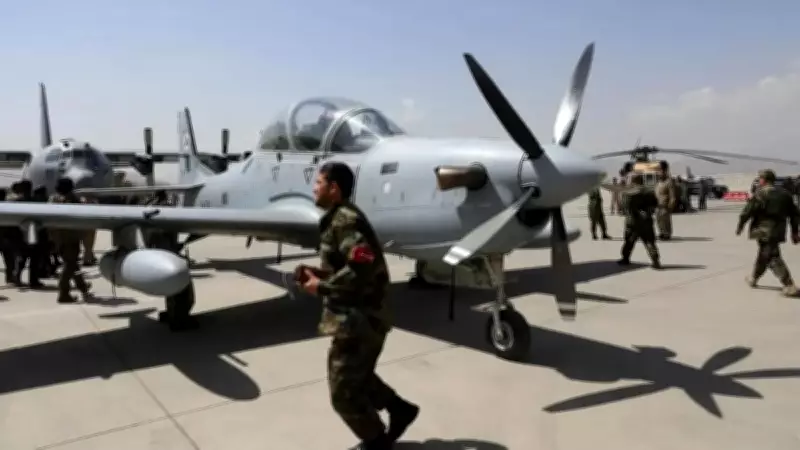
Afghanistan has conducted airstrikes against ISIS bases located in Pakistan, marking a significant escalation in cross-border counterterrorism operations. The strikes targeted militant hideouts in the border regions, with Kabul utilizing its available air power to dismantle terrorist networks.
Details of the Airstrikes
The Afghan Ministry of Defense confirmed that precision strikes were carried out on multiple ISIS positions inside Pakistani territory. According to officials, the operation aimed to neutralize threats posed by the group, which has been responsible for attacks on both Afghan and Pakistani soil. The strikes reportedly destroyed several training camps and ammunition depots.
Pakistani authorities have not yet officially commented on the incident, but sources indicate that the strikes occurred in remote areas near the Durand Line. The Afghan government emphasized that the action was taken in self-defense and with prior intelligence coordination.

Kabul's Air Force: A Comprehensive Overview
The Afghan Air Force (AAF) operates a modest but functional fleet of aircraft, primarily supported by international partners. As of 2026, the AAF's inventory includes fixed-wing aircraft, helicopters, and unmanned aerial vehicles (UAVs). Below is a detailed list of the aircraft in service:
- A-29 Super Tucano: A light attack aircraft used for close air support and counterinsurgency. The AAF operates around 25 of these Brazilian-made planes, which are equipped with precision-guided munitions.
- UH-60 Black Hawk: A utility helicopter primarily used for troop transport and medical evacuation. Kabul has about 30 Black Hawks, donated by the United States.
- MD 530F Cayuse Warrior: A light attack helicopter used for reconnaissance and fire support. Approximately 20 are in service.
- C-208 Grand Caravan: A light transport aircraft used for logistics and surveillance. The AAF operates 15 of these.
- Mi-8/Mi-17 Hip: Russian-origin medium transport helicopters. Around 10 remain operational.
- ScanEagle UAV: Small reconnaissance drones used for intelligence gathering. The AAF has an undisclosed number in use.
In total, the Afghan Air Force has approximately 100 aircraft, though maintenance and pilot shortages limit operational readiness. The fleet is heavily reliant on foreign support for spare parts and training.
Strategic Implications
The airstrikes demonstrate Afghanistan's willingness to project power beyond its borders to address security threats. Analysts note that the operation could strain relations with Pakistan, which has historically denied the presence of militant bases on its soil. However, Kabul insists that the action was necessary to prevent further attacks.
“The Afghan Air Force is capable of defending our sovereignty and targeting terrorists wherever they hide,” said a defense spokesperson, speaking on condition of anonymity. “We will continue to take necessary measures to protect our people.”
The strikes also highlight the evolving role of the AAF, which has been rebuilt with international assistance since the Taliban era. While the fleet remains small, it has been effective in counterterrorism operations within Afghanistan and now across the border.