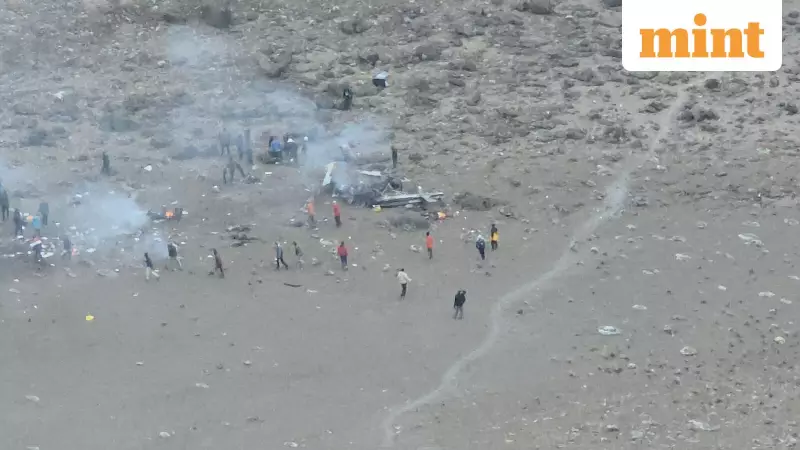
A tragic helicopter crash on the slopes of Africa's highest peak, Mount Kilimanjaro, has claimed the lives of five people, the Tanzanian civil aviation authority confirmed on Thursday. The accident occurred on Christmas Eve, turning a routine rescue mission into a devastating disaster.
Details of the Mount Kilimanjaro Crash
The accident took place on December 24, at approximately 5:30 PM local time. The aircraft involved was an Airbus AS350 B3 helicopter, operated by the local company KilimediAir, which specialises in emergency evacuations on the mountain.
The crash site was located between the Kibo Peak and the Barafu area on Kilimanjaro, at a staggering elevation of 4,700 metres (about 15,400 feet) above sea level. Disturbing videos circulated on social media in the aftermath, showing bystanders gathered around the burning wreckage as they searched for survivors amidst scattered debris and rising smoke.

According to reports, the helicopter had just taken off from the Barafu Camp when it plummeted to the ground minutes later. This incident marks a rare tragedy for the region, with local media noting that the last such crash on Kilimanjaro happened over 17 years ago, in 2008.
Victims of the Fatal Accident
All five individuals on board the ill-fated flight perished. The victims included a married couple from Czechia, both 30-year-olds David Plos and Anna Plosova, who were climbers on the mountain.
Also killed were their Tanzanian tour guide, Innocent Mbaga, and a Tanzanian doctor identified as Jimmy Daniel. The pilot, Constantine Mazonde from Zimbabwe, also lost his life in the crash.
Investigation and Context
The exact cause of the crash remains unknown at this time. Authorities have launched a full investigation to determine what led to the helicopter dropping out of the sky shortly after takeoff.
KilimediAir's helicopter was a critical asset for high-altitude rescues on the popular mountain. In peak seasons, such helicopters can be called upon for up to five rescue missions a single day. Mount Kilimanjaro, standing nearly 6,000 metres tall, attracts around 50,000 climbers annually, making reliable emergency services vital.
This devastating event has cast a shadow over the mountain community and highlights the inherent risks of high-altitude rescue operations in one of the world's most challenging environments.