

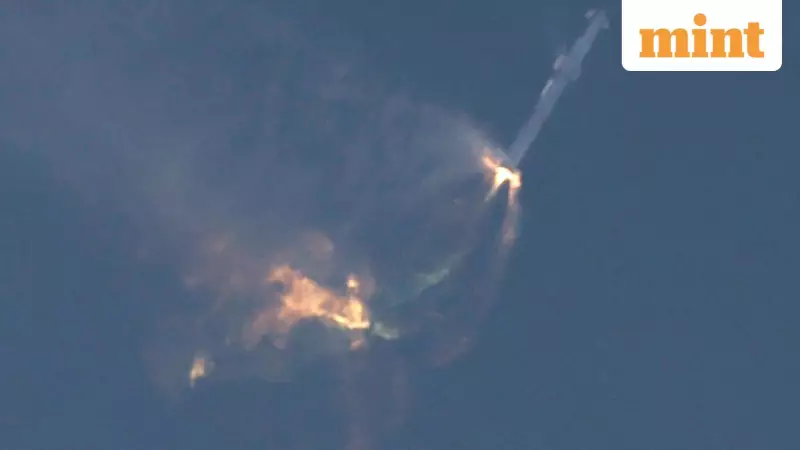
An explosive malfunction of SpaceX's massive Starship rocket in January created a far greater danger to commercial aircraft over the Caribbean than previously disclosed, according to internal Federal Aviation Administration (FAA) documents reviewed by The Wall Street Journal. The incident forced pilots into critical, split-second decisions, with nearly 450 passengers on three flights caught in a perilous situation.
Mid-Air Crisis: Pilots Forced to Choose Between Debris and Fuel
On the evening of January 16, a JetBlue aircraft en route to San Juan, Puerto Rico, received an urgent warning from air-traffic control. The pilots were informed they were heading directly into a newly established danger zone. "You want to go to San Juan, it's going to be at your own risk," a controller told the flight crew. The threat came from the disintegrating remains of SpaceX's experimental Starship, which had exploded minutes after liftoff from Texas.
The JetBlue pilots, positioned north of San Juan, faced a harrowing dilemma: proceed through a potential field of fiery rocket debris or risk running dangerously low on fuel over the ocean. They initially entered a holding pattern. Two other aircraft—an Iberia Airlines flight and a private jet—found themselves in the same predicament. FAA records show both were forced to declare fuel emergencies to navigate through the temporary no-fly zone. All three flights, carrying approximately 450 people in total, ultimately landed safely.

The explosion rained debris across parts of the Caribbean for roughly 50 minutes, the FAA documents detailed. A collision between an aircraft and such debris could lead to catastrophic damage and passenger fatalities. A JetBlue spokesman expressed confidence that its flights avoided all reported debris areas. An Iberia spokeswoman stated its plane traversed the zone only after all debris had fallen, asserting there was no safety risk.
Systemic Failures and Communication Breakdowns
The documents reveal a cascade of operational failures. Air-traffic controllers scrambled to reroute aircraft, a process that significantly increased their workload and created a "potential extreme safety risk," according to an FAA report from a New York facility. The chaos led to at least one close-call, where two aircraft flew too close together, requiring controller intervention to avert a collision.
Critically, SpaceX did not immediately notify the FAA about the explosion through an official hotline, a channel mandated for rapid alert of launch failures. This delay hampered controllers' ability to warn pilots promptly. The debris no-fly zones were activated four minutes after Starship stopped transmitting flight data. SpaceX confirmed the vehicle's disintegration with the agency 15 minutes after that. Controllers in Miami first learned of the explosion from pilots who saw the debris, while other FAA officials found out via an internal chat.
SpaceX, the world's busiest rocket launcher, declined to comment for the report. The company, led by CEO Elon Musk, has historically viewed such setbacks as learning opportunities. After a November 2023 test flight failure, SpaceX stated, "With a test like this, success comes from what we learn."
Growing Risks in a Crowded Sky
The January incident alarmed both airline industry and U.S. government officials, highlighting the emerging conflicts between rapidly increasing space operations and commercial air travel. The FAA expects to oversee 200 to 400 rocket launches or re-entries annually in the coming years, a massive jump from the average of two dozen per year between 1989 and 2024.
In response to the January blast, the FAA convened an expert panel in February to re-examine debris risk protocols. This review gained urgency after another Starship explosion during a March test launch. However, in a surprising move, the FAA suspended this safety review in August. Agency policies typically require such reviews to address identified risks. An FAA official, in an email, said debris risk would be handled at a different policymaking level. The agency stated the review was halted because most recommendations were already being implemented and it needed to consult more experts.

"The FAA will not hesitate to act if additional safety measures are required," the agency said. Captain Jason Ambrosi, president of the Air Line Pilots Association, called for better communication with aviation stakeholders to allow for better planning around launches, such as loading extra fuel or finding alternate routes. "We shouldn't be getting surprised when this happens," Ambrosi said.
Following the January event, the FAA closed a gap in its debris monitoring that had left pockets of international airspace unprotected. SpaceX has since conducted several more Starship launches, with the last two missions following their planned course. The company is expected to launch a new, more powerful Starship version early next year, which Musk acknowledged "might have some initial teething pains." The FAA maintains it is prepared to reconvene safety panels as needed to protect the increasingly congested skies.





