SpaceX has introduced a groundbreaking new system designed to monitor and track the movement of objects in low Earth orbit, providing crucial data on how close these objects come to each other. Named Stargaze, this innovative tool leverages information gathered from thousands of satellites already in space, moving beyond the limitations of traditional ground-based radar systems.
Stargaze: A New Approach to Space Traffic Management
The company asserts that Stargaze can detect changes in satellite motion much faster than existing methods, significantly enhancing the ability to reduce collision risks in orbit. In a move aimed at fostering greater coordination among space operators, SpaceX plans to share Stargaze screening data with other satellite operators at no cost in the coming weeks.
This initiative comes at a critical time as congestion in low Earth orbit continues to escalate, driven by an increasing number of satellite launches, uncoordinated maneuvers, and the accumulation of debris left behind after missions. Industry experts have repeatedly warned that conventional tracking systems are struggling to keep pace with the rapid growth of orbital traffic.

Free Data Sharing to Encourage Operator Coordination
SpaceX intends to make Stargaze conjunction screening available to all operators without charge. The platform has already undergone rigorous testing in a closed beta phase involving more than a dozen satellite operators. Participants in this program can share ephemeris data and receive low-latency screening results, enhancing collaborative efforts.
Starting in the spring, operators who submit trajectory predictions will receive alerts based on Stargaze data, complemented by information shared by other participants. This collaborative framework aims to create a more transparent and coordinated orbital environment.
Growing Congestion Intensifies Pressure on Tracking Systems
Low Earth orbit has become increasingly crowded, presenting numerous challenges. Old rocket bodies remain in orbit long after their missions conclude, while some operators adjust satellite paths without sharing updated trajectories. Additionally, military tests have contributed fragments that move unpredictably, further complicating tracking efforts.
Many existing tracking systems observe objects only a few times per day, leaving substantial gaps between updates. These gaps widen when space weather conditions interfere, reducing prediction accuracy precisely when it is most critical.
Stargaze Expands Detection Using Existing Satellite Infrastructure
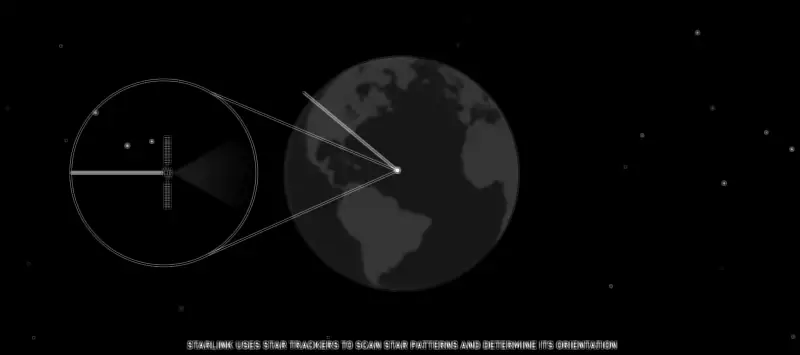
Stargaze adopts a fundamentally different approach by utilizing data from nearly 30,000 star trackers already deployed across SpaceX's satellite fleet. Each tracker continuously observes nearby objects, collectively generating approximately 30 million detected transits daily.
This methodology creates a dense and constantly refreshed picture of orbital activity, moving beyond the periodic snapshots provided by ground-based systems to offer near real-time monitoring capabilities.
Near Real-Time Screening Shortens Reaction Windows
Observations collected by Stargaze are processed automatically, with the system building updated estimates of position and velocity for detected objects. This data is then fed into a space traffic management platform, where potential close approaches are flagged and Conjunction Data Messages are generated within minutes.
SpaceX highlights this as a significant improvement over current industry timelines, which often require several hours to deliver similar warnings, thereby enhancing operational safety and responsiveness.
Late 2025 Encounter Demonstrates System Effectiveness
SpaceX points to a close approach incident in late 2025 as a compelling example of Stargaze's value. During this event, a Starlink satellite encountered a third-party spacecraft that was maneuvering without sharing ephemeris data.
Initial projections indicated a wide miss distance, but five hours before the encounter, a maneuver sharply reduced that margin. Stargaze quickly detected the change, updated the trajectory, and distributed new warnings, enabling the Starlink satellite to plan and execute an avoidance maneuver within an hour.

This incident underscores the system's capability to enhance situational awareness and facilitate timely responses in dynamic orbital environments.