A New Chapter for Indian Spaceflight
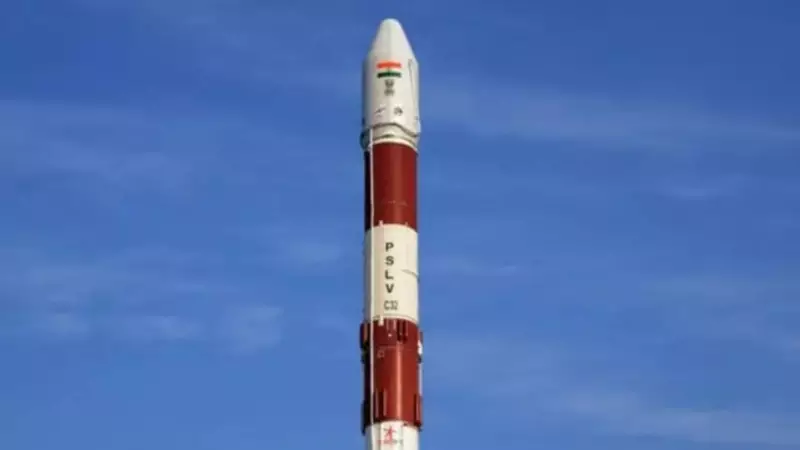
In a landmark development for India's space industry, the inaugural launch of the country's first privately-built Polar Satellite Launch Vehicle (PSLV) is now anticipated in the early part of 2026. This significant milestone follows the near-completion of the rocket's production, signaling a robust entry of private players into a domain long dominated by the Indian Space Research Organisation (ISRO).
Launch Timeline and Mission Details
According to senior executives from the industrial consortium manufacturing the rocket, the first flight of the privately-built PSLV is firmly on track for early next year. The mission, designated PSLV-N1, will carry the earth observation satellite EOS-10 into orbit. While the mission was initially slated for the first quarter of 2025, it experienced a delay primarily because the satellite payload was not ready in time.
AT Ramchandani, Senior VP and Head of L&T Precision Engineering & Systems, a key partner in the consortium, confirmed the progress. "We have started delivering the PSLV hardware and we are hopeful that next year we will have two or three launches," he stated. He further clarified that the final schedule is contingent on payload readiness and available slots in ISRO's launch calendar.

Ramchandani also acknowledged that the consortium faced technical challenges with certain components but was quick to highlight the supportive role played by ISRO in resolving them. "There were a few components or systems in which we faced challenges, but ISRO helped us out. We are geared up for launch," he affirmed.
The Bigger Picture: Commercialization and Future Demand
This initiative stems from ISRO's decision in 2022 to commercialize its workhorse PSLV launch vehicle, making it the first rocket to undergo this process after the Indian space sector was opened up for private participation. The contract was awarded to a consortium comprising Hindustan Aeronautics Ltd (HAL) and Larsen & Toubro (L&T) for the manufacturing of five launch vehicles.
However, the future looks even brighter. Ramchandani expressed optimism about the demand, suggesting that the consortium might end up building an additional ten PSLVs after the initial five. "I believe that ISRO feels that the demand is there and we may end up doing another ten launches after these," he said.
Currently, ISRO is responsible for securing payloads for these initial missions. However, the long-term vision is for the private consortium to independently build its own client base, market the launch services, and manage the launch schedule. This model is distinct from the approach taken with the Small Satellite Launch Vehicle (SSLV), where the company had to handle production and sales from day one. The SSLV technology was transferred to HAL, which is also a member of the PSLV consortium.
Ramchandani revealed that several satellite manufacturers, particularly those in the communication and earth observation sectors requiring heavier satellites, have already shown interest. These satellites are typically beyond the payload capacity of smaller rockets like the SSLV or Skyroot's Vikram-I. "After a couple of launches the confidence will come. Today, we are also not stepping out and reaching out to customers, but I suppose that is the next step after a couple of launches," he added, outlining the strategic roadmap for the consortium.