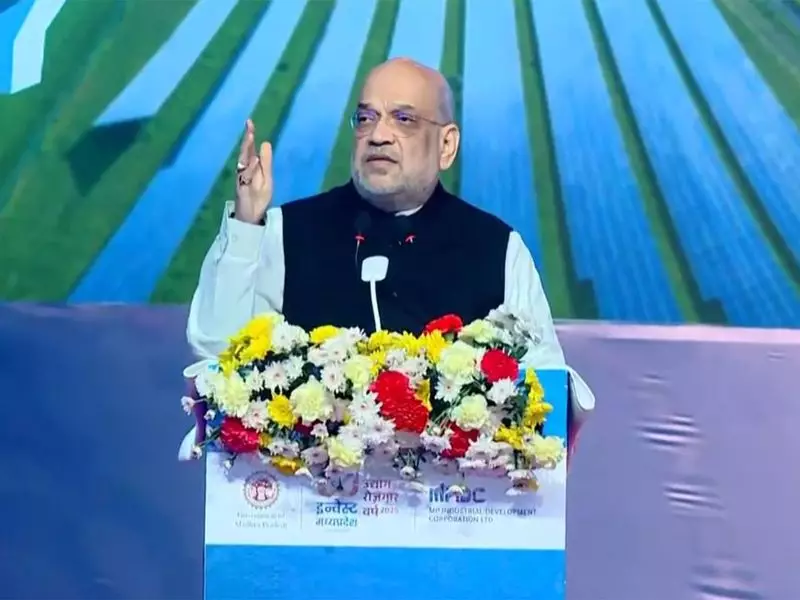
In a landmark announcement signaling a new era for India's technological ambitions, Union Home Minister and Minister of Cooperation Amit Shah declared that the country is on the verge of becoming an exporter of semiconductors. This pivotal development underscores the success of the government's aggressive push to establish a self-reliant electronics manufacturing ecosystem.
A Strategic Leap Towards Self-Reliance
Amit Shah made this significant revelation during his address at the 'Viksit Bharat 2047' event, organized by the India Semiconductor Mission (ISM) in Gujarat's capital, Gandhinagar. He emphasized that this achievement is a direct result of the visionary policies and substantial investments made under the leadership of Prime Minister Narendra Modi.
The journey began with the approval of the Rs 76,000 crore semiconductor manufacturing scheme, a bold initiative designed to position India as a global hub for electronics production. Shah highlighted that this move has not only attracted major international players but has also fostered a conducive environment for domestic innovation and manufacturing in this critical sector.

Building a Complete Ecosystem in Gujarat
The Home Minister detailed the comprehensive strategy being implemented, particularly in Gujarat. He pointed out that the state is rapidly developing a complete semiconductor ecosystem. This ecosystem encompasses everything from the manufacturing of chips (fabrication) to the design, packaging, and testing of these vital components.
"Today, India is moving forward in the semiconductor sector. Very soon, India will start exporting semiconductors," Shah stated with confidence. He framed this progress as a crucial step in the nation's broader mission to achieve complete 'Atmanirbharta' (self-reliance) in the electronics and technology domain.
From Importer to Global Exporter
Amit Shah contrasted India's current position with its past, noting that the country was once heavily dependent on imports for its semiconductor needs. The strategic focus on creating a domestic manufacturing base is now poised to transform that dependency into a strength. By entering the export market, India will not only secure its own supply chain but also contribute to the global electronics value chain.
This transition is expected to have far-reaching consequences. It will generate high-skilled employment opportunities, attract further foreign direct investment (FDI), and reduce the country's vulnerability to global supply chain disruptions, as witnessed during the recent chip shortages worldwide.
The announcement in Gandhinagar marks a definitive milestone for the India Semiconductor Mission. It validates the government's long-term planning and sets the stage for India to emerge as a trusted and reliable partner in the geopolitically sensitive semiconductor industry. The nation's tech ambitions are now crystallizing into tangible, export-ready reality.