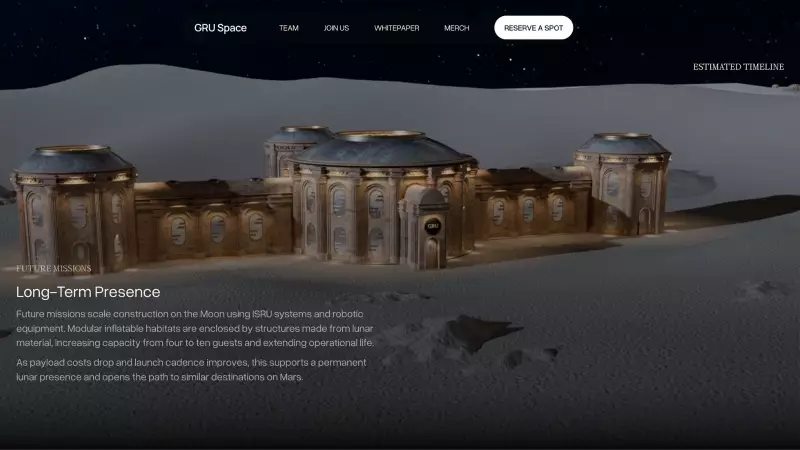
California Startup Unveils Plans for $1 Million Moon Hotel by 2032
A California-based startup has announced ambitious plans to build a hotel on the moon by 2032. This venture aims to offer space vacations, dubbed "space-cations," for a hefty price tag of $1 million per booking.
GRU Space Leads the Charge
Galactic Resource Utilisation Space, or GRU, founded by Skyler Chan, revealed details about the lunar hotel on January 12. The company launched a booking website and shared architectural plans for what it calls the first permanent off-Earth structure.
To secure a spot, prospective guests must deposit $1 million, approximately Rs 9 crore. This substantial fee underscores the exclusivity of the experience.

Innovative Construction Approach
GRU plans to use a proprietary habitation module system. The company will employ automated processes to transform lunar soil into durable structures. This method aims to meet the challenging 2032 deadline.
Construction is expected to begin in 2029, pending regulatory approvals. The timeline aligns with broader U.S. efforts to establish a permanent presence on the moon.
Target Clientele and Vision
The hotel's initial guests will likely include wealthy, adventurous newlyweds seeking unique honeymoons. Participants from prior commercial space trips are also expected to book stays.
Chan, a 21-year-old Berkeley graduate, believes tourism is key to developing the lunar economy. He stated, "Tourism offers the fastest path for humanity to become interplanetary."
He added, "We live during an inflection point where we can actually become interplanetary before we die. If we succeed, billions of human lives will be born on the moon and Mars and be able to experience the beauty of lunar and martian life."
Funding and Support
Chan developed the moon hotel concept while at Y-Combinator, a startup accelerator. Investors from SpaceX and Anduril have contributed funds to the project.
The initiative gains context from U.S. space expansion plans under NASA Administrator Jared Isaacman, backed by former President Donald Trump. GRU aims to support these national goals.
Strategic Roadmap and Missions
GRU published a white paper outlining a step-by-step plan to increase human presence on the moon. The strategy starts with the luxury hotel and expands to larger settlements.
The company's website details upcoming missions:
- Mission I: First Lunar Systems Test - This involves placing a pressurized test payload on the lunar surface. It will evaluate controlled environmental conditions and conduct early construction experiments using local materials. These tests aim to reduce risks for future missions.
- Mission II: Lunar Cave Base - A larger payload will land near a lunar pit chosen for natural radiation shielding. An inflatable system will deploy inside, with further construction tests to prepare for scaling up.
- Future Missions: Long-term Presence - These will scale construction using ISRU systems and robotic equipment. Modular inflatable habitats will be enclosed by structures made from lunar material, increasing guest capacity from four to ten and extending operational life. As payload costs drop and launch frequency improves, this supports a permanent lunar presence and paves the way for Mars destinations.
This project represents a bold step in commercial space exploration, blending luxury travel with frontier technology.