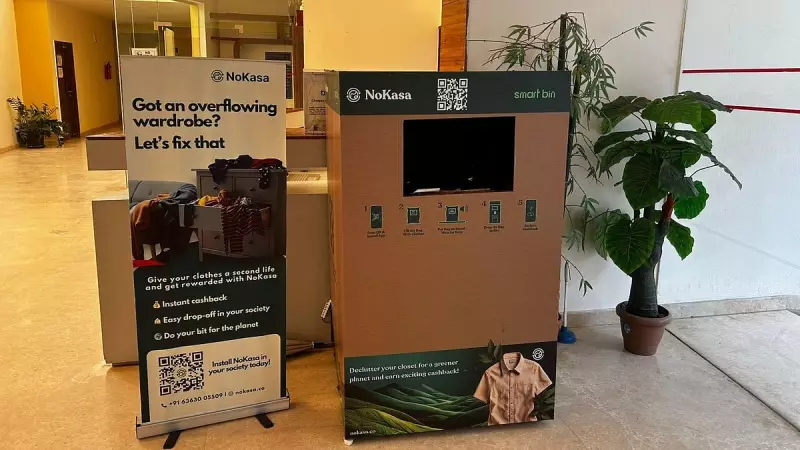
A Bengaluru-based startup is transforming the way urban India deals with textile waste by creating a sustainable ecosystem that actually pays residents for their discarded clothing. This innovative approach combines technology with environmental consciousness to address the growing problem of fashion waste.
Smart Bins Revolutionize Clothing Disposal
The company has deployed smart electronic bins across gated communities in Bengaluru, making clothing disposal both convenient and rewarding. These high-tech collection points feature user-friendly touch screens that allow residents to choose between donating or selling their pre-loved garments.
The process begins when users approach the NoKasa smart bins and select their preferred option on the digital interface. Those looking to contribute to charity can opt for donation, while others seeking financial returns can choose the selling option. This dual approach caters to different user preferences while ensuring clothes don't end up in landfills.

How the Sustainable Model Works
The startup's innovative system addresses multiple environmental concerns simultaneously. By creating a financial incentive for proper clothing disposal, they encourage participation from environmentally conscious citizens while providing an additional income stream for households.
Through strategic partnerships with recycling facilities and upcycling organizations, the collected garments find new life in various forms. Some quality items are redirected to those in need, while others are transformed into new products or industrial materials, significantly reducing textile waste.
Impact and Future Prospects
This initiative comes at a crucial time when India faces increasing challenges with textile waste management. The fashion industry's environmental footprint has become a growing concern, making such sustainable solutions particularly valuable.
The program, which launched with collections from gated communities, represents a significant step toward circular fashion economy in urban India. By making sustainable practices accessible and rewarding, the startup hopes to expand its reach across more neighborhoods in Bengaluru and eventually to other metropolitan cities.
As consumers become more environmentally aware, such innovative solutions bridge the gap between convenience and sustainability. The model not only helps reduce landfill waste but also promotes conscious consumption patterns among urban residents.