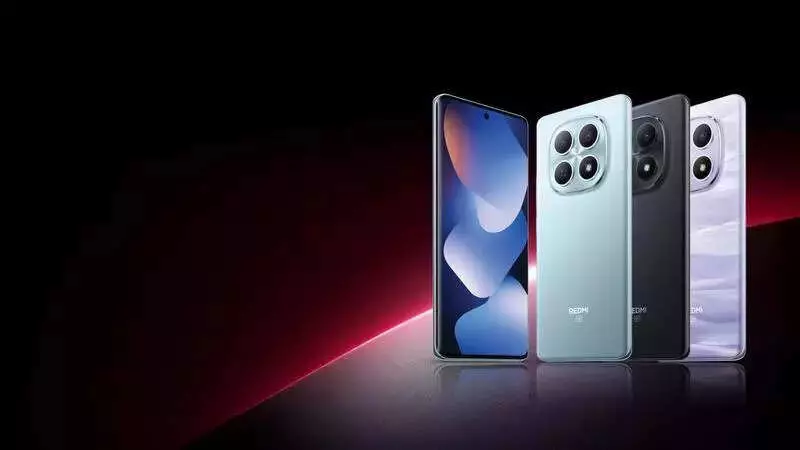
For years, the Redmi Note series has been the undisputed engine of Xiaomi's success in India. Positioned at the heart of the market, it has driven massive sales volumes and defined what consumers expect from a mainstream smartphone. However, with the launch of the Redmi Note 15 and the Redmi Pad 2 Pro, the company is signaling a profound strategic shift. It's moving away from chasing mere specifications to addressing a new market reality: users now hold onto their devices for much longer, demanding reliability, sustained software support, and a dependable experience over temporary novelty.
The New Consumer Mindset: Holding Onto Devices Longer
Sandeep Sarma, Associate Director of Marketing at Xiaomi India, observes that the Redmi Note has always been a barometer for the broader market. He notes that the series has historically dictated consumer behaviour by occupying the crucial middle ground of the price spectrum. However, the last two years have marked a significant turning point. The series had to take a bold leap, making decisions that might not have been immediately obvious but now align perfectly with the evolved consumer psyche.
The core of this evolution is the extended smartphone ownership cycle. Sarma reveals that people are now using their phones for 3 to 3.5 years, and sometimes even up to 4.5 years, a stark contrast to the previous 1-2 year upgrade cycle. This longevity creates fresh prerequisites for an upgrade. Consumers now prioritize devices that promise to last, making durability, quality, and robust after-sales support non-negotiable features.

Redmi Note 15: Built for the Long Haul
The newly launched Redmi Note 15 is engineered precisely for this era of extended use. At its core is the Snapdragon 6 Gen 3 chipset. It features a 6.67-inch curved AMOLED display with a 120 Hz refresh rate and a peak brightness of 3,200 nits, backed by TÜV-certified eye-care and Wet Touch technology.
In photography, Xiaomi is making a significant leap with the global debut of the 108 MP Samsung ISOCELL HM9 sensor. This "108 MasterPixel" camera comes with optical image stabilisation (OIS), enhanced low-light capabilities, and 3x in-sensor zoom. Sarma emphasizes that this sensor brings flagship-level imaging output to the segment for the first time.
Perhaps the most critical upgrade is in the promise of long-term support. The device is powered by a 5,520 mAh silicon-carbon battery with 45W wired charging, designed for extensive charge cycles. More importantly, Xiaomi commits to 4 years of OS upgrades and 6 years of security patches, ensuring software support "well into 2030" and security updates until 2032.
Design Philosophy: From Generic to Distinct and Ergonomic
The design language of the Note series has also matured. Sarma admits that earlier models sometimes felt "a bit more generic." Now, the focus is on perfecting a steady, recognizable identity. Anuj Sharma, Chief Marketing Officer of Xiaomi India, adds that the in-hand experience is now the ultimate test. For the Note 15, the goal was to create a device that feels balanced and comfortable to hold for long periods, not just impossibly thin. Sharma argues that many thin phones end up needing a case, negating the design intent, whereas the Note 15 aims for a slim feel "without the compromises."
This ergonomic philosophy extends to the Redmi Pad 2 Pro. Sharma explains that for a tablet, excessive thinness makes it uncomfortable to hold. The Pad 2 Pro, therefore, focuses on a balanced form factor. It sports a 12.1-inch 2.5K AdaptiveSync display with 120Hz and Dolby Vision, powered by a Snapdragon 7s Gen 4 platform. Its standout feature is a massive 12,000 mAh battery (claimed to be the largest in a tablet) with 27W reverse charging. Accessories like a Smart Pen and keyboard, coupled with HyperOS connectivity features, position it as a laptop alternative for everyday tasks.

The Bigger Picture: Building Loyalty Through Consistency
The overarching theme for both devices is building consumer trust over time. Sharma shares compelling data: the average phone ownership in the industry has crept up to about 3-3.5 years, and for Note users, it's typically a year longer. This deep familiarity breeds loyalty. For the Redmi Note 14, 50% of consumers were previous Note users, an upgrade rate Sharma states is "almost 2 to 2.5x of the industry average."
Sarma sees a similar pattern from Xiaomi's wearable business, where users who try alternatives often return. The lesson is clear: "Doing the right thing will eventually mean people will stick with you." For Xiaomi India, the "right thing" now means delivering long-term software support, stronger durability, measured design evolution, and ergonomics that respect real-world use. The Redmi Note 15 and Redmi Pad 2 Pro are not just new products; they are manifestations of a new, mature philosophy aimed at the patient Indian consumer.