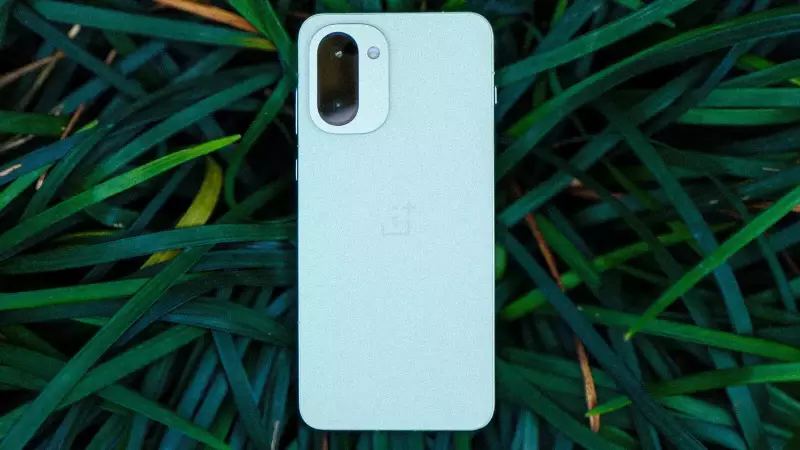
OnePlus built its brand on a simple, powerful idea: you shouldn't have to pay a fortune for a phone that performs like a top-tier flagship. Over the years, holding onto that promise has become more challenging. Component costs have risen, and the smartphone market has evolved, but the core philosophy remains. Priced at Rs 49,999, the OnePlus 15R certainly costs more than the brand's original "never settle" devices from 2014. However, its mission is still to offer more than you'd typically expect at this price point.
The intriguing aspect of the 15R is its focused strategy. Instead of trying to excel in every single area, it doubles down on raw performance and endurance. It packs the new Snapdragon 8 Gen 5 processor, a massive 7400mAh battery that outclasses even the standard OnePlus 15, and a super-smooth 165Hz display. But specifications only paint part of the picture. The real test is whether this hardware translates to a superior daily experience, what compromises were necessary to hit this price, and if the 15R still has the power to make premium flagships seem excessively priced.
Design and Build: Familiar Yet Rugged
The OnePlus 15R's design is heavily inspired by the more expensive OnePlus 15, which is a good thing. It features a camera module positioned at a 45-degree angle from the corner, a centered OnePlus logo on the back, and a flat aluminium frame. This is a proven, clean design language now applied to a more accessible model.

Buyers can choose from three colour options. Charcoal Black is classic and subtle. Mint Breeze is a light, refreshing green hue. The Electric Violet variant, exclusive to India, uses a fibreglass back which OnePlus claims is more durable than glass.
Weighing between 218-219 grams (with Electric Violet slightly lighter at 213g), the 15R has a substantial, premium feel. Its thickness is just over 8mm, which is reasonable given the enormous battery inside. The weight distribution is balanced, preventing the phone from tipping in your hand. However, its size can make one-handed use a stretch, especially when trying to reach the top of the screen.
The build quality is solid. The matte-finished aluminium frame resists fingerprints, and the buttons offer satisfying tactile feedback. The iconic alert slider is gone, replaced by a programmable Plus Key shortcut button—a change long-time fans may lament. The USB-C port is centered at the bottom, flanked by the SIM tray and a speaker grille. Everything feels tightly assembled, and the flat edges enhance grip.
In a significant move, OnePlus has equipped the 15R with extensive durability ratings: IP66, IP68, IP69, and IP69K. This means protection against powerful water jets, high-temperature water jets up to 80°C, submersion in 1.5 meters of water for 30 minutes, and dust. While the heated water jet scenario is niche, it means you can confidently use the phone in rain, near pools, or in dusty environments.
Display and Audio: Speed and Smoothness
The 6.83-inch display is a standout, though not always for the advertised reasons. It's a 1.5K LTPS AMOLED panel with a resolution of 2800×1272 pixels (450 ppi), offering sharp text and detailed images. It covers 100% of the DCI-P3 colour gamut and supports 10-bit colour for over a billion shades, resulting in vibrant, gradient-rich visuals. HDR10+ and HDR Vivid support are included for compatible content.
The headline feature is the 165Hz refresh rate, but its application is specific. This peak rate is only active in supported games like Call of Duty Mobile and PUBG. For all other tasks—scrolling, browsing, videos—the display runs at a still-excellent 120Hz. The jump from 60Hz to 120Hz is dramatic, but the difference between 120Hz and 165Hz is subtle and primarily benefits competitive mobile gamers.
To achieve this high refresh rate, OnePlus used an LTPS panel instead of a more advanced LTPO one. LTPO can drop to as low as 1Hz for static content to save power, while LTPS can only go down to 60Hz. This is a understandable compromise at this price, especially paired with the huge battery.

Brightness is impressive, with a claimed peak of 1800 nits, ensuring good visibility even in direct sunlight. The display also dims adequately for nighttime use. It carries TÜV Rheinland's Intelligent Eye Care 5.0 certification and features like an Eye Comfort Mode and reminders to take breaks.
A major upgrade is the ultrasonic fingerprint sensor under the display. It's faster, more reliable, works with damp fingers, and doesn't require a blinding light, outperforming the optical sensors common in this price segment.
The dual stereo speaker setup (a down-firing main speaker paired with the earpiece) delivers clear, well-defined sound with decent stereo separation and a hint of bass. It's thoughtfully tuned for a satisfying media consumption experience.
Performance and Gaming: Uncompromising Power
Performance is the OnePlus 15R's raison d'être. At its heart is the Snapdragon 8 Gen 5 chipset, which OnePlus gets first access to thanks to its collaboration with Qualcomm. This is paired with 12GB of LPDDR5X RAM and either 256GB or 512GB of UFS 4.1 storage. In daily use, this combination is flawless. Apps launch instantly, multitasking is seamless, and games load quickly. The performance feels invisible, which is the ultimate goal.
OnePlus enhances this with a custom CPU scheduler that prioritizes active tasks. When you launch a game, it gets maximum resources while background apps are deprioritized. This ensures sustained performance during intensive sessions.
Gaming is where the 15R truly shines. It can run titles like BGMI and Call of Duty Mobile at a consistent 120fps. The 165Hz display capability and a 3200Hz touch sampling rate make movements and inputs feel incredibly responsive and immediate, a tangible advantage in fast-paced shooters. Even demanding games like Genshin Impact run smoothly on high settings without significant frame drops, though the area around the camera module gets warm after extended play.
Heat management is handled by a robust three-layer cooling system featuring aerogel, a large 5,704mm² vapor chamber, and graphite. This system effectively dissipates heat, preventing performance throttling during long sessions.
Thoughtful gaming-centric features include a high-precision gyroscope for accurate aiming, a dedicated Wi-Fi chip for stable connections, and the aforementioned eye comfort features. It's clear OnePlus designed this phone with serious mobile gamers in mind.
Software and AI: Clean with Useful Additions
The phone runs OxygenOS 16 based on Android 16. The interface remains clean, responsive, and close to stock Android, with useful customizations. There's a noticeable iOS influence in some visual elements, including a notification area around the selfie camera that mimics Apple's Dynamic Island, albeit in a simpler form.
The replacement for the alert slider, the Plus Key, by default opens Mind Space. This is a hub for saved screenshots, voice notes, and web links, accessible via gestures. It integrates with Google Gemini, allowing the AI to access your saved content—useful for organized users.
OxygenOS 16 includes the now-standard suite of AI features: an AI Writer for drafting text, an AI Recorder for transcriptions, and an image editor with tools for object removal, background expansion, and portrait relighting. Their effectiveness is mixed; the writing and transcription tools work well, but the image AI can be inconsistent. You can easily ignore these features if you prefer a straightforward Android experience.
OnePlus promises four years of Android updates and six years of security patches. While decent, competitors have started offering seven years of support at similar price points, making OnePlus's commitment feel a bit short for such capable hardware.
Battery Life: A Two-Day Powerhouse
The 7400mAh battery is the largest ever in a OnePlus phone, and it shows. With typical use—social media, videos, messaging, some gaming—the 15R easily lasts a day and a half. Lighter usage can stretch to two full days, while heavy gaming will still comfortably get you through a full day.
This capacity is achieved using silicon-carbon battery technology, which replaces some graphite with silicon to store more energy in the same space. The trade-off is that silicon expands more, potentially leading to faster long-term degradation. OnePlus claims the battery will retain 80% capacity after four years, which is shorter than standard lithium-ion batteries. Most users upgrade within that timeframe, but it's a consideration for those who keep phones longer.
Charging is impressively fast with the included 80W wired charger. It can replenish the battery from near-zero to 50% in roughly 20-25 minutes, with a full charge taking under an hour. A notable omission is wireless charging, a feature that has become standard in this price segment. The massive battery lessens the daily need for charging, but the option would have been welcome.
Camera System: A Step Backwards
The camera setup is where the 15R takes its most significant compromise. It drops the telephoto lens found on last year's OnePlus 13R, leaving a dual-camera system: a 50MP main sensor (Sony IMX906) and an 8MP ultrawide (Sony IMX355).
OnePlus relies on its DetailMax processing engine for zoom, claiming software can compensate for the lack of a dedicated lens. In good light, the main camera performs well, capturing vibrant colours and sharp details with accurate exposure. There's a slight warm tone, but it's generally pleasing. However, in challenging mixed lighting or indoors, the camera struggles. Highlights can blow out, shadows lose detail, and noise reduction creates an overly smoothed look.
The software-based 2x zoom holds up reasonably well in good light, but quality degrades quickly beyond that. The 8MP ultrawide sensor is the same aging unit from the 13R. It produces cooler, softer images with visible noise, especially in low light, and doesn't match the main camera's colour science.
The 32MP selfie camera is an upgrade, offering detailed shots with reliable autofocus in good light. It tends to over-brighten and apply skin smoothing, though this can be reduced in settings. Low-light selfies can be inconsistent.
On the video front, the phone supports 4K recording at 120fps, which is excellent for smooth slow-motion footage, with effective stabilisation in daylight.
Verdict: A Powerful Specialist
The OnePlus 15R delivers emphatically on its core promise of delivering flagship-calibre performance and exceptional battery life at a sub-flagship price. The Snapdragon 8 Gen 5 is a powerhouse, the 7400mAh battery is a game-changer for endurance, and the high-refresh-rate display enhances gaming. Its robust IP ratings and solid build quality add to the package. For users whose top priorities are performance, gaming, and not having to charge daily, the 15R makes a very compelling case at Rs 49,999.
However, the compromises are real. The camera system is a step back, particularly the missing telephoto lens and underwhelming ultrawide. The lack of wireless charging is felt at this price point. The four-year software support window now lags behind the competition.
So, does it make flagship phones feel overpriced? For raw performance and battery life, absolutely—it rivals phones costing twice as much. But if you seek a more balanced, all-rounder flagship experience with a reliable camera, there are better options at or near this price, including the standard OnePlus 15. The OnePlus 15R is an expert in specific areas. Your purchase decision hinges on whether those areas are your top priorities.