Inside Google's Secret Taipei Hub: Engineering the Pixel 10 to Rival iPhone
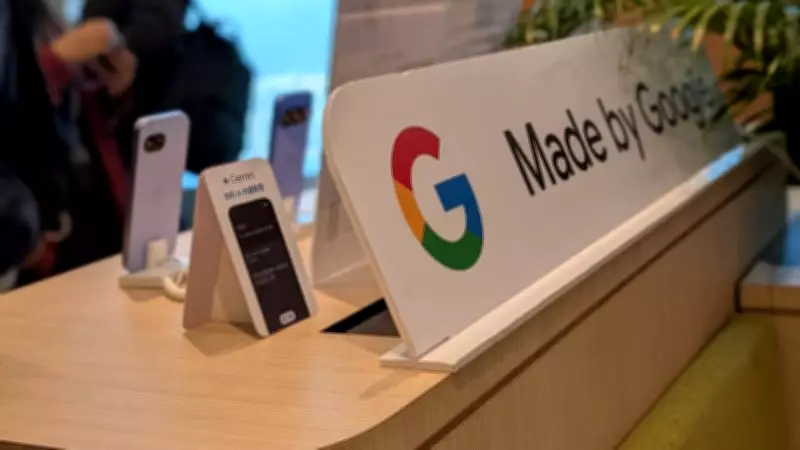
Nestled in the TPark campus of New Taipei City, Taiwan, lies Google's largest hardware engineering hub outside the United States. This sprawling facility, a 45-minute drive from Taipei's iconic financial district, is where the tech giant designs and prototypes key features for Pixel phones, Pixel Watch, and Pixel Buds. It serves as the epicenter for Google's ambitious plan to position Pixel as the core of the Android ecosystem, leveraging artificial intelligence to reshape both hardware and software.
Why Pixel Matters Beyond Market Share
Despite holding less than 3% of the global smartphone market, Pixel is recognized as the fastest-growing brand in a sluggish market. Google's goal with Pixel transcends mere sales numbers; it aims to showcase the pinnacle of Android software and AI, integrated into hardware that is uniquely Google. This distinguishes Pixel from Android licensees like Samsung and Xiaomi, even though some features eventually trickle down to other devices.
Venkat Rapaka, Vice President of Product Management for Pixel Ecosystems, explained the strategic approach: "Silicon design requires foresight, aligning with teams like Google DeepMind and Android OS to anticipate user behavior and technological shifts. We design silicon, such as Tensor processors, to be ready when these elements converge."

The Full-Stack Advantage: Hardware, Software, and AI Synergy
Google holds a unique position by developing Android, designing its own silicon (e.g., Tensor chips), and building AI features powered by Gemini models. Rapaka emphasized the iterative collaboration across the full stack, noting that hardware has a multi-year development lifecycle requiring deep planning. Erik Kay, Vice President of Engineering for Android Platforms, added that hardware and software influence each other bidirectionally, with AI serving as a tool to enhance user experiences seamlessly.
Pixel phones integrate AI-driven capabilities like Circle to Search, theft detection, and scam protection, making AI the centerpiece of the Pixel experience. Exclusive features such as Magic Cue, Camera Coach, and ProRes Zoom are reserved for Pixel devices, highlighting Google's investment in research and tight hardware-AI integration.
Pixel's Role in the Android Ecosystem and AI Competition
As AI reshapes technology, Pixel acts as the heartbeat of the Android ecosystem, positioned at its center. While Google collaborates with partners like Samsung and Motorola, it maintains exclusive Pixel experiences to preserve premium differentiation. Rapaka stated: "We build distinctive experiences for Pixel, such as ProRes Zoom, which may eventually reach other devices, but we continue innovating for our users."
Google's strategy includes expanding AirDrop-style support to more Android devices beyond the Pixel 10, enhancing cross-device interoperability. Despite challenges in convincing consumers to switch from iPhones or Samsung devices, Pixel's success in the mid-range premium segment, as seen with the Pixel 9a, indicates a growing market.
The Future of Smartphones and Google's Vision
Rapaka and Kay affirmed that smartphones are here to stay, serving as versatile devices for connectivity and local compute. They predict devices will become more autonomous and context-aware, with AI enabling agentic experiences across Gemini and Android services. Google's commitment to AI is unwavering, even as it navigates monetization strategies and competition from Apple and OpenAI.
The Pixel 10 series, with its fifth-generation Tensor chip developed in-house with Taiwan Semiconductor Manufacturing Co., demonstrates Google's hardware progress. However, the challenge remains: convincing consumers to choose Pixel over established rivals. As Google doubles down on Pixel and explores new form factors like foldables, the battle for premium smartphone dominance intensifies, with AI as the key differentiator.