For a growing number of young Indians, the morning ritual doesn't involve scrolling through newspaper headlines or tuning into TV debates. Instead, it begins with opening Instagram, where the news arrives not as sober reports but as jump-cut edits, viral audios, and politically charged memes. This shift represents a fundamental change in how a generation consumes information, where humour becomes both a coping mechanism and a potential barrier to genuine empathy.
The Algorithm Knows You: Memes as the First Draft of News
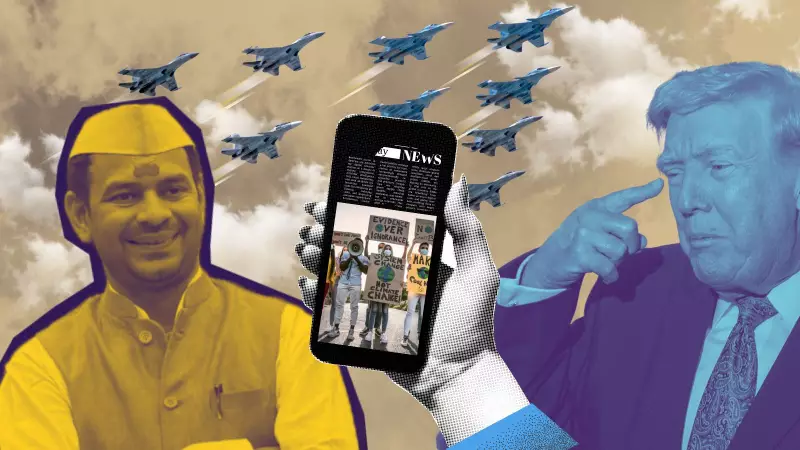
The author's experience highlights this new reality. A month before the Bihar elections, their Instagram feed was dominated by Nitish Kumar jump-cuts and countless edits of Tej Pratap Yadav, rather than traditional news coverage. While channels aired panel discussions, users were double-tapping through slo-mo videos of politicians set to popular tracks like Imran Khan's 'Bewafa'.
This content, often sarcastically captioning serious issues like unemployment or migrant crises with Bhojpuri music, initially felt entertaining. The realisation came later: these were not just jokes but reflections of real issues impacting real lives. Politics, for this demographic, has become "too heavy to look at directly but too blatant to ignore, so we watch it through a meme filter."

Hyper-Awareness Meets Emotional Exhaustion
Contrary to the stereotype of apathetic youth, the piece argues that Gen Z in India cares deeply, often to the point of exhaustion. The constant churn of elections, communal tensions, Supreme Court rulings, and inflation is overwhelming. Instagram reels act as a necessary buffer, processing raw anxiety into digestible, often absurd, humour.
This isn't entirely new. India has a long history of using comedy to process crises, from Raju Srivastava's mimicries to AIB's sketches. However, the reel format has accelerated this into a real-time response. Petrol price hikes instantly spawn edits of Finance Minister Nirmala Sitharaman in SRK's 'Jawan' avatar. Parliamentary fights are soundtracked by 'Arjan Vailly' from the film 'Animal'. The meme now frequently arrives before the polished news headline, especially for hyperlocal events.
The algorithm itself forces a strange form of engagement. To understand a niche political meme, users must often research the context, making them unknowingly more politically aware just to get the joke. The line between FOMO (fear of missing out) on a trend and genuine journalistic curiosity blurs.
The High Cost of Scrolling: Desensitisation and Performance
This new media diet comes with significant psychological trade-offs. The architecture of the platform itself rewires empathy. A reel showing a tragic event from Gaza is immediately followed by a fashion haul or a gym routine video, with no emotional breathing room. The thumb keeps scrolling, numbed by the relentless, context-less feed.
This has given rise to a "performance culture" around tragedy, where grief and solidarity are filtered through an aesthetic lens—trending audio placed over scenes of conflict, tears shed on camera for algorithmic reward. The platform incentivises optics over authentic compassion or action.
The result is a generation living at the crossroads of hyper-awareness and emotional fatigue. "We know everything, yet we feel increasingly less," the author notes. The capacity for shock erodes, requiring ever more dramatic visuals to provoke a reaction.
Reclaiming Agency in the Age of the Algorithm
Despite the drawbacks, this meme-first news cycle has undeniable impact. Young Indians learn about patriotism through army edits set to A.R. Rahman remixes, and feel the pulse of protest through visuals synced to powerful music. Algorithms force-feed them issues from Bihar, Gaza, Manipur, and the Supreme Court, creating a broad, if fragmented, awareness.

The final call is for conscious reclamation. While reels can raise awareness, turning that awareness into meaningful action requires stepping outside the predictive scroll. Change begins by nurturing the part of us the algorithm cannot predict: the part that pauses, questions, and cares deeply without the filter of humour. The scroll won't save the world, but the generation that masters it still can.