Amazon Takes on Starlink with Satellite Internet Service
Amazon has officially entered the satellite internet race by launching enterprise testing of its Leo service, setting the stage for a direct confrontation with Elon Musk's Starlink. The e-commerce giant confirmed in a recent blog post that it has initiated an enterprise preview program for select businesses, marking a significant milestone in its six-year journey to deploy global satellite internet.
Technical Specifications and Capabilities
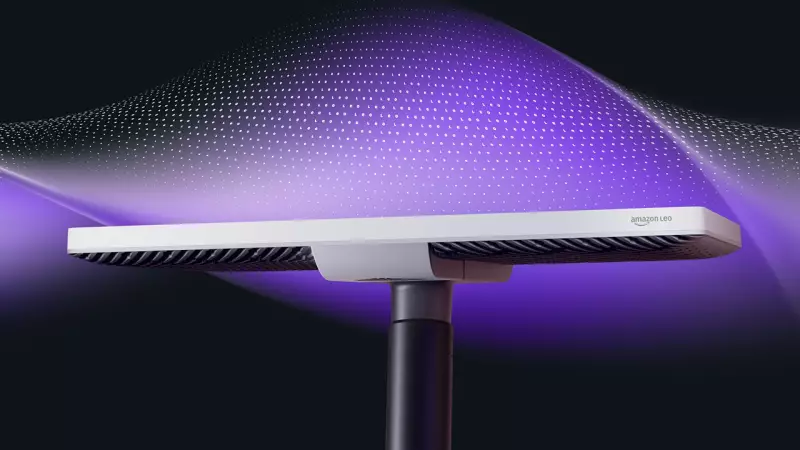
The company revealed impressive technical details about its flagship terminal, Amazon Leo Ultra, designed specifically for enterprise needs. This advanced terminal features a full-duplex phased array antenna capable of reaching download speeds up to 1 Gbps and upload speeds up to 400 Mbps. Amazon claims this makes it one of the fastest commercial phased array antennas currently available in the market.
The hardware is engineered to withstand challenging environmental conditions, including extreme temperatures, heavy rainfall, and strong winds. Its compact, integrated design eliminates moving parts while supporting quick installation and consistent performance across diverse locations. The antenna operates on a custom silicon chip developed by Amazon Leo and utilizes the company's proprietary radio frequency design and signal processing technology to enhance throughput and minimize latency.

Strategic Partnerships and Deployment Progress
Amazon has already secured agreements with several prominent companies across various sectors, including JetBlue, Vanu Inc., Hunt Energy Network, Connected Farms, and Crane Worldwide Logistics. The company confirmed it has started shipping both Leo Pro and Leo Ultra units to selected participants in the enterprise preview program.
Since April, Amazon has deployed over 150 satellites using rocket partners United Launch Alliance and SpaceX. This represents the beginning of their ambitious plan to deploy a constellation of 3,236 satellites in Low Earth Orbit (LEO). The company recently rebranded its service from Project Kuiper to Amazon Leo, directly referencing the orbital region where its satellite network will operate.
The testing program is strategically designed to gather valuable feedback from enterprise users, allowing Amazon to customize solutions for different industries before the broader public launch. As network coverage and capacity increase, the company plans to expand access to more businesses.
Enterprise Features and AWS Integration
Amazon Leo will offer enterprise-grade features including comprehensive network management tools, robust system-wide encryption, and 24/7 priority support. The service is specifically designed to support critical operations such as real-time data analysis, remote operations, and secure field communications.
A key advantage lies in its direct integration with Amazon Web Services (AWS) and other cloud systems. Businesses will be able to securely transfer data from remote locations to private networks without relying on the public internet. The service offers multiple connectivity options, including Direct to AWS, which enables AWS users to connect directly to their cloud workloads through the Amazon Leo console interface, significantly reducing latency and simplifying network configuration.
Another notable feature is the Private Network Interconnect, which allows enterprises and telecom providers to establish private links at major data centers, connecting remote sites directly to core networks within days rather than the weeks typically required for traditional circuits.
This enterprise preview represents Amazon's strategic move to challenge Starlink's current market dominance, with SpaceX having already deployed nearly 9,000 satellites in orbit. The competition in satellite internet services is heating up, promising better connectivity options for businesses and consumers worldwide.